

Key Takeaways
Summary
18 items · 2-5 minutes
Why a Pre-Trip Check Is Worth Two Minutes of Your Time
Most drivers climb in, start the engine, and go. That routine works - until it doesn't. A slow tire, a cracked wiper blade, a child's bike behind the rear bumper: these are the kinds of things that a 90-second walkaround catches before they turn into accidents, flat tires on a highway, or worse.
This checklist is designed for everyday drives, not just road trips. The habit compounds: drivers who build a quick pre-trip routine become more attuned to how their vehicle looks and sounds when everything is right - which makes it much easier to notice when something isn't. For longer journeys or seasonal transitions, pair this with the seasonal vehicle maintenance checklist to cover deeper mechanical checks.
Run through the items below in the order they appear - it maps to a logical path around the vehicle so you're not backtracking.
Exterior Walkaround
Rear Zone and Surroundings
Interior and Controls
Driver Readiness
Tools and Items to Keep in the Vehicle
Most of this checklist requires nothing more than your eyes and about two minutes. A few items, however, are easier to verify quickly if you already have the right gear on hand. Check that these are stowed before your first trip of any kind.
Tire pressure gauge
Confirms accurate tire pressure in seconds - more reliable than a visual check alone.
Ice scraper and snow brush
Needed to clear windows and roof surfaces in cold-weather conditions before driving.
Roadside emergency kit
Should contain jumper cables or a jump starter, a reflective triangle or flares, a basic first-aid kit, and a flashlight.
Microfiber cloth
Useful for quickly cleaning hazy headlight lenses or wiping interior windshield fogging before departure.
Phone mount
Allows navigation and audio to be set hands-free before driving so you're not adjusting mid-trip.
Before You Put It in Reverse: Two Things That Cannot Wait
Children and Animals Behind the Vehicle
Backup camera systems improve rearward visibility but do not replace a physical check - cameras have blind zones, can be dirty or fogged, and have a lag between movement and display. Always walk the backing path before getting in the vehicle, especially in residential driveways where children play. Never rely solely on technology for this step.
Backing accidents account for a disproportionate share of driveway and parking lot incidents - particularly involving children and small animals who are invisible in mirrors. After completing the rear-zone check in the checklist above, do one final scan of the area directly behind your vehicle before shifting into reverse, even if you checked 60 seconds ago.
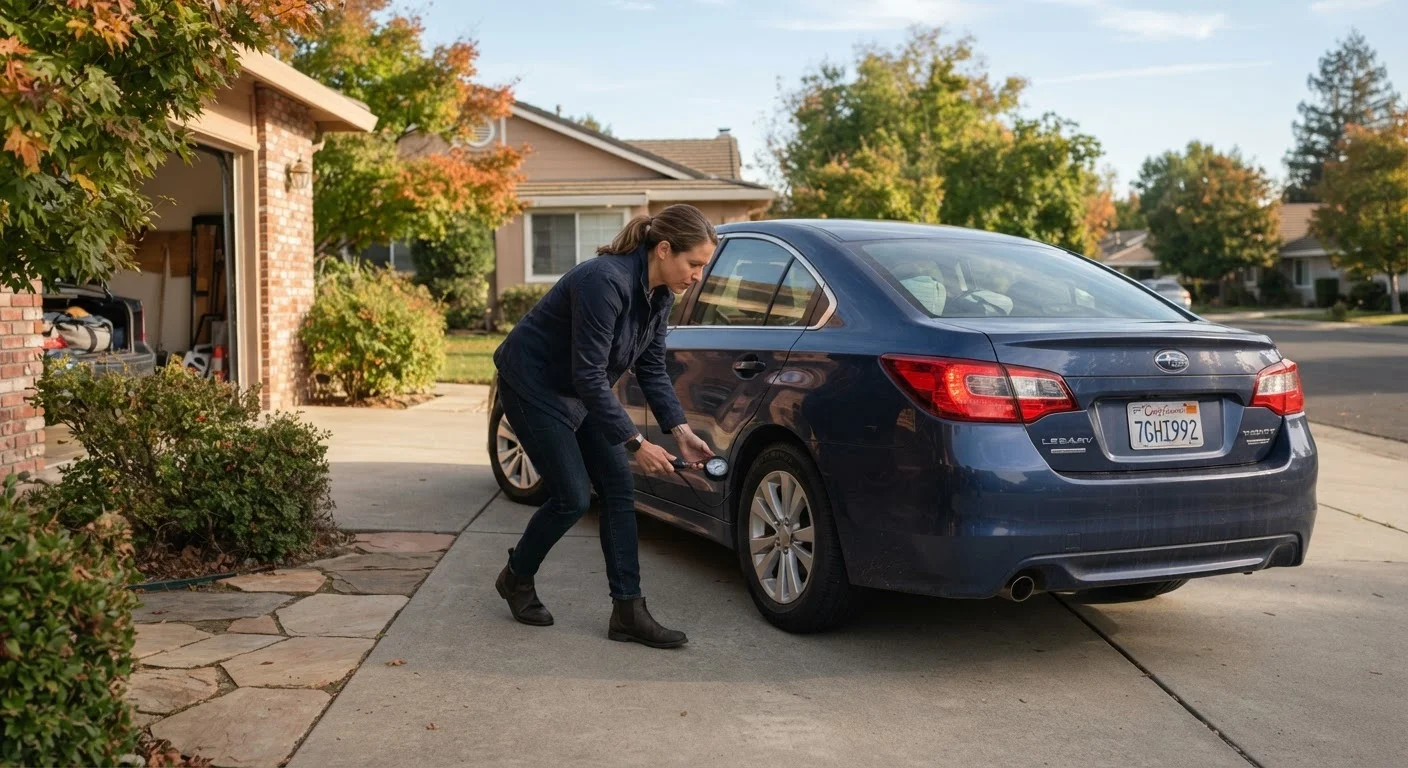
Separately, if your tire pressure warning light is on or a tire looks visually low, do not drive on it until you've checked the pressure and inflated it to the vehicle manufacturer's specification (found on the door jamb sticker, not the number printed on the tire sidewall). Driving even a short distance on an underinflated tire can cause irreversible sidewall damage.
Once you're rolling, your next layer of safety is situational awareness behind the wheel. Our guide to mirrors, blind spots, and head checks picks up where this checklist leaves off - covering what to do once you're in traffic.
Ignored Warning Lights Are Not a Small Risk
A dashboard warning light is the vehicle's way of flagging a condition that needs attention. Some lights - like a low-fuel or seatbelt reminder - are informational. Others, such as the engine temperature, oil pressure, or brake warning lights, signal conditions that can lead to vehicle damage or brake failure if ignored. If an unfamiliar warning light is on, look it up in your owner's manual before driving. If you're unsure whether it is safe to proceed, consult a qualified mechanic.