

| Engine Air Filter Interval | 15,000-30,000 miles (varies by conditions) (Common manufacturer range; check owner's manual) |
| Cabin Air Filter Interval | 15,000-25,000 miles, or ~1 year (Common manufacturer range; check owner's manual) |
| Fuel Filter Interval (serviceable units) | 30,000-60,000 miles (Common manufacturer range; many newer vehicles use non-serviceable filters) |
| DIY Difficulty: Cabin Filter | Low - typically tool-free on most vehicles |
| DIY Difficulty: Engine Air Filter | Low - accessible airbox, no special tools required |
| DIY Difficulty: Fuel Filter | Moderate to High - involves pressurized fuel; professional service recommended |
What Each Filter Actually Does
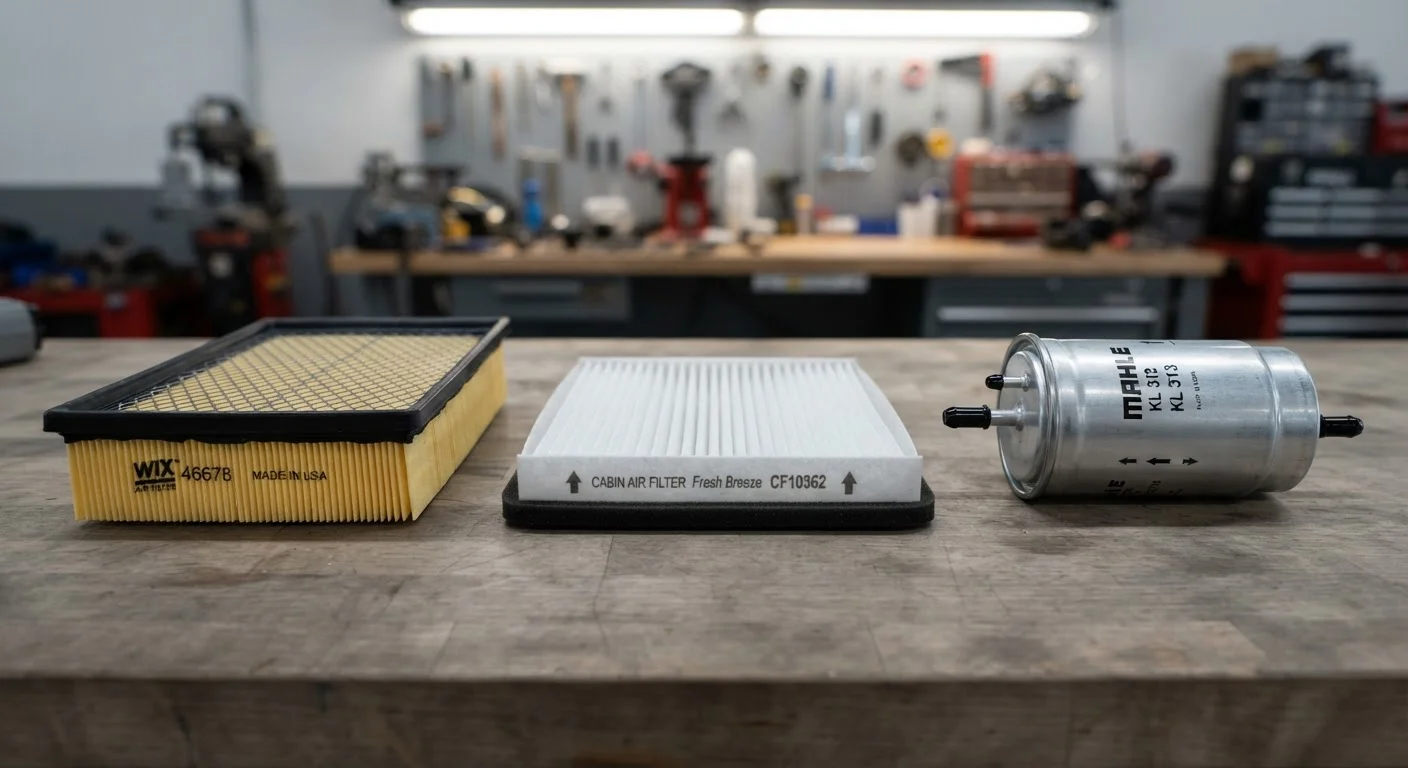
Your vehicle runs three distinct filtration systems, each protecting something different. Mixing them up - or ignoring one while servicing another - is a common and costly oversight.
| Engine Air Filter Interval | 15,000-30,000 miles (varies by conditions) (Common manufacturer range; check owner's manual) |
| Cabin Air Filter Interval | 15,000-25,000 miles, or ~1 year (Common manufacturer range; check owner's manual) |
| Fuel Filter Interval (serviceable units) | 30,000-60,000 miles (Common manufacturer range; many newer vehicles use non-serviceable filters) |
| DIY Difficulty: Cabin Filter | Low - typically tool-free on most vehicles |
| DIY Difficulty: Engine Air Filter | Low - accessible airbox, no special tools required |
| DIY Difficulty: Fuel Filter | Moderate to High - involves pressurized fuel; professional service recommended |
Engine Air Filter
The engine air filter sits between the outside air intake and the engine itself. Its job is to block dirt, dust, pollen, and debris from entering the combustion chamber. A clean filter lets the engine breathe freely; a clogged one starves it of air, forcing the fuel-air mixture out of balance. The result is reduced power, worse fuel economy, and - over time - engine wear. See how a well-maintained engine supports better fuel costs for the bigger picture.
Cabin Air Filter
The cabin air filter cleans the air flowing through your heating and air conditioning system before it reaches the passenger compartment. It captures pollen, dust, mold spores, and exhaust particulates. Unlike the engine filter, a clogged cabin filter doesn't damage the engine - but it does reduce HVAC airflow, force the blower motor to work harder, and let allergens circulate inside the car. Replacing it is one of the most straightforward DIY jobs on most vehicles; see which maintenance tasks are genuinely DIY-friendly.
Fuel Filter
The fuel filter screens contaminants - rust, sediment, and microscopic debris - out of the fuel before it reaches the injectors or carburetor. On older vehicles, it was a serviceable inline component replaced on a routine schedule. Many newer vehicles integrate the fuel filter inside the fuel tank as part of the pump assembly, making it less accessible but also less prone to neglect-driven failure. When a fuel filter does fail, symptoms include hard starting, engine hesitation under load, and in severe cases, stalling.
Replacement Intervals and Warning Signs
No single interval applies to every vehicle or every driving environment. Treat manufacturer intervals as a starting point, then adjust for your actual conditions.
Engine Air Filter
A replaceable filter - typically made of pleated paper or foam - that prevents airborne contaminants from entering the engine's intake. It sits in the airbox between the intake snorkel and the throttle body or carburetor.
Cabin Air Filter
A filter that cleans outside air before it enters the vehicle's passenger compartment through the HVAC system. It traps pollen, dust, and fine particulates to improve air quality inside the car.
Fuel Filter
A component that removes rust particles, sediment, and debris from fuel before it reaches the engine's fuel injectors or carburetor. It may be an inline unit or integrated into the fuel pump assembly inside the tank.
Pleated Media
The folded filtration material inside most air and cabin filters. The accordion-like pleating increases surface area, allowing the filter to trap more contaminants before becoming restrictive.
Fuel Injector
An electronically controlled nozzle that sprays a precise amount of fuel into the engine's intake or combustion chamber. Injectors are sensitive to particulate contamination, making upstream filtration important.
Service Interval
The mileage or time period recommended by a vehicle manufacturer between routine maintenance tasks, including filter replacements. Intervals vary by manufacturer and driving conditions.
Engine Air Filter
Most manufacturers recommend replacement every 15,000-30,000 miles, but drivers in dusty, rural, or high-pollution environments may need to replace it more frequently - sometimes twice as often. A visual inspection is easy: remove the filter and hold it up to light. Heavy grey or brown buildup across the pleats is a clear replacement signal. Don't wait for a performance drop; by the time you feel it, the filter has already been restricting airflow for some time.
Cabin Air Filter
The typical service interval is 15,000-25,000 miles, or roughly once a year for average drivers. Reduced airflow from your vents even on the highest fan setting is the most common symptom. A musty odor when the HVAC runs is another - it usually indicates mold or trapped organic matter in a saturated filter. Allergy sufferers and pet owners often benefit from replacing this filter more often than the manual specifies.
Fuel Filter (where serviceable)
For vehicles with a separate, accessible fuel filter, intervals typically range from 30,000-60,000 miles. Check your owner's manual - some manufacturers have extended this interval significantly on modern fuel systems. Symptoms of a failing fuel filter include engine hesitation during acceleration, difficulty starting when the engine is cold, and a notable loss of power at highway speeds. Because fuel system work involves pressurized flammable liquid, this is a job most drivers should leave to a qualified mechanic. Delaying fuel system maintenance is one of the more common ways deferred service turns into a repair bill.
Putting It All Together
Filters are consumables - they're designed to get dirty and be replaced. The real cost isn't the filter itself; it's the downstream damage that accumulates when a clogged filter goes unaddressed.
Keep a simple log of when each filter was last replaced, ideally alongside your other fluid checks. For a practical framework on routine under-hood upkeep, checking your essential vehicle fluids pairs naturally with filter inspections as a single periodic review. Done together, they take less than 20 minutes and give you a reliable read on your vehicle's basic health.
Always Verify With Your Owner's Manual
Service intervals vary significantly between manufacturers, model years, and trim levels. The intervals cited here represent common industry ranges, not universal rules. Your owner's manual lists the exact specification for your vehicle, including whether your fuel filter is a separate serviceable part or integrated into the fuel pump module.
Your owner's manual is the authoritative source for your specific vehicle's filter locations, specifications, and service intervals. Intervals listed in this article reflect common industry ranges and may not apply to every make, model, or model year.