

Key Takeaways
Increases adaptability to industry and role changes
Professionals who regularly update their skills are better positioned to absorb new tools and workflows without extended ramp-up periods, making them lower-risk hires and more resilient employees during organizational change.
Strengthens leverage in salary negotiations
Demonstrable, current expertise gives professionals concrete evidence to anchor compensation conversations, particularly in fields where skill scarcity drives market rates upward.
Expands career mobility and opportunity access
Broader and more current skills open pathways to roles, industries, and projects that would otherwise require a significant credential gap to cross, reducing career lock-in.
Builds professional credibility and visibility
Active learning often generates artifacts - certifications, projects, published work - that signal engagement and competence to managers, peers, and external networks alike.
Skill depreciation narrows available job options
As industries evolve, outdated skill sets make it harder to qualify for new roles or lateral moves, effectively shrinking the pool of opportunities a professional can realistically pursue.
Stagnant credentials weaken negotiating position
Without evidence of current expertise, professionals have less to anchor salary discussions to, often accepting compensation below what updated skills would support.
Reduced resilience during layoffs and restructuring
When organizations downsize, employees with the most current and transferable skills tend to be retained or re-placed more quickly; those with dated profiles face longer, harder searches.
Catch-up costs rise the longer development is deferred
Skill gaps that accumulate over years require proportionally more time and effort to close, making eventual re-engagement significantly more demanding than sustained incremental learning would have been.
Long-term engagement and satisfaction can decline
Research in occupational psychology suggests that perceived growth is a significant predictor of workplace engagement; professionals who feel their skills are stagnating often report lower motivation and job satisfaction over time.
Our Verdict
Professional development is not optional maintenance for ambitious outliers - it is ongoing protection for anyone who wants to remain employable and competitive. The hidden costs of ignoring it accumulate slowly but compound significantly, affecting earning power, job security, and career mobility. Engaging with even modest, consistent skill-building tends to pay dividends that far outweigh the time and financial investment required.
This article is most relevant for mid-career professionals who feel settled in their current role but suspect their skills may be drifting behind market demands.
What 'Doing Nothing' Actually Does to a Career
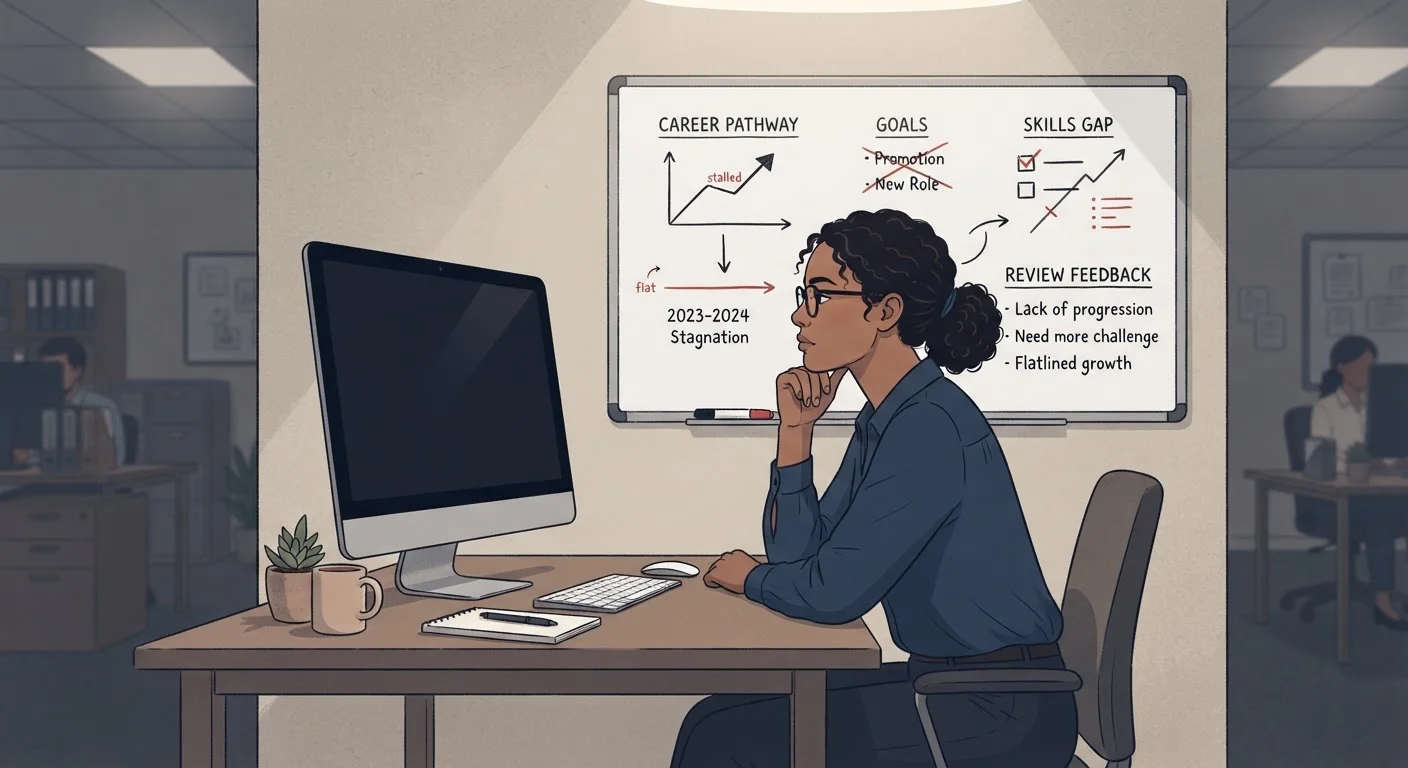
Professional development is easy to deprioritize. Workloads are heavy, budgets are tight, and the consequences of skipping it rarely show up immediately. But inaction is not the same as stability. Skills that are not actively maintained tend to depreciate - not because they disappear, but because the professional landscape around them shifts.
Industries evolve through changes in technology, regulation, and practice. A skill set that was competitive five years ago may be table stakes today, or partially obsolete. The professional who does not account for this drift often discovers the gap only when it matters most: during a layoff, a promotion cycle, or a job search.
Understanding the full picture requires looking honestly at both the genuine advantages of deliberate skill-building and the real disadvantages of neglecting it. Before examining those costs, it helps to address a common misconception - many professionals assume that free or low-cost learning lacks credibility. That assumption is worth re-examining, because accessible learning has improved substantially.
The Advantages of Staying Engaged with Learning
Deliberate professional development does more than add lines to a résumé. It builds adaptability - the capacity to absorb new tools, frameworks, and expectations without requiring a long ramp-up period. Employers consistently value this trait because it reduces their risk when roles change or new needs emerge.
Increases adaptability to industry and role changes
Professionals who regularly update their skills are better positioned to absorb new tools and workflows without extended ramp-up periods, making them lower-risk hires and more resilient employees during organizational change.
Strengthens leverage in salary negotiations
Demonstrable, current expertise gives professionals concrete evidence to anchor compensation conversations, particularly in fields where skill scarcity drives market rates upward.
Expands career mobility and opportunity access
Broader and more current skills open pathways to roles, industries, and projects that would otherwise require a significant credential gap to cross, reducing career lock-in.
Builds professional credibility and visibility
Active learning often generates artifacts - certifications, projects, published work - that signal engagement and competence to managers, peers, and external networks alike.
There are also compounding effects on earning potential. Professionals who demonstrate current, relevant expertise tend to enter salary conversations from a position of greater leverage. The negotiation itself matters, but preparation matters more - a point explored in depth when looking at common salary negotiation missteps that erode a candidate's position before the conversation even begins.
The Real Disadvantages of Prolonged Stagnation
The costs of ignoring professional development are not always visible in the short term, but they tend to crystallize at inflection points - restructurings, industry shifts, or competitive hiring cycles.
Skill depreciation narrows available job options
As industries evolve, outdated skill sets make it harder to qualify for new roles or lateral moves, effectively shrinking the pool of opportunities a professional can realistically pursue.
Stagnant credentials weaken negotiating position
Without evidence of current expertise, professionals have less to anchor salary discussions to, often accepting compensation below what updated skills would support.
Reduced resilience during layoffs and restructuring
When organizations downsize, employees with the most current and transferable skills tend to be retained or re-placed more quickly; those with dated profiles face longer, harder searches.
Catch-up costs rise the longer development is deferred
Skill gaps that accumulate over years require proportionally more time and effort to close, making eventual re-engagement significantly more demanding than sustained incremental learning would have been.
Long-term engagement and satisfaction can decline
Research in occupational psychology suggests that perceived growth is a significant predictor of workplace engagement; professionals who feel their skills are stagnating often report lower motivation and job satisfaction over time.
87%
Employers reporting skills gaps in their workforce
According to McKinsey research on workforce trends, the vast majority of executives report that skill gaps are present or anticipated within their organizations.
~5 years
Average half-life of a professional skill
The World Economic Forum has noted that many technical skills have a relevance half-life of approximately five years, after which significant updating is typically needed.
It is also worth noting that career stagnation shares something with deferred maintenance in other domains: the longer the delay, the steeper the catch-up cost. Just as skipping routine upkeep on a vehicle leads to compounding mechanical problems, avoiding skill investment creates knowledge gaps that become progressively harder to close. The instinct to delay often feels financially rational but rarely turns out to be.
Career fulfillment is also affected. Research and professional experience both suggest that passion alone does not sustain a career - but nor does competence without growth. Prolonged stagnation can erode a professional's sense of purpose and engagement, not just their market value.
Practical Ways to Re-Engage Without Overwhelming Yourself
The barrier to professional development is often perceived as higher than it actually is. Many professionals assume meaningful skill-building requires extended programs, significant expense, or time they cannot spare. In practice, consistent small investments tend to outperform sporadic intensive efforts.
You Don't Need a Full Program to Start
Many professionals conflate professional development with formal enrollment, but the research on learning transfer suggests that applied, incremental practice often produces stronger skill retention than passive coursework. Structured micro-learning sessions of 20-30 minutes, tied directly to a current work challenge, can be a more sustainable entry point than committing to a multi-month program. The goal is consistency, not comprehensiveness.
Identifying one concrete skill gap - rather than attempting a broad overhaul - gives learning immediate direction. Industry associations, employer learning budgets, library systems, and structured online platforms all offer credible pathways that do not require major financial outlay. The key is matching the format to the constraint: if time is the limiting factor, asynchronous and modular options are more sustainable than scheduled cohort courses.
The professionals most at risk are not those who are unaware that development matters - most understand it in principle. The risk group is those who acknowledge the need but repeatedly defer action, waiting for a moment when conditions feel less pressured. That moment rarely arrives on its own.