

Key Takeaways
Why Most Tracking Attempts Fail
Most people who try to track spending quit within two weeks. The culprit is rarely laziness - it's friction. Complicated spreadsheets, apps that require extensive setup, or systems that demand logging every coffee and parking meter create enough daily resistance that the habit collapses under its own weight.
The fix isn't discipline. It's reducing the effort required at every step. That means choosing a method that fits your actual behavior, keeping categories simple, and building in a regular but brief review ritual rather than trying to monitor spending in real time all day long.
It also helps to reframe what tracking is for. You're not auditing yourself - you're collecting data. Patterns in that data tell you things your instincts can't: which categories consistently blow past your estimate, where spending has crept up over several months, and which expenses deliver real value versus those you barely notice. That information is the foundation of any budget that actually holds. For those managing travel costs specifically, the same blind spots apply - Why Your Travel Budget Always Runs Out Early covers how tracking gaps show up in trip planning.
Tracking Is Not the Same as Restricting
Many people avoid tracking because it feels like punishment. It isn't. Tracking is simply knowing where your money goes - what you do with that information is a separate decision. Starting with observation rather than restriction makes the habit far easier to build and maintain.
Setting Up Your System
Before logging a single transaction, gather what you need and make a few decisions that will keep your system consistent.
What you will need
Notebook or paper ledger
Manual logging of daily transactions for those who retain information better by writing it down.
Spreadsheet (e.g., Google Sheets or Excel)
Custom expense tracking with full control over categories, formulas, and layout.
Budgeting or expense-tracking app
Automates transaction import and categorization, reducing daily manual data entry.
Bank or credit card statements
Source of truth for reviewing all transactions when reconciling your records.
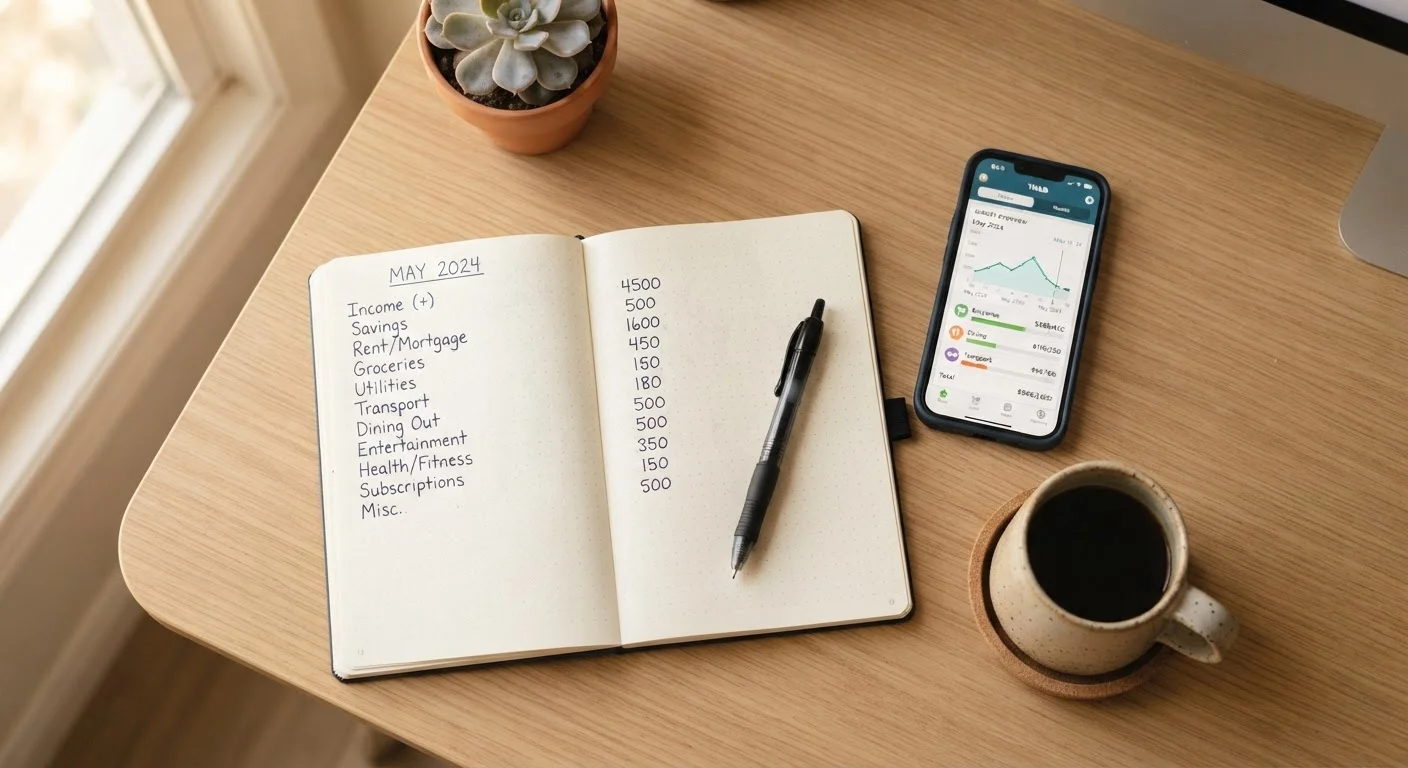
Choose one tracking method and commit to it
The single biggest reason expense tracking fails is switching tools mid-month. Before you log a single purchase, decide on your method: a notebook, a spreadsheet, or an app. Each has real tradeoffs - see Spreadsheet vs. App: Choosing How to Track Your Budget for a side-by-side comparison. Pick the one that fits how you already live, not the one that looks most impressive.
Define your spending categories before you start
Decide upfront how you'll group expenses: housing, groceries, transportation, dining out, subscriptions, personal care, and so on. Use broad categories at first - you can always subdivide later. Consistency in categorization is what makes month-over-month comparison useful. If you haven't built a full budget yet, Your First Personal Budget, Built from Scratch walks through setting spending limits alongside those categories.
Log transactions as close to real time as possible
The longer you wait to record a purchase, the more likely you are to forget it or misremember the amount. A quick entry right after a transaction - or at least same-day - is the standard to aim for. If you use a debit or credit card for nearly everything, your bank's transaction feed becomes a reliable safety net for anything you miss.
Do a weekly 10-minute review
Once a week, compare what you've spent in each category against your planned limits. This is where tracking pays off: you'll catch overspending in dining out or discretionary categories while there's still time to adjust. A weekly check also surfaces forgotten subscriptions and small recurring charges that add up quietly. Pair this habit with something you already do to make it stick.
Reconcile against your bank statement at month's end
At the end of each month, pull your full bank and credit card statements and compare them to your tracked records. Identify any transactions you missed, correct miscategorized items, and tally totals by category. This reconciliation step is what turns raw data into genuine insight. Use those totals to run a full budget audit - Monthly Budget Audit: A Checklist for Staying on Track provides a structured checklist for doing exactly that.
Anchor Your Review to an Existing Habit
Pair your weekly spending check-in with something you already do - morning coffee, Sunday meal prep, or a commute. Habit stacking makes new behaviors stick faster than willpower alone. Even five minutes of focused review compounds significantly over a year.
Don't Let Perfect Kill Good
Missing a day or misclassifying a purchase is not a reason to abandon your system. Gaps in your data are normal, especially early on. A tracking record that's 80% complete is still enormously valuable - and far better than starting over from zero every month.
Once your monthly reconciliation is routine, you'll have the spending history needed to make your budget more resilient - Building a Budget That Holds When Life Gets Expensive covers the structural habits that keep budgets intact through job changes and unexpected expenses. If you're also working on saving or reducing debt, your expense data becomes even more actionable - see the Saving & Debt hub for practical next steps.
This article is for general informational purposes only and does not constitute personalized financial advice. Consider consulting a qualified financial professional for guidance specific to your situation.