

Key Takeaways
Building Permit
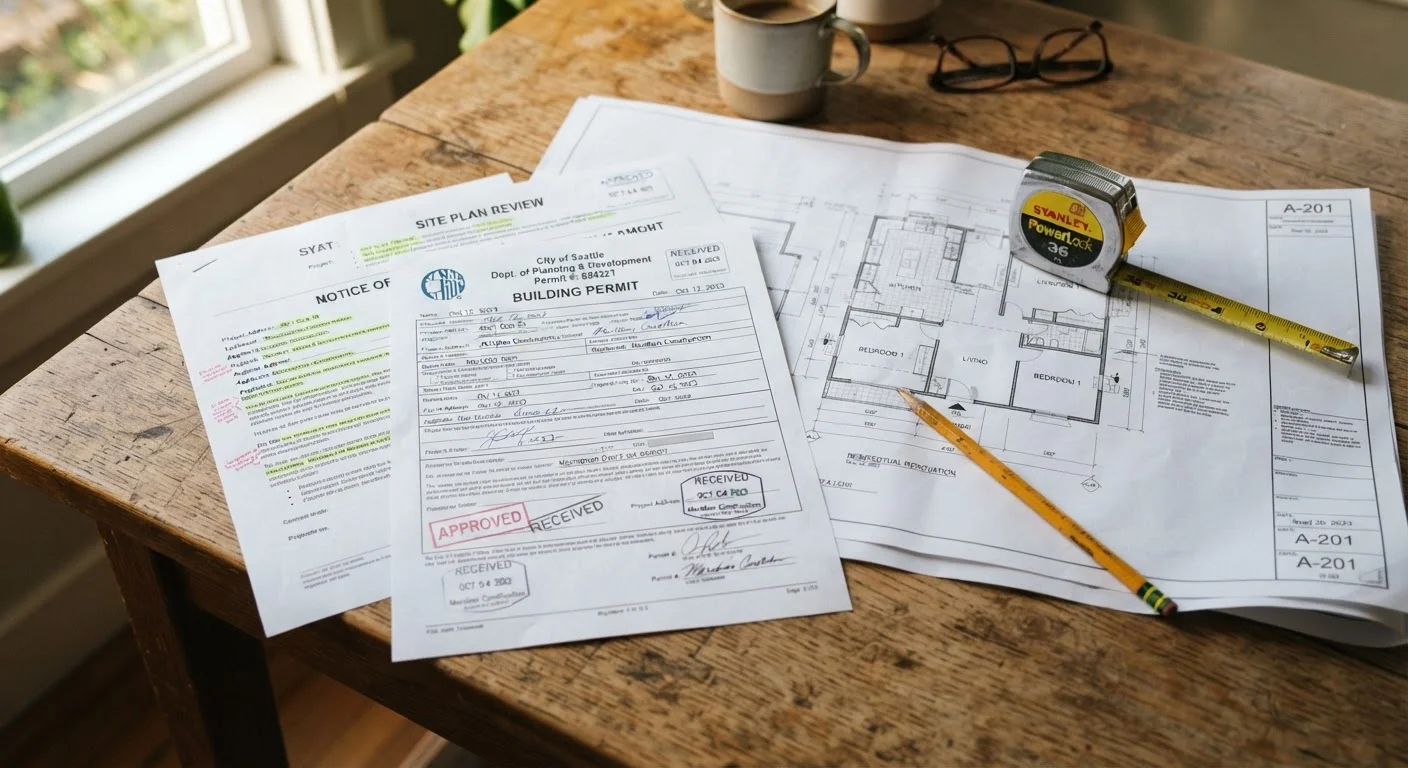
A building permit is an official document issued by a local government authority that authorizes specific construction, renovation, or repair work on a property. It confirms that the proposed work has been reviewed against local building codes before it begins. Once the job is complete, an inspector signs off to verify the work was done correctly.
Permits are tied to a property's legal record, not just the owner who pulled them - meaning they follow the home through future sales and can affect insurance, lending, and liability.
Why Permits Are More Than Just Red Tape
Most homeowners think of building permits as a bureaucratic hurdle - something a contractor deals with so you don't have to. But a permit is actually a document rich with practical information about your home's history. Whether you're buying a house, planning a renovation, or just trying to understand what a previous owner changed, knowing how to read a permit can save you from expensive surprises.
At its core, a permit is a transaction between a property owner (or their contractor) and the local government. The owner describes planned work; the government reviews it against building codes and either approves, conditions, or denies the application. That review process, and the inspections that follow, create a paper trail tied directly to your home's address.
Permits Follow the Property, Not the Owner
Open, expired, or unresolved permits don't disappear when a home is sold. The obligation to address them typically transfers with ownership. Before purchasing a home, always check for any outstanding permit issues through the local building department - not just what the seller discloses.
Unlike a home inspection report - which reflects conditions on a single day - a permit history covers the life of the property and is part of the public record. Just as you might read a soil test to understand what's happening beneath the surface of your garden, permit records reveal what's happened inside your home's walls over time.
How to Locate Permit Records
Permit records are public documents and are held by the municipality where the property is located - typically the city or county building department. Here's how to access them:
- Online portals: Many jurisdictions have searchable databases where you can enter an address and see all permits on file, often with status and inspection history.
- In-person or phone requests: Smaller municipalities may not have digitized records. A call or visit to the building department can surface older permits, sometimes going back decades.
- Title and disclosure documents: When buying a home, permit records sometimes appear in seller disclosures or title search results - though these are not always complete.
It's worth requesting records before listing a home for sale or making a major addition, so you understand what's already documented - and what might be missing.
~40%
Of home addition work done without permits
Industry estimates suggest a significant share of home improvement additions and alterations are completed without required permits, according to building industry researchers.
3-10%
Potential value impact of unpermitted additions
Real estate appraisers and inspectors commonly note that unpermitted square footage may not be counted in official home valuations, affecting resale price negotiations.
Decades
How far back permit records can go
Many local building departments retain permit records going back 30-50 years or more, especially for properties in well-established municipalities.
Decoding the Fields on a Permit
Once you have a permit in hand, here's what each major section tells you:
- Permit Number
- A unique identifier used to track the application, inspections, and final sign-off. Use this number to request inspection records.
- Permit Type
- Describes the category of work: building, electrical, plumbing, mechanical (HVAC), or demolition. A project may have multiple associated permits.
- Scope of Work / Description
- A written description of what was authorized. This is critical - it tells you what was legally approved, which may or may not match what was actually built.
- Valuation
- An estimated value of the work, used to calculate permit fees. It gives a rough sense of project scale but is not a reliable cost estimate.
- Contractor Information
- Name, license number, and sometimes contact details for the contractor who pulled the permit. You can verify license status with your state licensing board.
- Status / Inspection Results
- This is the most important field. Look for finaled, closed, or approved - these indicate an inspector signed off. Open, expired, or void means the work was never formally completed under inspection.
Red Flags to Watch For
Permit records can surface issues that aren't visible during a standard walkthrough. Watch for these common warning signs:
- Open or expired permits: Work was started but never finaled. This may indicate incomplete or uncorrected work - and you, as a future owner, may inherit the obligation to resolve it.
- No permit for significant work: If a home has a finished basement, added bathroom, or expanded square footage with no corresponding permit in the record, that work is likely unpermitted. Unpermitted work isn't automatically dangerous, but it hasn't been officially verified against code.
- Permit scope doesn't match the home: If a permit describes a minor deck repair but the current deck is clearly a large new structure, the discrepancy is worth investigating.
- Owner-performed work: Many jurisdictions allow homeowners to pull their own permits. That's legal - but it means a licensed contractor didn't do the work. Inspections matter more in those cases.
Request Inspection Reports, Not Just the Permit
When you retrieve a permit, ask specifically for the associated inspection records. These logs show which inspections were requested, when they occurred, and whether they passed or failed on the first attempt. A permit that required multiple re-inspections before being finaled can indicate that corrections were needed - useful context even years later.
Reading a permit record is a skill similar to interpreting other technical documents. Just as you'd parse a vehicle history report before buying a used car, a property's permit history gives you documented evidence of what's been done - and what corners may have been cut.
What Permits Can't Tell You
Permits confirm that work was authorized and inspected - not necessarily that it was done perfectly or that nothing has changed since. A permit finaled in the 1990s reflects code requirements from that era, which may differ from today's standards. Materials degrade, systems age, and inspectors can only evaluate what's visible at the time of inspection.
For a comprehensive picture, pair a permit review with a current home inspection performed by a licensed inspector. The permit history tells you about the past; a professional inspection evaluates current conditions. Neither alone gives the full picture - but together, they're a powerful foundation for understanding what you own or are about to buy.
When planning new work yourself, always verify permit requirements with your local building department before starting. Requirements vary by location, project type, and scope - and what doesn't require a permit in one county may require one in the next.