

Key Takeaways
Why 'Free' Rarely Means Zero Dollars
A zero admission price is one of the most reliable triggers for loosening a travel budget. Travelers who would carefully weigh a $40 museum ticket often spend that same amount-or more-on parking, gear, food, and gratuities attached to a nominally free outing, without ever stopping to add it up.
This isn't a fringe scenario. It's a consistent pattern that shows up across national parks, urban walking tours, public beaches, cultural festivals, and free museum days. The activities are genuinely valuable; the problem is treating "free entry" as equivalent to "free experience." For deal-hunting travelers, that assumption is where budgets quietly break down. The planning blind spots that drain travel budgets often trace back to exactly this kind of cost category.
Below are the most common hidden costs attached to free activities-and what to realistically account for before you arrive.
National Park Parking and Facility Fees
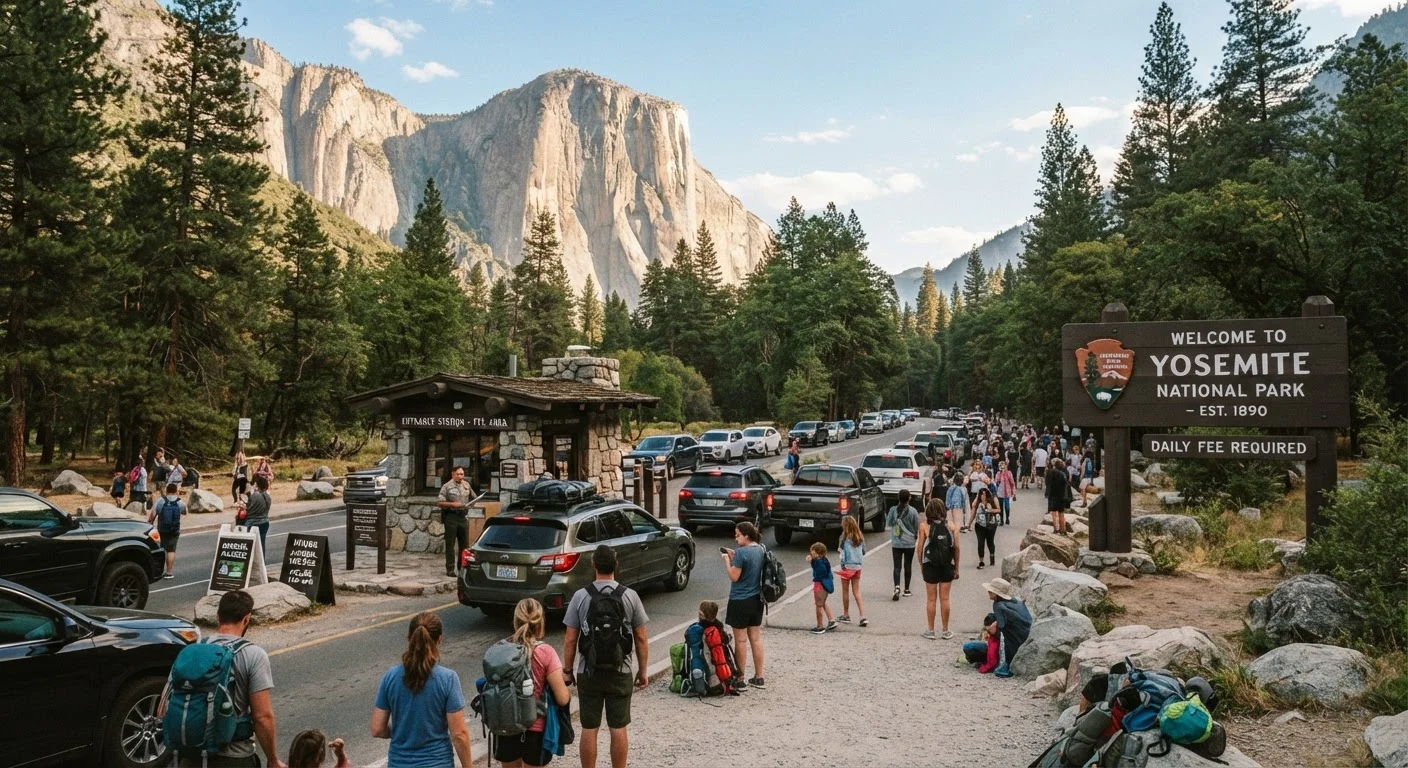
Many US national parks charge no per-person entrance fee but collect mandatory vehicle entry fees ranging from roughly $15 to $35 per car. Add timed-entry reservation fees introduced at high-traffic parks, shuttle systems that require separate passes, and overnight parking surcharges, and a "free" day hike can easily cost $50 or more before you leave the trailhead. Some parks also charge separately for boat launches, backcountry permits, and interpretive programs.
Before visiting any federal recreation area, check the official fee schedule and determine whether the America the Beautiful annual pass-which covers entrance and standard amenity fees at most federal lands-makes financial sense given your trip plans.
A vehicle entry fee of $35 is common at popular national parks, even when hiking itself is free.
Transportation to Remote or Outer-Urban Sites
Free attractions are often located outside city centers where transit doesn't reach. Driving means fuel plus parking; rideshares to suburban parks or coastal preserves routinely cost $25-$45 each way in major metro areas. A free beach visit 20 miles from your hotel can generate $60-$90 in round-trip transportation costs alone-more than many paid city attractions that are a short walk from transit.
Map the logistics before committing. If the site requires a car and you don't have one, factor in the true hourly or daily rental cost allocated to that single activity, not just the advertised base rate. See how ancillary transportation costs compound in the breakdown of overlooked trip expenses.
Rideshares to free suburban attractions can cost more than a paid museum in the city center.
Tipping at Pay-What-You-Will Walking Tours
"Free" walking tours operate on a tip-based model. Guides typically depend on gratuities for their income, and the implied expectation in most major cities runs between $15 and $25 per person for a two-hour tour. A family of four effectively pays $60-$100 for a tour marketed as free. That's not a complaint-these tours often deliver excellent value-but it needs to appear as a real line item in your daily activity budget, not zero.
Budget the tip before you join, decide on an amount that reflects what the experience is worth to you, and carry cash if the city's payment culture leans that way.
A 'free' walking tour realistically costs $15-$25 per person in expected gratuities.
Equipment, Gear, and Clothing Rental
Outdoor activities promoted as free-snorkeling spots, kayaking access points, cross-country ski trails-assume you arrive with the right gear. If you don't, on-site rentals close the gap, at a cost. Snorkel set rentals at popular reef sites commonly run $15-$30 per person; kayak rentals often start at $25-$50 per hour. Ski trail passes at Nordic centers that don't charge admission frequently require gear rentals that push total costs to $50-$80 per person.
Check gear requirements during trip planning, not on arrival. Renting from an off-site outfitter before reaching the trailhead or beach is almost always more economical than on-site rates.
On-site gear rentals at free outdoor sites routinely exceed $30 per person per visit.
Food and Drink Pricing Inside Destination Zones
Free cultural festivals, outdoor markets, and public events concentrate large crowds in contained areas-which creates premium food and beverage pricing. Vendors at major outdoor events frequently charge 40-80% more than comparable off-site restaurants. A family spending a full day at a free festival can easily spend $80-$120 on meals and drinks at prices they wouldn't accept elsewhere.
Packing food and water where the venue allows is the simplest mitigation. When that's not practical, identify restaurants or grocery options just outside the event perimeter before you arrive. This habit also applies to airport food costs-a pattern explored in the full breakdown of how budget travel add-ons accumulate.
Festival food vendors commonly charge 40-80% more than equivalent off-site options nearby.
Photography Permits and Drone Fees
An increasing number of scenic areas, heritage sites, and some national parks require separate commercial or recreational photography permits-particularly for drone operation. Recreational drone fees at federally managed lands can range from nominal permit costs to full closure of airspace. Some international heritage sites charge a camera fee on top of entry. If photography is a core part of your trip experience, verify permit requirements and associated costs through official site management contacts before you travel.
Drone permits and camera fees at scenic sites are a widely overlooked cost for photography-focused travelers.
Build a Realistic Activity Budget Before You Book
The fix is straightforward but requires a deliberate step most travelers skip: before labeling anything "free" in your budget, spend five minutes identifying every ancillary cost attached to it. Check the official site for parking fees, required permits, and gear rental rates. Look at transport options and factor in fuel, transit fare, or rideshare estimates. If it's a walking tour, decide in advance what you'll tip and treat that as a line item.
Use the 'Total Cost of Experience' Method
For every activity labeled 'free,' create a quick mental checklist: transportation, parking, gear, food, tips, and any permits. Add those figures to get the real cost before deciding whether it fits your daily budget. Applying this method consistently during trip planning-not on the day of the activity-prevents the cumulative overruns that characterize most blown travel budgets.
This kind of pre-trip audit pairs naturally with a broader savings check. The pre-purchase savings checklist is a useful companion for catching overlooked costs before they hit your card. For a wider view of what travelers routinely forget to budget, the full breakdown of hidden trip costs covers airport transfers, resort fees, visa charges, and tipping norms in one place.
The goal isn't to avoid free activities-most are genuinely worthwhile. It's to price them honestly so they don't quietly consume the budget you set aside for everything else.
This article is for general informational purposes. Prices, fees, and policies vary by destination and change over time. Always verify current costs through official sources before traveling.