

Key Takeaways
Vehicle Depreciation
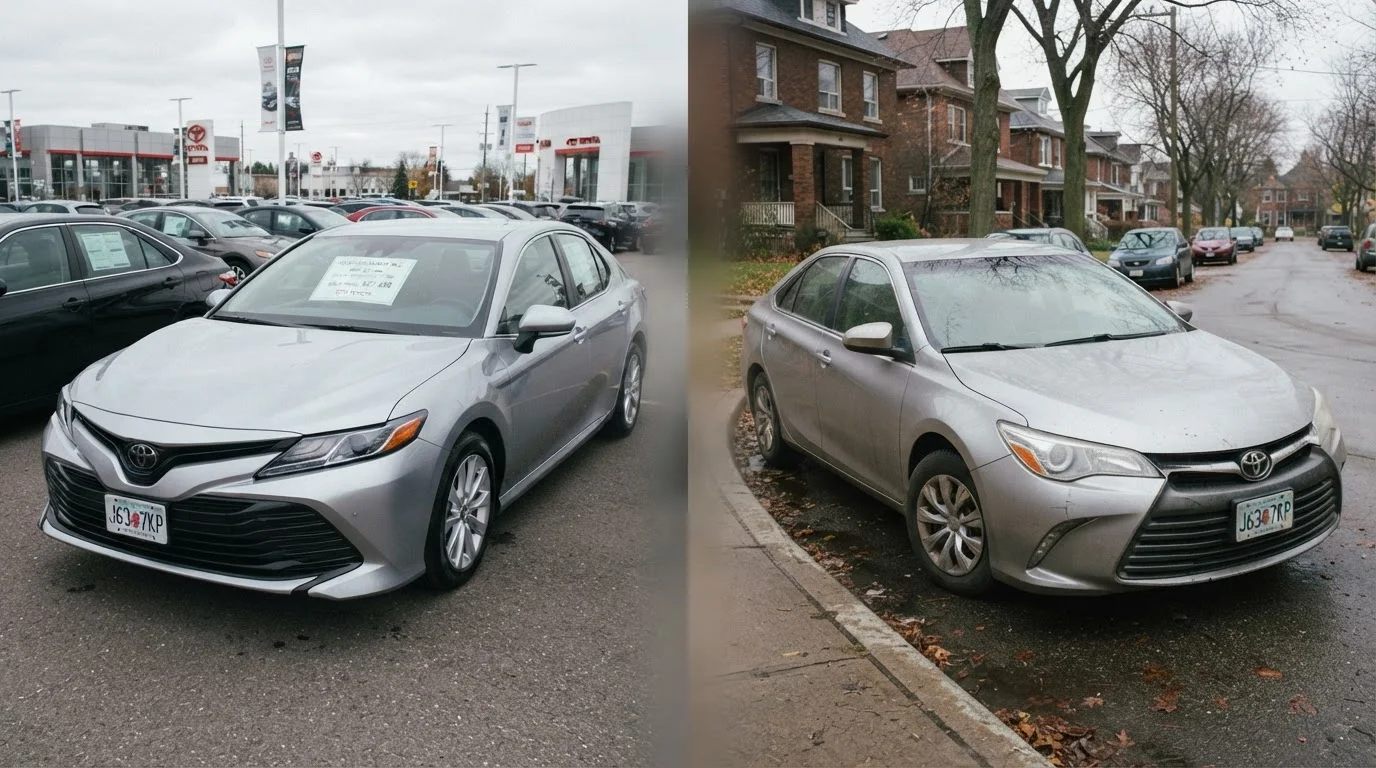
Depreciation is the loss in a vehicle's market value over time. Every car loses worth from the moment it's purchased, with the steepest drops occurring in the first few years of ownership. This lost value represents real money - it's what you can't recover when you eventually sell or trade in.
Depreciation is calculated as the difference between a vehicle's purchase price and its resale or trade-in value at any given point. It is a non-cash cost, meaning it doesn't show up on a monthly bill, which is why many owners underestimate it.
Why Depreciation Beats Fuel and Insurance as Your Real Cost
Most drivers track what they spend at the pump or pay monthly for insurance. Those costs feel real because they appear on statements. Depreciation doesn't - yet for the majority of US vehicle owners, it's the single largest ownership expense year over year.
According to data from AAA's annual Your Driving Costs report, depreciation has consistently accounted for the largest share of per-mile ownership costs for new vehicles - often exceeding fuel costs by a substantial margin. A vehicle that loses $4,000 in value annually is costing you more than $330 a month before you've paid for a drop of gas.
The reason it goes unnoticed: depreciation is a deferred loss. You don't receive a bill. Instead, the cost is revealed only when you go to sell or trade in the vehicle and discover how much of your original investment has evaporated. Understanding this mechanism is the first step to making smarter ownership decisions. See our annual car cost audit checklist to see how depreciation fits alongside your other ownership expenses.
~20%
Value lost in a new car's first year
Industry estimates commonly place first-year depreciation between 15% and 25% of the original purchase price for new vehicles.
~50%
Value lost by end of year three
Many new vehicles lose close to half their original value within the first three years, according to automotive valuation industry data.
#1
Largest annual ownership cost for new vehicle drivers
AAA's annual Your Driving Costs study has consistently ranked depreciation as the top per-mile cost for owners of new vehicles.
How the Depreciation Curve Actually Works
Depreciation doesn't happen at a flat rate. It follows a curve - steep at first, then gradually leveling off. Here's what that typically looks like:
- Year 1: A new car loses roughly 15%-25% of its value, partly because it immediately becomes a 'used' vehicle in the market's eyes.
- Years 2-3: Continued sharp drops, often totaling 40%-50% of the original price lost by the end of year three.
- Years 4-6: The rate of decline slows meaningfully. The vehicle still loses value, but less per year.
- Years 7+: Depreciation slows further, though it doesn't stop entirely until the vehicle reaches a stable floor value.
This curve has a direct implication for ownership strategy: the driver who buys a two- or three-year-old used vehicle avoids the worst of that early cliff while still getting years of reliable use. Conversely, the driver who trades in every two years repeatedly pays the steepest portion of that curve without ever reaching the flatter, lower-cost years.
What Accelerates or Slows Depreciation
Not all vehicles depreciate at the same pace, and several factors within a driver's control can influence the rate:
Factors that accelerate depreciation
- High mileage: Putting significantly more than the ~12,000-15,000 mile annual average on a vehicle depresses its resale value faster.
- Deferred maintenance: A vehicle with incomplete service records or visible neglect commands less at resale. Skipping routine maintenance adds up in repair bills and erodes resale value simultaneously.
- Accident history: A reported collision typically reduces resale value even after professional repair.
- Color and configuration: Unusual colors or poorly chosen option packages can narrow the buyer pool and suppress offers.
Factors that slow depreciation
- Strong reliability reputation: Vehicles with a documented history of longevity tend to hold value better because buyers are willing to pay a premium for lower risk.
- Consistent maintenance records: A complete service history is a verifiable signal of care that supports higher resale bids.
- Market demand: Trucks and certain SUVs have historically depreciated slower than sedans, though this shifts with fuel prices and consumer preferences.
Practical Ways to Reduce Depreciation's Impact on Your Budget
You can't stop depreciation - but you can reduce how much it costs you per year of use. Here's how ownership timing and habits make the difference:
Buy used, after the first cliff
Purchasing a vehicle that's two to four years old means someone else absorbed the steepest value loss. You still get years of reliable service at a fraction of the original depreciation exposure. Pair this with fuel-efficient driving habits and the total per-mile cost drops considerably.
Hold the vehicle longer
The longer you own a vehicle, the more years you spread the total depreciation across. A car that loses $15,000 in value over 10 years costs you $1,500 per year in depreciation. The same car traded in after three years costs $5,000 per year - more than three times as much for the same total loss.
Maintain it well
Protecting resale value through consistent routine maintenance is one of the few depreciation levers directly in your hands. A well-documented service history signals lower risk to future buyers and supports a stronger resale price.
Depreciation is invisible until the day you sell - but it's working against your wallet from day one. Building it into your ownership math upfront is how you make better decisions before you sign, not after. If you're just starting out, the full picture of new-driver costs is worth reviewing before committing to any vehicle.
Calculate Depreciation Before You Buy
Before committing to any vehicle, look up its estimated resale value at three and five years using publicly available valuation tools. Subtract that from the purchase price and divide by the years you plan to own it - that's your annual depreciation cost. Factoring this in upfront gives you a far more accurate picture of total ownership expense than the monthly payment alone.