

Key Takeaways
Repair Estimate
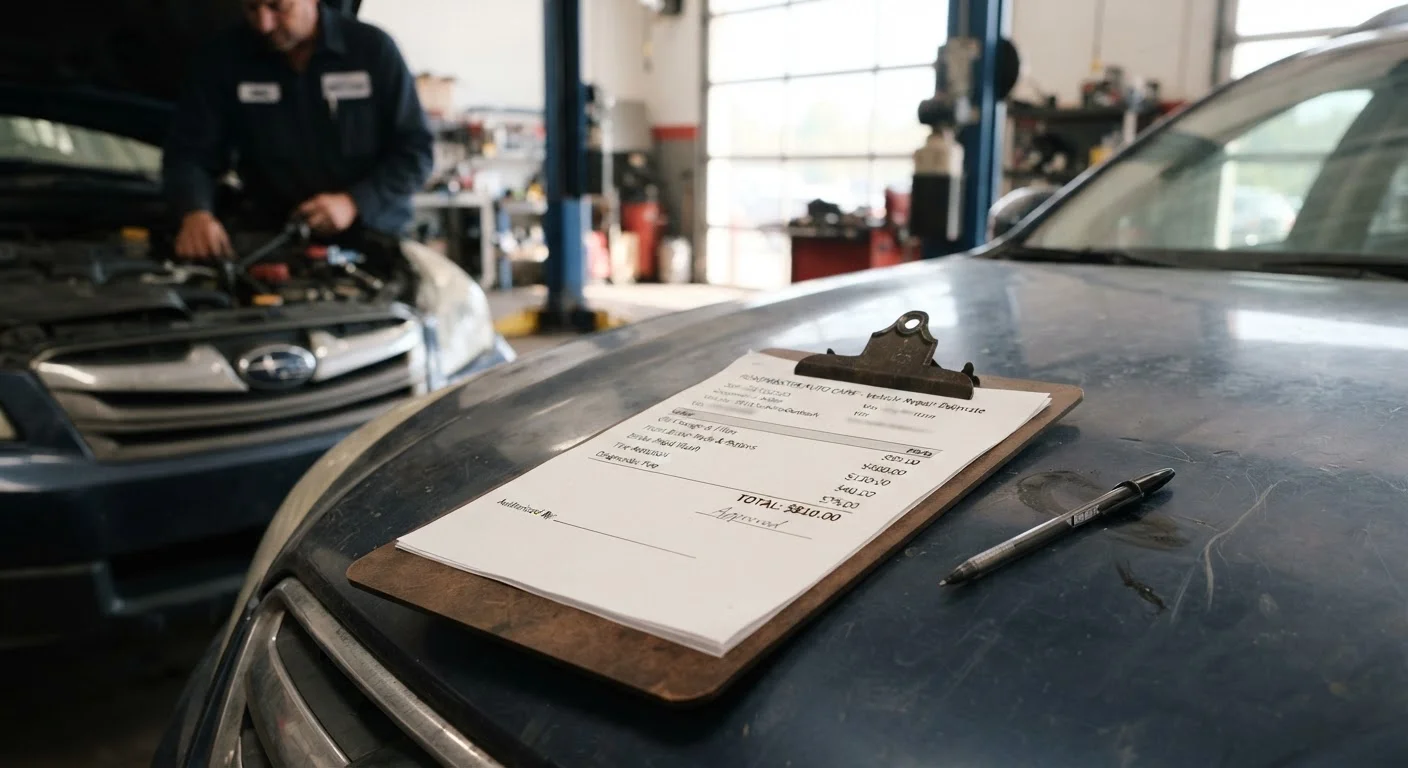
A repair estimate is an itemized document from a mechanic or shop that breaks down the anticipated cost of diagnosing and fixing your vehicle before any work begins. It typically lists labor charges, parts costs, and shop fees separately. You generally must authorize the estimate before the shop can proceed.
In most US states, repair shops are legally required to provide a written estimate and obtain your signature before exceeding it - often called a 'not-to-exceed' or authorization limit under state consumer protection law.
The Three Core Sections of Any Estimate
Nearly every repair estimate, whether from a dealership or an independent shop, is built from the same three components: labor, parts, and fees. Understanding each one gives you a framework for evaluating any job before you sign.
Labor is the cost of the mechanic's time. It is calculated by multiplying the shop's hourly rate by the number of hours a specific job is expected to take. That expected time comes from a published labor guide, not a stopwatch - meaning a flat 2.5-hour charge applies whether the job takes 90 minutes or three hours. Labor rates vary significantly by region and shop type; dealership rates are generally higher than independent shops.
Parts are listed at a marked-up price above the shop's wholesale cost. A markup of 20-50% above wholesale is common industry practice. You may see a choice between OEM (Original Equipment Manufacturer) parts and aftermarket alternatives - ask which category applies to each line item and what brand of aftermarket part the shop sources.
Fees include items like shop supplies, hazardous waste disposal, and sometimes a separate diagnostic charge. These should appear as explicit line items, not appear for the first time on your final bill.
For a deeper look at how these costs fit into your total vehicle budget, see the full breakdown of car ownership costs.
20-50%
Typical parts markup above wholesale
Industry practice recognized by the Automotive Service Association; the exact percentage varies by shop and part type.
$75-$175/hr
Common US shop labor rate range
Rates vary by region, shop type, and specialty; dealership rates typically fall at the higher end of this range.
What the Labor Hours Figure Actually Means
The labor hours line is the single most important number to scrutinize. Industry labor guides - published by companies like Chilton and Mitchell - assign a standard hour value to thousands of specific repair procedures. When a guide says a brake job takes 1.8 hours, the shop bills 1.8 hours regardless of how quickly (or slowly) the technician works.
This system is fair in principle, but it creates room for overcharging when a shop bills more hours than the guide suggests, or bundles overlapping tasks as separate jobs. For example, if replacing a water pump and a timing belt require the same teardown, charging full hours for both is considered double-billing - a recognized red flag in consumer protection guidance.
You can look up published labor times using free or low-cost online resources to cross-reference what you are being charged. If a quote seems significantly higher than the guide figure, it is reasonable to ask the shop how they arrived at the hour count.
Cross-Check Labor Hours Before You Sign
Several free and low-cost websites allow you to look up standard labor times for specific repairs by entering your vehicle's year, make, and model. Running a quick search before authorizing work takes about five minutes and gives you a reasonable benchmark for whether the shop's hour estimate is in line with industry norms.
Diagnostic Fees and What You Are Paying For
A diagnostic fee compensates the technician for the time spent identifying what is wrong with your vehicle - using scan tools, visual inspection, and test drives. This is legitimate skilled labor, and shops that do not charge for diagnostics typically fold the cost into the repair price instead.
Two things to clarify before authorizing any diagnostic: First, ask whether the fee will be applied toward the repair total if you approve the work. Second, ask what the fee covers - a basic OBD-II scan that reads a trouble code is different from a full mechanical diagnosis involving live data analysis.
If you decline the repair after a diagnostic, you typically still owe the diagnostic fee. That is the shop's reasonable compensation for the technician's time, even if you take the car elsewhere.
Questions to Ask Before You Sign
A few direct questions put you in a much stronger position before authorizing any work:
- Is this a written, itemized estimate? Verbal estimates offer little consumer protection. Get everything in writing.
- What is the labor rate, and how many hours are estimated per job? This lets you check the math yourself.
- Are parts OEM or aftermarket, and from which supplier? Quality among aftermarket parts varies significantly.
- Will you contact me before exceeding this estimate? Confirms they understand the authorization limit.
- Can I have my old parts returned after the job? A reasonable request that lets you verify the repair happened.
Knowing which repairs you can handle yourself also helps you evaluate whether a shop's quote is worth approving. See which maintenance tasks are DIY-friendly and which carry real risk before deciding.
Repair costs are one of the recurring expenses that compound quietly over time. Running an annual car cost audit can help you spot patterns and avoid overpaying year after year. And if you want to reduce how often you see unexpected repair bills, staying current with your vehicle's service intervals is the most reliable prevention - your maintenance schedule explained in plain terms is a useful starting point.