

Key Takeaways
Why Tires Wear Out Faster Than They Should
Most tires are engineered to last 50,000 to 70,000 miles under normal conditions. In practice, many sets wear out well short of that - not because of defects, but because of controllable habits and overlooked maintenance. The damage is cumulative and largely invisible until a tire is already compromised.
Understanding what accelerates wear puts you in a position to prevent it. The causes aren't exotic: they're pressure, heat, friction, and geometry - all of which drivers influence every time they get behind the wheel. Prematurely replaced tires are also one of the more avoidable expenses in vehicle ownership, which matters when you're trying to manage overall car costs and savings.
Driving on chronically underinflated tires.
Why it happens: Drivers often rely on the TPMS warning light as their signal to act, but that light only triggers after pressure has dropped substantially. Tires also lose pressure gradually due to temperature changes and normal permeation.
Skipping or delaying tire rotations.
Why it happens: Rotations feel optional compared to oil changes, and many drivers assume wear is uniform across all four tires. Front tires on front-wheel-drive vehicles wear significantly faster than rears, making this assumption costly.
Ignoring wheel alignment issues.
Why it happens: Misalignment often has no dramatic symptom - the vehicle may pull subtly to one side or the steering wheel may sit slightly off-center. Drivers adapt to these cues rather than investigating them.
Consistently braking hard and accelerating aggressively.
Why it happens: Driving habits developed in non-congested conditions often carry over to stop-and-go traffic. Hard stops and rapid acceleration feel normal but transfer enormous friction force directly to the tread surface.
Overloading the vehicle beyond its rated capacity.
Why it happens: Drivers frequently haul cargo, tow trailers, or carry multiple passengers without checking whether that load exceeds what the tires are rated to handle. The load index number on the tire sidewall is rarely consulted.
What to Watch For - and When to Act
Catching tire wear early requires knowing what to look for. Run your hand across the tread surface: if it feels scalloped, feathered on one edge, or smoother on one side than the other, you already have an uneven wear pattern that needs investigation. These patterns point to specific causes - alignment problems, inflation issues, or suspension wear - and can inform exactly which correction is needed.
Don't Rely Solely on TPMS Alerts
Your vehicle's Tire Pressure Monitoring System (TPMS) typically triggers only when pressure drops 25% or more below the recommended level - by which point significant wear stress has already occurred. Tires lose roughly 1 PSI per month naturally, so monthly manual checks with a gauge are far more protective than waiting for a dashboard warning.
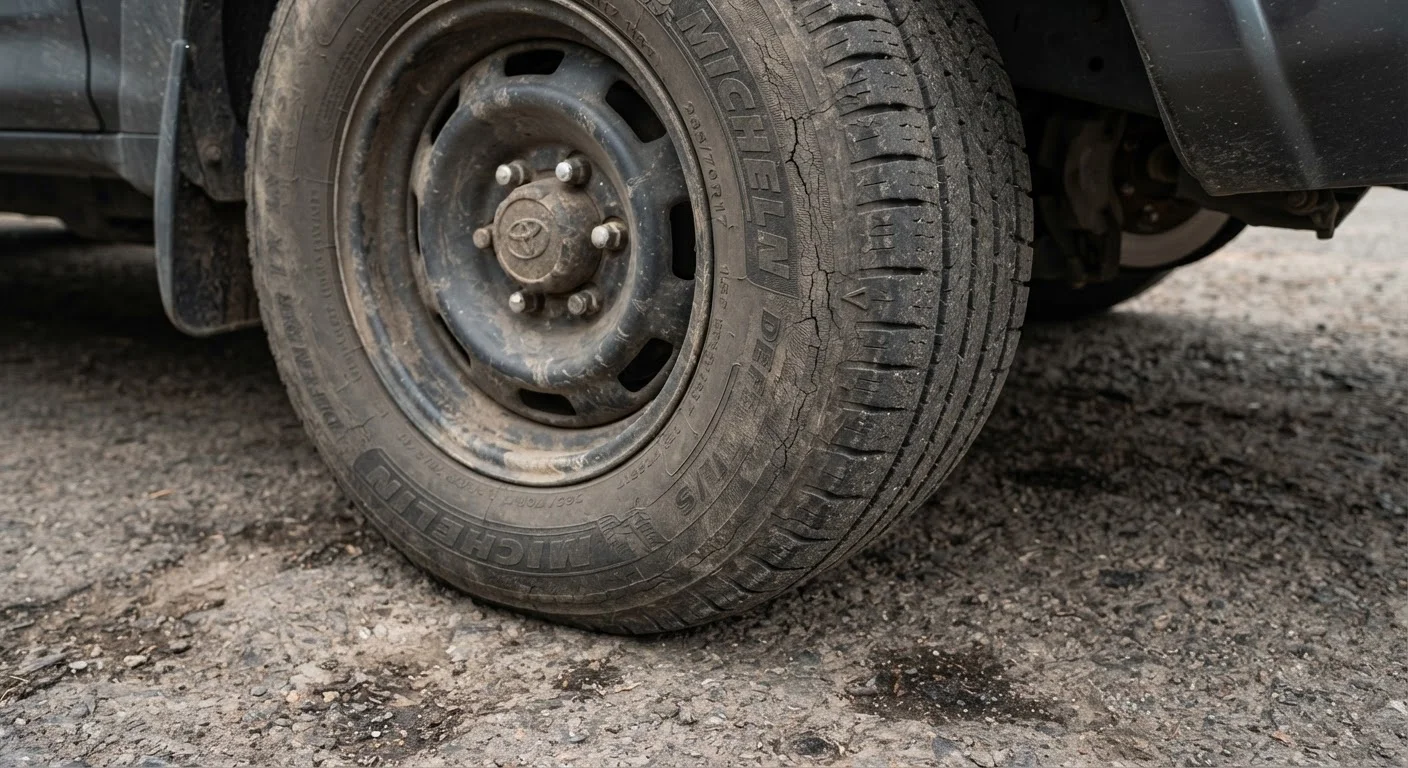
Also inspect the sidewalls periodically for cracking, bulges, or bubbles. Sidewall damage is not repairable, and a bulge indicates internal structural failure that can lead to a blowout. Underinflation is the leading cause of sidewall stress - worn and damaged tires from low pressure can compromise vehicle handling in ways that connect directly to loss of control on wet or slippery roads.
Worn Tires Are a Traction and Safety Risk
Tread depth below 2/32 of an inch is the legal minimum in most US states, but stopping distances degrade significantly before you reach that threshold. A tire that looks okay to the eye may already be compromised in wet conditions. Use a tread depth gauge or the penny test regularly - don't wait for a warning light or visible damage.
For drivers who want a structured maintenance approach, it helps to understand how rotation, balancing, and alignment each contribute differently to tire longevity. These are often confused or conflated - our explainer on the three services clarifies exactly what each one does and when your vehicle needs it. Tire care also fits into the broader pattern of maintenance tasks that get delayed until real damage occurs - addressing small issues early is almost always cheaper than the failure they prevent.