

Key Takeaways
Why Instinct Fails You at the Worst Moment
When traction suddenly disappears, the brain defaults to panic responses: stomp the brakes, yank the wheel, freeze. Almost every one of those instincts makes a skid or hydroplaning event more dangerous, not less. The reason is simple - these situations unfold in one to three seconds, faster than conscious reasoning can catch up. What saves you is a pre-loaded, practiced response.
This guide breaks down what's actually happening in three common loss-of-control scenarios - rear skids, front-wheel (understeer) skids, and hydroplaning - and gives you the correct technique for each. Read it, visualize it, and revisit it. Mental rehearsal is a legitimate preparation tool; it narrows the gap between what you know intellectually and what your hands actually do.
Before any of this applies, your vehicle and habits need to be in order. A pre-trip safety check that catches a low tire or worn wipers before you leave dramatically reduces the conditions that lead to loss of control in the first place.
These Techniques Require Your Tires to Be Roadworthy
No recovery technique fully compensates for bald or severely underinflated tires. Tires with insufficient tread depth cannot channel water regardless of how correctly you respond. Check tread depth using the penny or quarter test regularly, and replace tires before they reach the wear-indicator bars. Proper inflation - per your door jamb sticker, not the tire sidewall - is equally critical.
Understanding the Three Scenarios
Rear-Wheel Skid (Oversteer)
The back of the car slides outward, often in a corner or during hard acceleration on a slippery surface. The car begins to spin. The correct response is to steer in the direction the rear is sliding - commonly called "steering into the skid" - while easing off the accelerator smoothly. Do not brake. The goal is to bring the rear back in line with the front.
Front-Wheel Skid (Understeer)
The front tires lose grip and the car continues straight despite turning the wheel - common in front-wheel-drive vehicles entering a corner too fast. Ease off the accelerator to transfer weight forward and restore front-tire grip. Do not add more steering input; it won't help and can delay recovery. Let the tires regain traction, then steer.
Hydroplaning
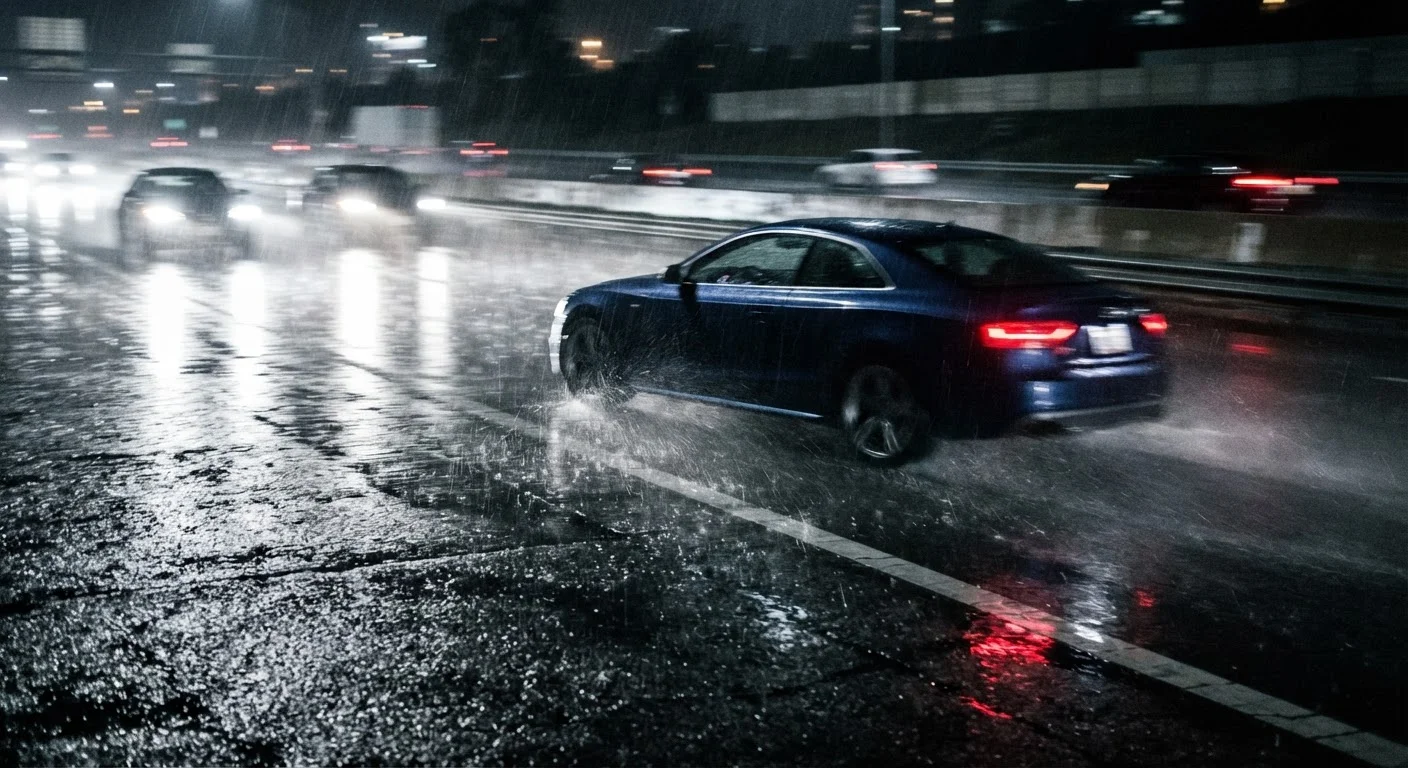
A layer of water builds between the tires and road surface, lifting contact entirely. Steering becomes light or unresponsive. Do not brake hard or make sudden steering inputs. Ease off the accelerator gradually, keep the wheel straight, and allow the tires to push through the water naturally as speed drops. Hard braking on a hydroplaning vehicle triggers a skid on top of the hydroplane - a compounding problem.
Tire tread depth and inflation are the primary variables in hydroplaning risk. Tires at or near their wear indicators channel water far less effectively. Speed matters equally - hydroplaning risk increases significantly above 45 mph on a wet surface.
Practice the Response Before You Need It
Find an empty, wet parking lot and practice gentle threshold braking and steering inputs at low speed to understand how your specific vehicle responds. Many community driving programs and advanced driving schools offer wet-skid-pad exercises. Even one session builds muscle memory that is genuinely difficult to acquire from reading alone.
Step-by-Step: Recovering Control
Follow these steps in sequence based on the scenario you're in. Each response must be calm and deliberate - abrupt inputs are as dangerous as no input at all.
Identify what's happening before you react
Take one moment to register whether you're in a rear skid, front skid, or hydroplane. The sensation is different: a rear skid feels like the back swinging out; a front skid feels like the car pushing wide despite steering; hydroplaning feels like sudden lightness and floating in the wheel. Acting on the wrong diagnosis - treating a front skid like a rear skid - will make it worse.
Ease off the accelerator - smoothly
In all three scenarios, lifting off the gas is almost always the right first move. Do it gradually, not as a snap lift. Abrupt throttle changes shift weight suddenly and can trigger a secondary loss of traction. Smooth deceleration lets the tires begin to recover grip without adding a new problem.
Steer to where you want the car to go
In a rear skid, steer toward the direction the rear is sliding - if the rear swings right, steer right. As the car straightens, return the wheel toward center. In a front skid, hold your steering input steady and let traction return before turning more. During hydroplaning, keep the wheel as straight as possible. In every case, look at where you want to go - your hands will follow your eyes.
Apply brakes correctly if needed
If you need to slow down after stabilizing, and your vehicle has ABS (Anti-lock Braking System - standard on all US vehicles manufactured after 2012), apply firm, steady pressure and hold it. ABS will pulse the brakes automatically to prevent wheel lockup. Do not pump the pedal. If your vehicle does not have ABS, apply threshold braking - firm pressure just short of lockup - and ease off if you feel wheels locking.
Recover to a safe position and reassess
Once control is restored, reduce your speed and increase following distance significantly. If road conditions caused one loss-of-traction event, they will cause another. Pull off the road when it is safe to do so if you're shaken, if visibility is dangerously low, or if you want to check the vehicle. Driving stressed or rattled raises accident risk substantially.
If you find yourself regularly relying on vehicle safety systems to catch these events, it may be worth considering whether overconfidence is shaping your driving habits in ways you haven't noticed.