

| Red light urgency | Stop driving as soon as safely possible |
| Amber light urgency | Schedule service within days, not weeks |
| OBD-II standard adopted | Required on all US vehicles since 1996 (US EPA / CARB regulatory requirement) |
| TPMS required since | 2008 (all new US passenger vehicles) (NHTSA FMVSS No. 138) |
| Flashing check engine light | Active misfire - reduce speed, seek service immediately |
| Where to find your light definitions | Owner's manual - usually indexed by symbol |
The Color Code: What Urgency Looks Like
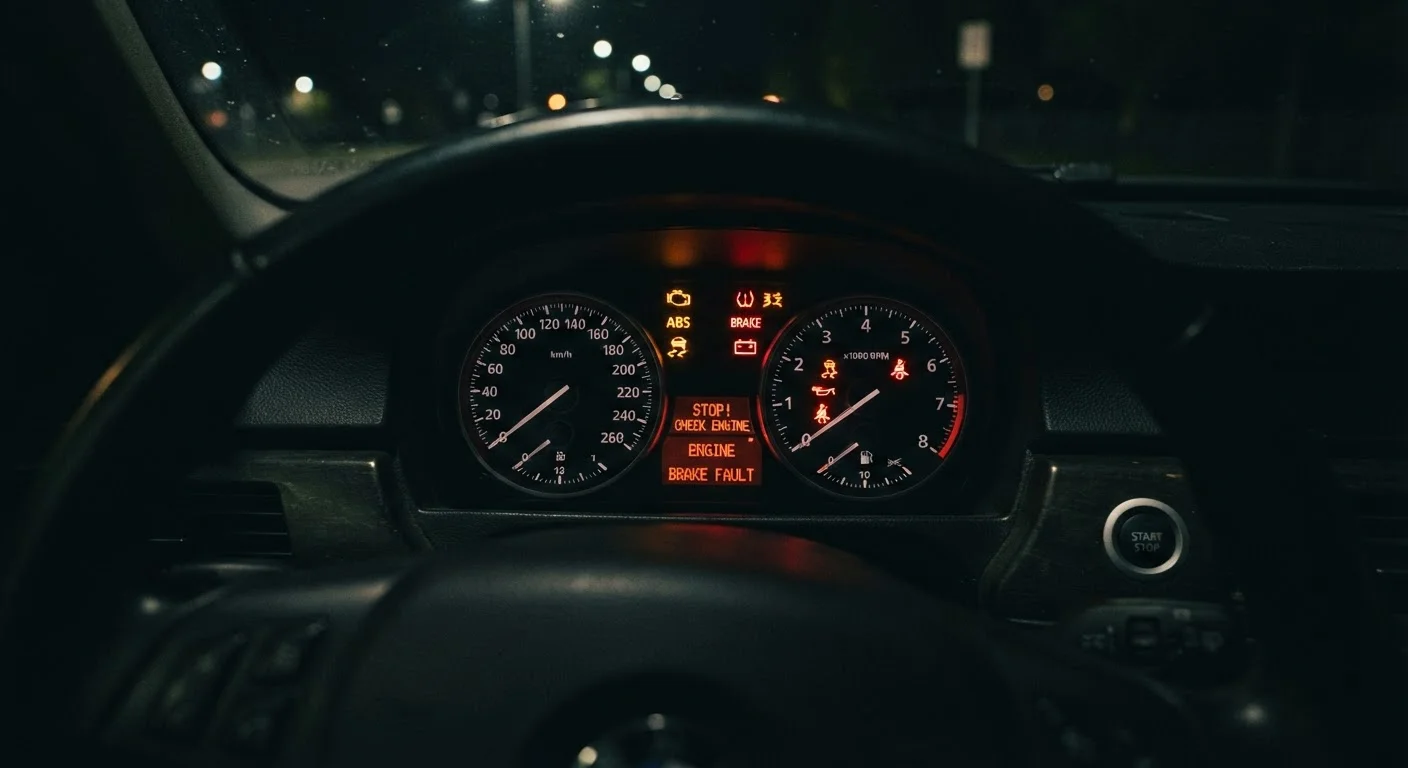
Before diving into individual symbols, understand the universal color system most modern vehicles use. Red lights signal an immediate safety or mechanical threat - pull over safely and stop driving if one appears. Amber or yellow lights indicate something needs attention soon but typically isn't a stop-now emergency. Green and blue lights are status indicators, not warnings - they confirm that a system (like high beams or turn signals) is active.
This three-tier logic applies across nearly every US passenger vehicle manufactured in the past two decades. When in doubt, treat any unfamiliar light as urgent until you've identified it in your owner's manual or with a qualified mechanic.
| Red light urgency | Stop driving as soon as safely possible |
| Amber light urgency | Schedule service within days, not weeks |
| OBD-II standard adopted | Required on all US vehicles since 1996 (US EPA / CARB regulatory requirement) |
| TPMS required since | 2008 (all new US passenger vehicles) (NHTSA FMVSS No. 138) |
| Flashing check engine light | Active misfire - reduce speed, seek service immediately |
| Where to find your light definitions | Owner's manual - usually indexed by symbol |
Red Lights: Stop and Act Now
These lights indicate conditions that can cause engine damage, brake failure, or unsafe operation if ignored.
- Oil Pressure (oil can icon): Engine oil pressure has dropped critically. Continuing to drive can cause permanent engine damage within minutes. Stop safely, turn off the engine, check oil level - but do not restart until the cause is diagnosed.
- Engine Temperature (thermometer in liquid): Your engine is overheating. Pull over, turn off the engine, and let it cool. Never open the radiator cap while the engine is hot. Causes range from low coolant to a failed water pump.
- Battery / Charging System (battery icon): The electrical system isn't charging properly. Your car may continue running temporarily on battery reserve, but systems will fail progressively. Head to a service center promptly.
- Brake System (exclamation in circle or BRAKE): This can indicate low brake fluid, a brake system fault, or - if your parking brake is engaged - that you forgot to release it. Check the parking brake first; if it's disengaged and the light stays on, have the brakes inspected immediately.
For a broader look at what regular service intervals can prevent, see your car's maintenance schedule explained.
Amber Lights: Schedule Service Soon
Amber lights don't demand you stop immediately, but ignoring them tends to turn small repairs into expensive ones.
OBD-II
On-Board Diagnostics II - the standardized system used in US vehicles since 1996 to monitor engine and emissions performance. When a fault is detected, it stores a diagnostic trouble code (DTC) that a scanner can read.
TPMS
Tire Pressure Monitoring System. A sensor-based system required on all US passenger vehicles since 2008 that alerts the driver when tire pressure drops 25% or more below the recommended level.
Malfunction Indicator Lamp (MIL)
The technical term for the check engine light. It illuminates when the vehicle's OBD-II system detects a fault in the engine, transmission, or emissions system.
Diagnostic Trouble Code (DTC)
A standardized alphanumeric code stored by the OBD-II system when a fault is detected. A mechanic or scan tool reads these codes to identify the source of a warning light.
- Check Engine (engine outline icon): One of the most misunderstood lights on the dashboard. It can indicate anything from a loose gas cap to a misfiring engine. A solid amber light means schedule diagnostics soon; a flashing check engine light means a serious misfire is occurring - reduce speed and get to a mechanic quickly.
- Tire Pressure (TPMS - flat tire with exclamation): One or more tires are significantly under- or over-inflated. Check all four tires with a gauge. Proper inflation improves fuel economy, handling, and tire life.
- Traction Control / Stability Control (car with skid lines): If this light flashes while driving on slippery roads, the system is actively working - that's normal. A steady light means the system has been manually disabled or has a fault.
- Transmission Temperature (thermometer with gear): Transmission fluid is overheating. Reduce load (stop towing if applicable) and allow the vehicle to cool. Continuing to drive risks transmission damage.
Wondering which of these you can address yourself? Some maintenance tasks are safe DIY projects - but others genuinely require a professional.
Common Misconceptions and What to Do Next
Many drivers assume the check engine light always signals catastrophe, or ignore the oil pressure light because the car "seems fine." Neither approach serves you well. The check engine light covers dozens of diagnostic trouble codes - a $20-$50 code scan at most auto parts stores (or free at some) tells you exactly what triggered it. The oil pressure light, on the other hand, is non-negotiable: drive on it and you may destroy an engine worth thousands of dollars.
If a warning light appears and then disappears on its own, don't assume the problem resolved itself. Many faults are intermittent; the underlying cause is still present. Note which light appeared and mention it at your next service appointment.
For ongoing maintenance that reduces how often these lights appear in the first place, the Car Maintenance hub covers practical guides for keeping your vehicle running reliably. And if you're evaluating a used vehicle, reading a vehicle history report can reveal whether warning-light-related repairs were properly addressed by previous owners.
This article provides general educational information about dashboard warning lights and is not a substitute for diagnosis by a qualified mechanic. Always consult your vehicle's owner's manual and a licensed automotive professional for issues specific to your vehicle.