

Key Takeaways
The Stress Response
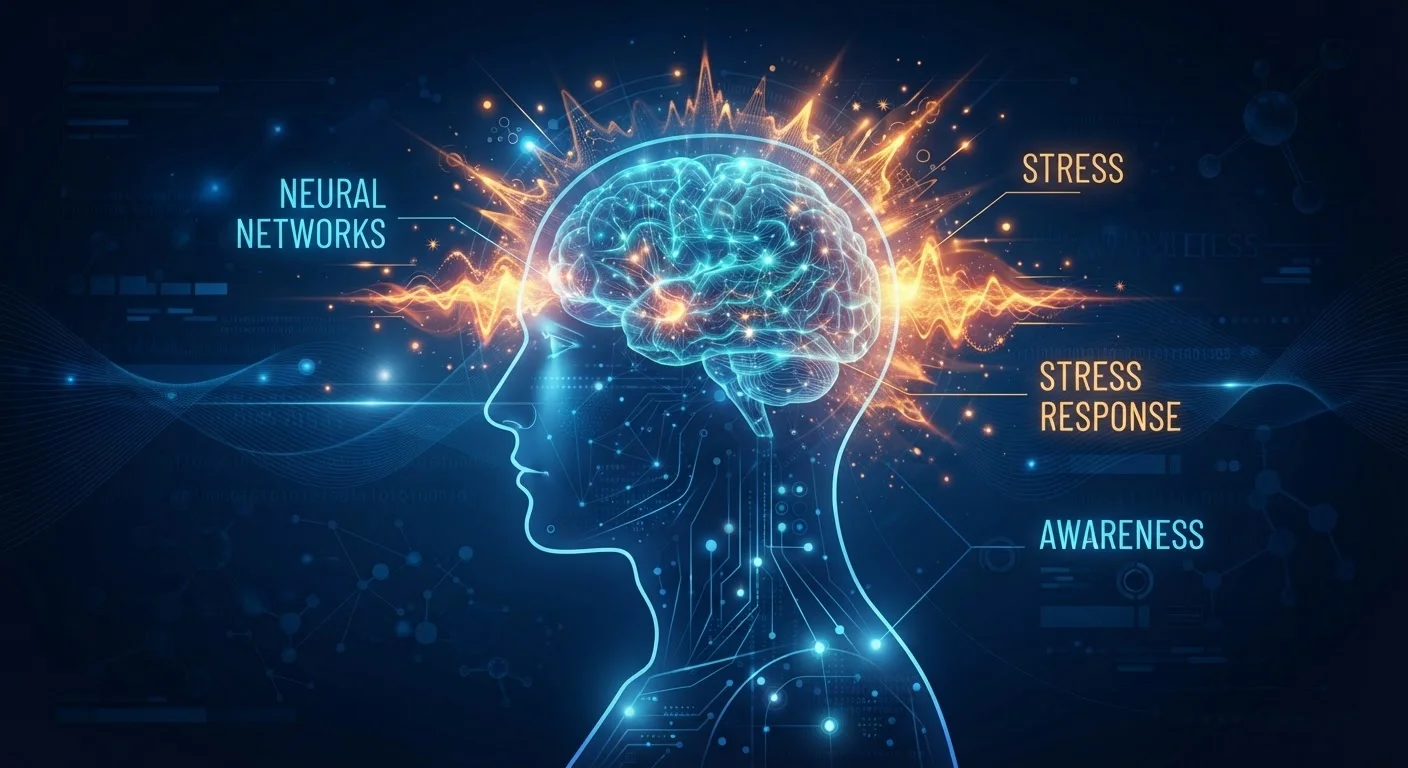
The stress response is your body's automatic reaction to a perceived threat or demand - physical, emotional, or psychological. It involves a rapid release of hormones that prime you to act, temporarily altering everything from your heart rate to your immune function. While this system evolved to protect you, chronic activation can erode health over time.
The stress response is mediated primarily by the hypothalamic-pituitary-adrenal (HPA) axis and the sympathetic nervous system, coordinating hormonal and neural signals throughout the body.
The Alarm System: What Happens in the First Few Seconds
The moment your brain registers a threat - a near-miss car accident, a difficult email, a looming deadline - a region called the amygdala fires an alarm. Within milliseconds, the sympathetic nervous system releases adrenaline (epinephrine), producing the familiar surge of a racing heart, quickened breath, and heightened alertness. Blood is redirected away from digestion and toward your muscles. Your pupils dilate to sharpen vision.
This is the fight-or-flight response - an evolutionary mechanism that kept early humans alive. It is fast, automatic, and remarkably well-coordinated. Seconds later, the hypothalamic-pituitary-adrenal (HPA) axis activates, culminating in the release of cortisol from the adrenal glands. Cortisol sustains the response: it mobilizes glucose for energy, sharpens short-term memory, and suppresses functions your body considers non-urgent in a crisis, including digestion and reproduction.
In small, acute doses, this system is protective - even performance-enhancing. The problem emerges when it never fully switches off.
77%
Adults reporting physical symptoms of stress
According to survey data published by the American Psychological Association, a large majority of US adults experience physical manifestations of stress such as fatigue, headache, or upset stomach.
50%
Increased infection risk under chronic stress
Research by Sheldon Cohen and colleagues, published in peer-reviewed journals, found that people under prolonged psychological stress showed substantially higher susceptibility to common respiratory viruses in controlled studies.
~20%
Hippocampal volume reduction in chronic stress
Neuroimaging studies have observed measurable reductions in hippocampal gray matter in individuals with prolonged stress-related conditions, though exact figures vary across study populations and methodologies.
What Chronic Stress Does to Your Brain
Sustained cortisol elevation has measurable effects on brain structure. Research consistently shows that prolonged stress is associated with reduced volume in the hippocampus - the region critical for forming and consolidating memories. This helps explain why chronically stressed people often describe feeling forgetful or mentally foggy. Our article on how memory works explores how encoding and retrieval can be disrupted by this kind of neurological stress.
Chronic stress also weakens the prefrontal cortex - the area governing rational thinking, impulse control, and decision-making - while amplifying amygdala reactivity. In practical terms: you become more reactive, less patient, and find it harder to think clearly under pressure. This biological shift is also closely tied to how anxiety cycles develop and persist.
“The brain is not just a receiver of stress signals - it is actively remodeled by them. Understanding this plasticity is both a warning and an opportunity: the same brain that is changed by chronic stress can be changed back by recovery.”
— Bruce McEwen, Neuroendocrinologist, Rockefeller University (research on allostatic load and brain stress responses)
Effects on the Body: Immunity, Sleep, and the Heart
Cortisol is a potent anti-inflammatory - in the short term. But when cortisol remains elevated chronically, immune cells become desensitized to its signals, paradoxically increasing systemic inflammation. This low-grade inflammatory state is implicated in conditions ranging from frequent colds to more serious cardiovascular concerns.
Sleep is another major casualty. Cortisol follows a natural daily rhythm, peaking in the morning and declining at night to allow sleep onset. Chronic stress disrupts this curve, keeping cortisol elevated in the evening. The result: difficulty falling asleep, lighter sleep, and waking during the night. Because sleep deprivation then raises cortisol the following day, a self-reinforcing loop forms. The relationship between sleep and mental health is bidirectional in ways most people underestimate.
Cardiovascular effects include persistently elevated blood pressure, increased heart rate variability, and higher long-term risk of hypertension - all well-documented in population research. Even driving while fatigued from stress-related poor sleep carries measurable safety risks.
Building Resilience: What the Evidence Supports
Understanding your stress response isn't just academic - it's the foundation of managing it. Several strategies have consistent research support for reducing the burden of chronic stress:
- Physical activity lowers baseline cortisol and raises endorphins. Our overview of exercise and mental health examines exactly what the evidence shows and where it's still evolving.
- Sleep hygiene - consistent sleep and wake times, reduced screen exposure before bed - helps restore the natural cortisol curve.
- Social connection activates the parasympathetic nervous system, the biological counterweight to fight-or-flight.
- Mindfulness and breathing practices have demonstrated effects on HPA axis activity in controlled studies, though effect sizes vary widely by individual and practice type.
None of these are quick fixes, and what works varies by person. If stress feels unmanageable, frequent, or is affecting your daily functioning, consulting a qualified mental health professional is the most evidence-based step you can take. For a broader framework, see our complete mental wellness resource.
Recognize Your Early Stress Signals
Stress often shows up in the body before it registers consciously - tight shoulders, shallow breathing, or a clenched jaw are common early indicators. Noticing these signals early gives you more options for response. Taking a few slow, deliberate breaths activates the parasympathetic nervous system and can help interrupt the escalation cycle.
This article is for general informational and educational purposes only and is not a substitute for professional medical or mental health advice. Always consult a qualified healthcare provider regarding any health concerns or before making changes to your health routine.