

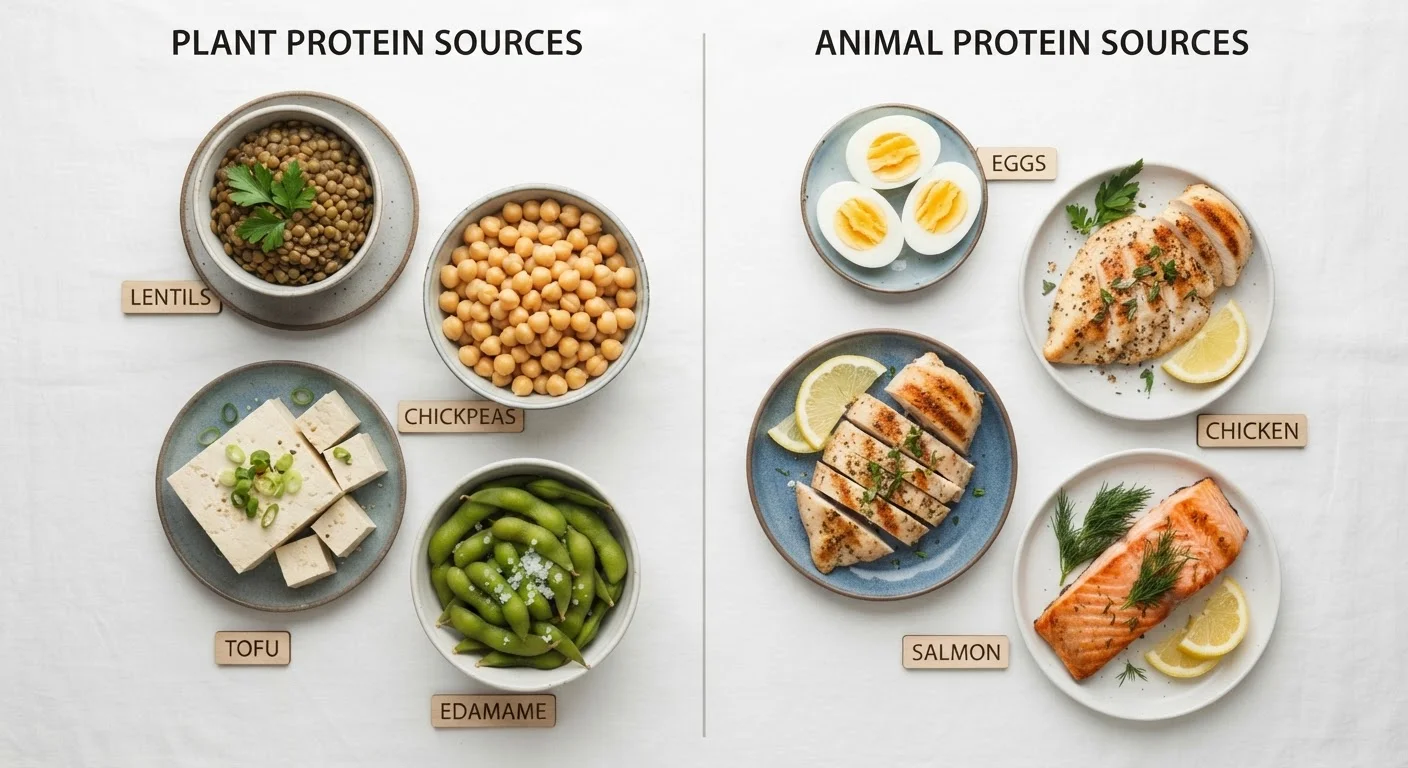
Key Takeaways
Option A
Plant Protein
The fiber-rich, environmentally lighter choice.
Best for: People seeking to increase dietary variety, reduce saturated fat intake, or shift toward more plant-forward eating patterns.
Option B
Animal Protein
The complete, highly bioavailable protein benchmark.
Best for: Those prioritizing amino acid completeness and high digestibility, particularly during periods of higher physiological demand.
If you follow a fully plant-based or vegan diet
Plant Protein
A well-planned diet using diverse legumes, grains, nuts, and seeds can meet protein and amino acid requirements-though attention to vitamin B12 and certain minerals is essential. Professional guidance is recommended.
If digestibility and amino acid completeness are your primary concerns
Animal Protein
Animal proteins score consistently high on digestibility indices and provide all essential amino acids without requiring strategic food combining.
If you want to support heart health and increase fiber intake
Plant Protein
Legume-based proteins bring dietary fiber and are naturally lower in saturated fat, attributes linked to cardiovascular benefit in population research.
If you want flexibility without committing to either camp
Plant Protein
A flexitarian approach-emphasizing plant proteins while including modest amounts of animal sources-is supported by nutritional research as a practical, balanced strategy.
If you have elevated protein needs due to age, recovery, or clinical guidance
Animal Protein
Higher bioavailability and complete amino acid profiles make animal proteins reliable in contexts where protein utilization efficiency matters most. Always follow your clinician's guidance.
What 'Complete' Actually Means
Protein is not a single nutrient-it's a category made up of amino acids, nine of which the human body cannot synthesize on its own. These are called essential amino acids, and dietary protein must supply them.
Animal proteins-meat, poultry, fish, eggs, and dairy-contain all nine essential amino acids in proportions that closely match human needs. Nutritionists call these complete proteins. Most plant proteins tell a different story. Grains tend to be low in lysine; legumes are limited in methionine. This doesn't make plant proteins inadequate-it means variety and planning matter.
The concept of complementary proteins resolves this gap. Eating rice and beans, for example, supplies the amino acids each source lacks individually. Importantly, current evidence suggests these combinations don't need to happen within the same meal-meeting needs across the day is sufficient, according to mainstream dietetic guidance.
| Criterion | Plant Protein | Animal Protein |
|---|---|---|
| Amino acid completeness | Usually incomplete (soy is an exception) | Complete in all sources |
| Digestibility (DIAAS) | Generally lower; varies by source | Generally higher across sources |
| Fiber content | Present in whole food sources | Absent |
| Saturated fat | Typically low | Variable; higher in red/processed meat |
| Vitamin B12 | Not naturally present | Reliably present |
| Heme iron | Absent (non-heme iron only) | Present in meat sources |
| Omega-3 (EPA/DHA) | Minimal (ALA only in most sources) | Present in fatty fish |
| Environmental footprint | Generally lower land and water use | Generally higher, varies by source |
Digestibility: How Much Your Body Actually Uses
Even if a food is rich in protein on paper, what matters nutritionally is how much the body can absorb and use. Scientists measure this using the Digestible Indispensable Amino Acid Score (DIAAS), which the Food and Agriculture Organization recommends as the current standard.
Animal proteins-particularly eggs, dairy, and meat-score consistently high on DIAAS, meaning the body absorbs and utilizes a high proportion of what's consumed. Many plant proteins, by contrast, score lower; factors like fiber content and naturally occurring compounds called antinutrients (phytates, lectins) can reduce absorption. Cooking, soaking, and fermentation all meaningfully improve plant protein digestibility.
~74%
DIAAS score for cooked lentils
Compared to scores above 100% for eggs and whey, illustrating the digestibility gap between plant and animal sources per FAO methodology.
~1.8x
Heme vs. non-heme iron absorption advantage
Research indicates heme iron from animal sources is absorbed at roughly 15-35%, while non-heme iron from plants absorbs at 2-20%, depending on dietary context.
10-12%
Estimated US adults meeting fiber recommendations
According to dietary intake data cited by the Dietary Guidelines Advisory Committee, most Americans fall well short of recommended fiber intake-an area where plant proteins hold a clear advantage.
This digestibility gap is real but not insurmountable. Eating slightly larger quantities of plant protein, or choosing higher-scoring plant sources like soy and pea protein, can compensate in practice. For context on how processing affects nutrient availability across food categories, see our comparison of whole and refined grains.
Nutritional Co-Passengers: What Else Comes Along
Protein rarely travels alone. The surrounding nutrients in each source meaningfully shape its health impact.
Animal proteins supply heme iron (absorbed more readily than non-heme iron), vitamin B12 (found almost exclusively in animal foods), zinc, and preformed vitamin A in some sources. Fatty fish add omega-3 fatty acids EPA and DHA. These are nutrients many people struggle to get adequately from plants alone.
Plant proteins bring dietary fiber, a range of phytonutrients, and are typically lower in saturated fat. Legumes in particular deliver soluble fiber associated with improved cholesterol profiles in clinical research. They also add volume and satiety relative to caloric density-a practical benefit for many eating patterns.
Neither package is universally superior. People eating primarily plant proteins need to monitor B12, calcium, iodine, and long-chain omega-3 status. Those eating predominantly animal proteins benefit from actively incorporating fiber-rich plant foods. This article is for general informational purposes only and is not a substitute for personalized medical or nutritional advice. Consult a qualified healthcare professional for guidance suited to your individual circumstances.
Putting It Together: What the Evidence Actually Supports
Large-scale nutritional research consistently finds that overall dietary pattern predicts health outcomes more reliably than any single food or nutrient. Both plant-forward and omnivorous diets can support good health when thoughtfully constructed.
The American and British Dietetic Associations recognize that well-planned plant-based diets-including vegan diets-can meet nutritional needs across life stages, while noting that attention to specific nutrients is essential. This framing reflects evidence, not ideology.
For most people, the practical takeaway is diversity: incorporating a range of protein sources-legumes, whole grains, nuts, seeds, and modest amounts of animal products where preferred-covers nutritional bases without requiring rigid dietary labels. The comparison is less about which source 'wins' and more about understanding what each contributes so you can make informed, personalized choices.
Special Populations Need Tailored Guidance
Protein needs and the ability to meet them from specific dietary sources can vary significantly for pregnant individuals, older adults, children, and people managing chronic conditions. General comparisons like this one cannot substitute for individualized assessment. Always consult a registered dietitian or your healthcare provider before making significant dietary changes, particularly if you belong to a higher-needs group.