

Health & Wellness

Weekly Eating Audit: A Nutrition Checklist for Everyday Decisions

Share
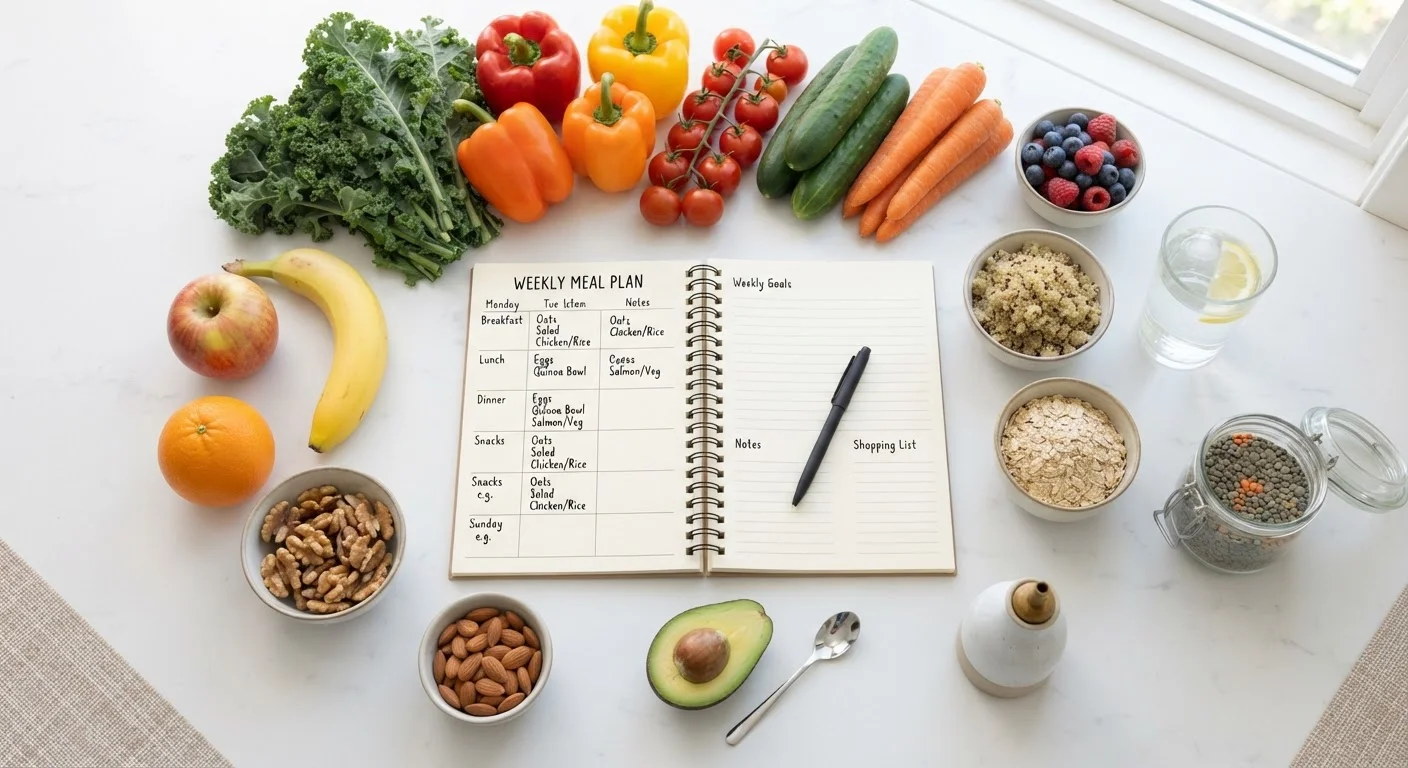
Weekly meal planning journal surrounded by colorful fresh vegetables, fruits, and whole grains on a white counter.

Key Takeaways

A weekly audit reveals eating patterns that daily habits can obscure.
Balance, variety, and hydration are the three pillars most people underestimate.
You don't need a perfect week—you need an honest one to make real progress.
Small, consistent adjustments tend to outperform sweeping dietary overhauls.
This checklist is general education, not a substitute for professional nutrition guidance.
15–30 min

Summary

22 items · 15–30 minutes

Why a Weekly Audit Beats Daily Food Tracking

Daily food tracking can feel relentless and, for many people, counterproductive. A weekly review offers a wider lens—one that captures patterns rather than individual slip-ups. Did you eat vegetables on most days, or mostly just on the weekend? Were your proteins varied, or have you defaulted to the same two sources all week? These are the questions that actually shape long-term dietary quality.

Think of this checklist the way you might approach a monthly budget audit: you're not judging every transaction—you're looking for drift, blind spots, and easy wins. The goal is honest awareness, not perfection.

Work through the groups below at the end of each week. A few minutes of reflection now can inform smarter choices in the days ahead. For deeper context on structuring individual meals, see our guide to building a balanced plate.

This article provides general nutrition education and is not a substitute for personalized advice from a registered dietitian or other qualified healthcare professional.

Food Variety & Color

Eat at least three distinct vegetable types across the week, aiming for a range of colors. Must
Include at least two different fruit types, not just juice or dried fruit. Must
Rotate protein sources—aim for at least two different types (e.g., legumes, fish, poultry, eggs, tofu). Should
Incorporate whole grains on most days rather than relying primarily on refined grains. Should
Try one food or preparation method you haven't used in the past two weeks. Nice to have

Meal Structure & Timing

Eat a recognizable meal (not just a snack) at least twice per day on most days of the week. Must
Avoid routinely skipping meals due to busyness rather than genuine lack of hunger. Should
Identify any days where eating was mostly reactive (grabbed whatever was available) and note why. Should
Plan at least two meals in advance for the coming week to reduce decision fatigue. Nice to have

Hydration

Drink water as your primary beverage on most days; note how many days you relied heavily on caffeinated or sweetened drinks instead. Must
Check for signs of low fluid intake across the week: persistent fatigue, headaches, or dark urine. Must
Keep a reusable water bottle accessible at your primary work or home station. Should

Processed & Added-Sugar Foods

Note how many meals or snacks were dominated by ultra-processed foods (packaged snacks, fast food, ready meals). Must
Identify your highest-frequency source of added sugar and assess whether it's a consistent habit or occasional. Should
Review ingredient lists on two packaged items you ate this week to build label-reading fluency. Nice to have

Hunger & Fullness Awareness

Reflect on whether you regularly ate past the point of comfort—and note any patterns (time of day, stress, boredom). Must
Identify at least one meal where you ate slowly and without screens or distractions. Should
Notice if emotional triggers (stress, boredom, celebration) drove eating choices more than hunger on any day. Should

Gaps & Next Steps

List the one food group or habit you most consistently missed this week. Must
Set a single, specific intention for the coming week—not a rule, but a nudge (e.g., "add spinach to breakfast twice"). Must
If you noticed persistent symptoms (fatigue, digestive discomfort, significant mood shifts tied to eating), flag them for discussion with a healthcare professional. Must

How to Use This Checklist Effectively

Set aside 15–30 minutes at the end of your week—Sunday evening works well for most people. You'll need a rough mental or written log of what you ate. You don't need calorie counts; you need general recall of food types, meal timing, and how your body felt.

Required

Weekly Meal Journal or Notes App

Record what you ate each day in general terms—food types, not calorie counts—so you have something concrete to review.

Optional

Reusable Water Bottle with Time Markers

Helps you track fluid intake across the day without logging every sip.

Optional

Nutrition Facts Panel Reference

Use to decode ingredient lists and added-sugar content on packaged foods during your audit.

Work through each group honestly. For every item you can't confidently check off, jot a one-line note: What made this hard this week? That note is more useful than the checkmark. Common barriers—time, cost, access, habit—each suggest a different adjustment.

This Is Education, Not Medical Advice

The questions in this checklist are designed to build self-awareness around general eating patterns—not to diagnose nutritional deficiencies or direct your medical care. If you have a chronic health condition, are pregnant, or have concerns about specific symptoms related to your diet, consult a registered dietitian or your primary care provider before making significant changes.

One practical tip: if you find the same items unchecked week after week, those are your highest-leverage targets. Address one per week rather than trying to fix everything simultaneously. Understanding how to read a nutrition label can also help you make faster, more informed choices at the grocery store—especially for processed or packaged foods that make up part of most real-world diets.

Avoid Using This Checklist as a Restriction Tool

This audit is meant to surface patterns and opportunities—not to justify cutting food groups or dramatically reducing what you eat. If you notice the checklist triggering anxiety, guilt, or restrictive thinking around food, step back and speak with a qualified health professional. Rigid or punitive approaches to eating can do more harm than the habits they aim to correct.

Health & Wellness Editorial Team is the collective byline for our editorial team and contributor network. Articles published under this byline or an editorial pen name are researched, written, and reviewed according to our editorial standards for clarity, consistency, and independence before publication.

View all articles by Health & Wellness Editorial Team →
Disclaimer: The content provided on our blog site traverses numerous categories, offering readers valuable and practical information. Readers can use the editorial team’s research and data to gain more insights into their topics of interest. However, they are requested not to treat the articles as conclusive. The website team cannot be held responsible for differences in data or inaccuracies found across other platforms. Please also note that the site might also miss out on various schemes and offers available that the readers may find more beneficial than the ones we cover.