

Key Takeaways
Envelope Budgeting
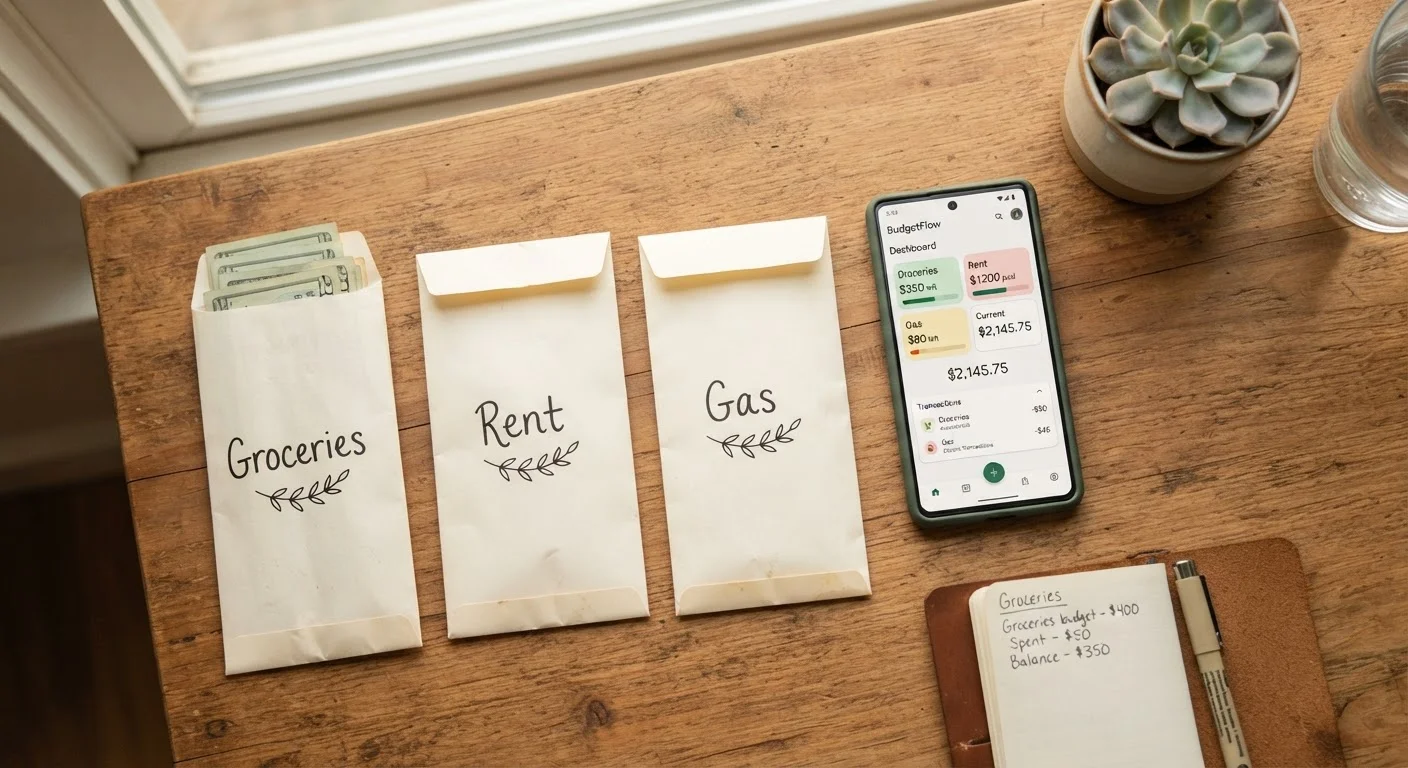
Envelope budgeting is a cash-based spending system where you divide your monthly income into labeled envelopes - one per spending category - and only spend what's physically in each envelope. When the grocery envelope is empty, grocery spending stops for the month. The method creates hard boundaries that prevent overspending in any single category.
The system is a form of zero-sum allocation: total envelope amounts should equal total take-home pay after fixed obligations, leaving no unassigned dollar.
How the Original System Works
The traditional envelope method is straightforward. At the start of each month, you withdraw your discretionary income in cash, then physically divide it into labeled envelopes - one for groceries, one for gas, one for dining out, and so on. Throughout the month, you pay for purchases using only the cash in the relevant envelope. An empty envelope means that category is closed until next month.
That hard stop is the system's core value. Unlike a credit card where you can always swipe regardless of your budget position, an empty envelope delivers immediate, tactile feedback. You can't accidentally overspend what isn't there.
The method became popular in the mid-20th century, largely through Dave Ramsey's promotion of it as a debt-reduction tool. Its conceptual roots, however, go back much further - allocating physical money to specific purposes is one of the oldest budgeting strategies in personal finance.
Adapting Envelope Budgeting for a Card-Based Life
Most Americans today pay by debit card, credit card, or mobile payment. Carrying envelopes of cash to the grocery store or using them at online checkout isn't practical. The solution is to recreate the envelope's boundary using digital architecture instead of paper.
~33%
Americans with a written monthly budget
Gallup polling has consistently found that roughly one-third of U.S. adults maintain a detailed household budget, suggesting most people manage spending without a formal system.
$1,000+
Average monthly discretionary spending per household
Bureau of Labor Statistics Consumer Expenditure data shows significant monthly outflows in categories like food away from home, entertainment, and apparel - precisely the areas envelope budgeting targets.
The most common digital approaches include:
- Separate bank accounts per category: Open multiple free checking accounts and transfer each envelope's allocation into the appropriate account at the start of the month. Use the linked debit card only for that category's purchases.
- Prepaid debit cards: Load a fixed amount onto a prepaid card designated for a specific category, such as groceries or entertainment. When the card balance hits zero, spending in that category stops.
- Budgeting apps with virtual envelopes: Several apps replicate the envelope framework digitally, letting you log transactions against category balances and alerting you when a category nears its limit.
None of these approaches are perfect, but they all preserve the method's critical feature: a visible, hard-ish limit per category that you must consciously override to exceed.
Start With Just Five Envelopes
New to the system? Pick your five highest variable-spending categories and set envelopes only for those. Master the habit over one or two months before adding more categories. Fewer categories means less tracking friction and a much higher chance you'll stick with it.
Which Categories Benefit Most
Envelope budgeting shines on variable, discretionary spending - the categories where most household budgets quietly leak money. Fixed expenses like rent, car payments, and insurance don't need envelopes because the amounts don't change month to month and are usually auto-debited.
The highest-value envelope categories for most households include groceries, dining and takeout, entertainment and streaming, personal care, clothing, gas, and household supplies. These are the areas where spending is both variable and emotionally driven - exactly where a spending boundary pays off.
If you're building a full budget from the ground up, the step-by-step budgeting walkthrough covers how to list income and expenses before you assign envelope amounts. And if you want to compare envelope-style thinking against a broader framework, see how zero-based budgeting assigns every dollar a job before the month starts.
Common Pitfalls and How to Avoid Them
The most frequent mistake is setting envelope amounts that don't reflect real spending patterns. If you budget $300 for groceries but routinely spend $480, you'll drain the envelope in three weeks and either cheat the system or go hungry. Spend one month tracking your actual spending before you assign envelope amounts - use real numbers, not aspirational ones.
A second pitfall is creating too many envelopes. Tracking fifteen categories adds friction that most people won't sustain. Start with five to seven categories covering your highest-variable spending, then add more only if a problem area demands its own boundary.
Finally, credit card rewards create a structural tension with envelope budgeting. If you want to keep earning rewards, you can still use a credit card - but you must track spending against your virtual envelope in real time and pay the card balance in full each month. Any carried balance undermines the discipline the system is designed to build. For strategies on making a budget durable through unexpected expenses and income changes, the guide to building a resilient budget offers practical structural fixes.
This article provides general financial education and is not personalized financial advice. Consider consulting a qualified financial professional for guidance specific to your situation.