

Key Takeaways
Option A
Checking Account
Your everyday transaction hub.
Best for: Paying bills, making purchases, and accessing cash with no withdrawal limits.
Option B
Savings Account
Your money's quiet holding pen.
Best for: Storing funds you don't need immediately while earning interest over time.
If you need to pay bills, shop, and access cash daily
Checking Account
Checking accounts support unlimited transactions, debit card use, and direct deposit without restrictions on how often you access your money.
If you're building an emergency fund or saving toward a goal
Savings Account
Savings accounts earn interest on your balance and are deliberately less convenient, which helps you avoid spending money set aside for future needs.
If you want stronger interest earnings on idle cash
Savings Account
Even a basic savings account outpaces a standard checking account on interest; high-yield options widen that gap considerably.
If you're opening your very first bank account
Checking Account
A checking account handles the core mechanics of daily financial life - direct deposit, bill pay, debit purchases - making it the logical starting point.
What Each Account Is Actually Designed to Do
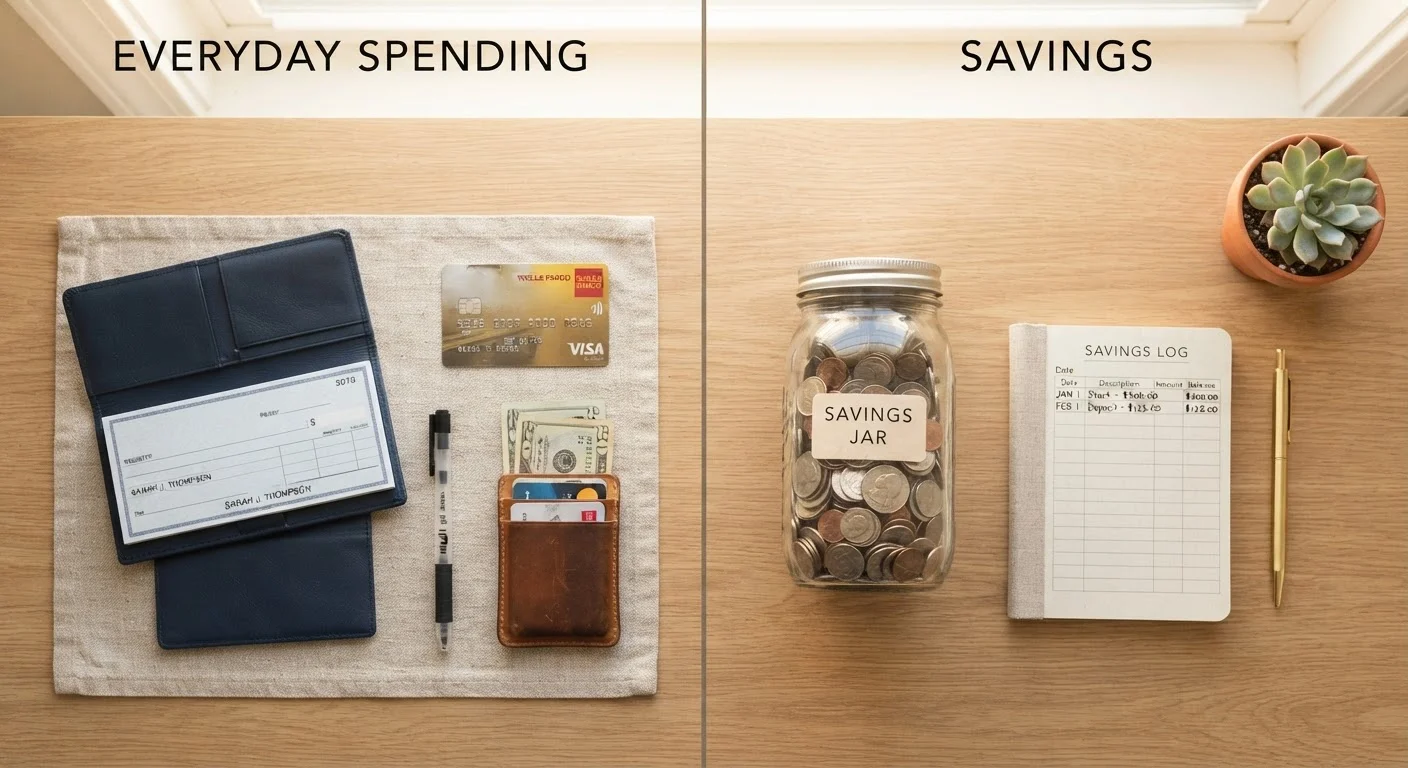
A checking account is a transactional account. Its purpose is to move money in and out frequently - through direct deposit, bill payments, debit card purchases, and ATM withdrawals. There are generally no limits on how many transactions you can make per month, and funds are immediately accessible.
A savings account is a storage account. It holds money you don't need right now, and it rewards you for leaving it alone - through interest on your balance. Under a now-rescinded Federal Reserve rule called Regulation D, savings withdrawals were capped at six per month. The Fed removed that cap in 2020, but many financial institutions still apply similar limits as a matter of policy. That friction is partly the point: it keeps your savings intact.
Neither account type is optional for long-term financial health. They serve different roles, and using both together is more effective than relying on one alone. For a broader look at how banks and credit unions handle both account types, see how banks and credit unions differ.
| Criterion | Checking Account | Savings Account |
|---|---|---|
| Primary purpose | Daily transactions and bill pay | Storing and growing funds |
| Interest earned | Rarely, or very low | Yes - APY varies by institution |
| Transaction limits | Unlimited | Often limited by bank policy |
| Debit card access | Standard | Not typically offered |
| Overdraft risk | Yes, if balance runs low | Rarely applicable |
| Best use case | Paychecks, rent, groceries | Emergency fund, savings goals |
Interest, Fees, and What to Watch For
The most concrete difference is interest. Standard checking accounts typically pay little to no interest. Savings accounts - even basic ones at traditional banks - earn a stated annual percentage yield (APY). High-yield savings accounts, usually offered by online banks, can pay meaningfully more. For a direct comparison, the high-yield vs. traditional savings account breakdown covers the mechanics in detail.
Fees are where things get complicated. Common charges to scrutinize include:
- Monthly maintenance fees - often waived if you maintain a minimum balance or receive direct deposit
- Overdraft fees - triggered when a checking account goes negative; some institutions have reduced or eliminated these
- Excess withdrawal fees - applied by some banks when savings transactions exceed their policy limit
- ATM fees - especially relevant for checking accounts used outside a bank's network
Before opening either account, ask for the fee schedule in writing. A monthly fee you don't notice can erode whatever interest a savings account earns.
~0.08%
Average APY on traditional savings accounts
According to FDIC national rate data, the average savings account APY at traditional banks has historically remained well below 1%, though high-yield options vary considerably.
56%
Americans without enough savings for a $1,000 emergency
A Bankrate survey found that more than half of U.S. adults could not cover a $1,000 unexpected expense from savings alone - underscoring why a dedicated savings account matters.
How to Structure Both Accounts to Work Together
The most practical framework is to use your checking account as a flow account - money comes in via direct deposit and flows out to cover regular expenses. Your savings account functions as a reservoir - money parked there stays until you need it for a specific purpose, like an emergency fund or a planned purchase.
A common approach: set up an automatic transfer from checking to savings on each payday, even if the amount is small. This treats saving as a fixed expense rather than an afterthought. Most banks allow you to schedule recurring transfers at no cost.
If you're deciding how to balance saving with debt repayment, the savings vs. debt payoff trade-off guide provides a structured framework. And if you're just getting started, what to know before opening your first bank account walks through the process step by step.
Once a year, it's worth reviewing your balances, the interest you're earning, and whether your account structure still matches your goals. The annual debt and savings check-in guide offers a simple template for that review.
This article is for general informational purposes only and does not constitute personalized financial advice. Consult a qualified financial professional for guidance specific to your situation.