

Key Takeaways
Start here
Choosing the Right Account Type
Next
What You Need to Bring
Then
Fees to Spot Before You Sign
Before you commit
Questions Worth Asking the Banker
Final step
After the Account Is Open
Choosing the Right Account Type
Before you compare institutions, know what you're opening. Most first-time account holders need one of two things: a checking account for daily spending and bill payments, or a savings account for money you want to set aside. Some people open both at the same time.
Checking accounts come with a debit card and are built for frequent transactions - paying rent, buying groceries, receiving direct deposit. Savings accounts typically earn a small amount of interest (expressed as APY) and are better suited for an emergency fund or short-term goals. For a deeper look at how to structure both, see when to use each account type.
Some institutions also offer student accounts or basic banking accounts with lower fees and minimal requirements - worth asking about if you're just starting out.
APY
Annual Percentage Yield - the real rate of return on a deposit account over one year, including compound interest. A higher APY means your savings grow faster.
FDIC Insurance
Federal Deposit Insurance Corporation protection that covers your deposits up to $250,000 per depositor, per insured bank, if that bank fails. Credit unions have equivalent protection through the NCUA.
Overdraft
When a payment or withdrawal exceeds your available account balance, leaving the account with a negative balance. Banks may cover the difference for a fee, or decline the transaction.
ChexSystems
A consumer reporting agency that tracks past banking problems like unpaid overdrafts or fraud. Banks often check it before approving a new account application.
Routing Number
A nine-digit code that identifies your specific bank or credit union in electronic transfers. Think of it as your bank's address for moving money.
Minimum Balance
The lowest dollar amount a bank requires you to keep in your account - either as an average or a daily minimum - to avoid a monthly maintenance fee.
What You Need to Bring
Walking in unprepared is the most common reason first-time applicants leave empty-handed. Here's what most US banks and credit unions require:
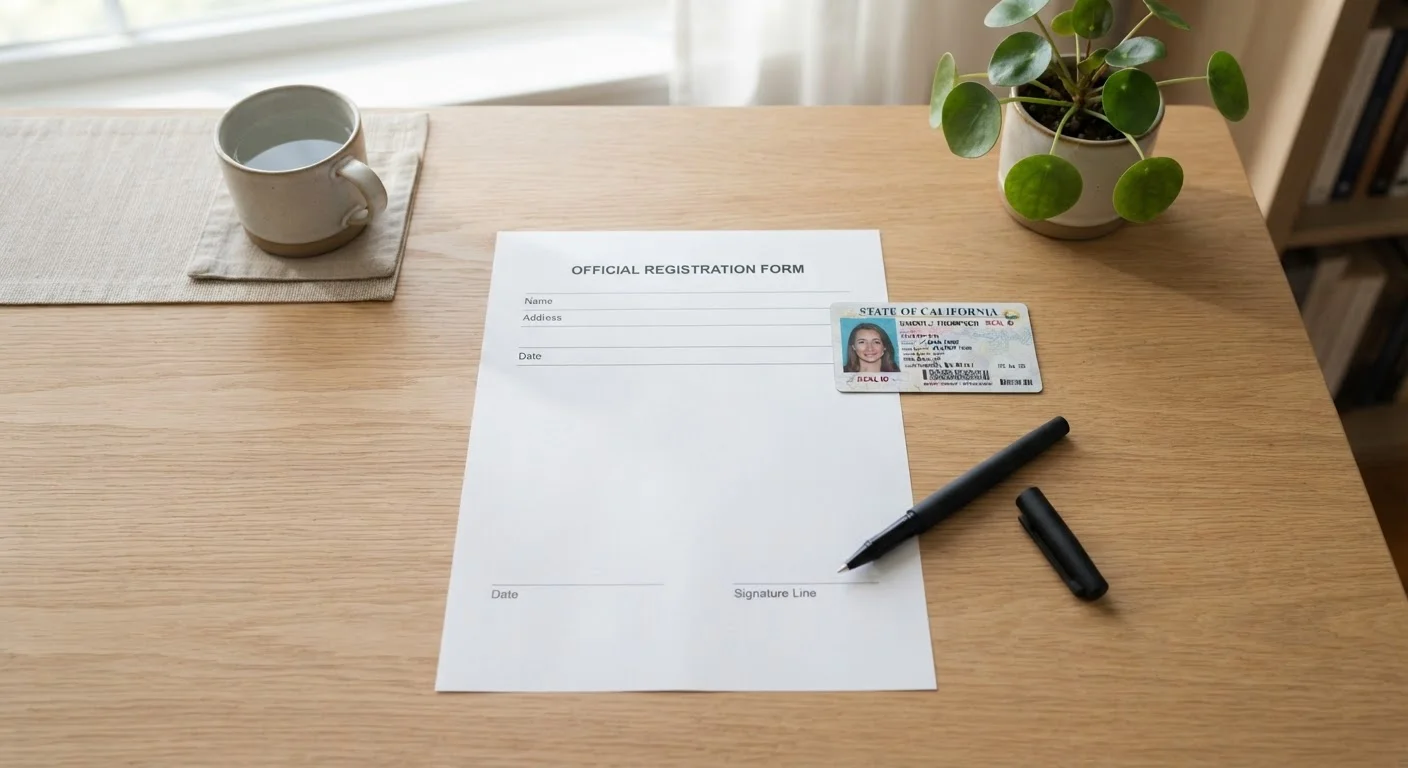
- Government-issued photo ID - a driver's license, state ID, or passport. Some institutions accept two forms of secondary ID (utility bill + student ID) if you lack a primary document.
- Social Security number (SSN) - required under federal law for tax reporting. Bring your SSN card or a document that displays it; you likely won't need to leave it with the bank.
- Proof of address - a recent utility bill, lease agreement, or bank statement showing your current address. Some banks waive this if your ID address matches their records.
- Opening deposit - cash or a check. Confirm the minimum amount before you go. Some accounts have no minimum; others require $25-$100.
If you're under 18, a parent or guardian will typically need to be a joint account holder and must bring their own ID and documentation.
Fees to Spot Before You Sign
Fee disclosures are required by law, but they're buried in dense account agreements. The three you need to understand before signing are:
- Monthly maintenance fee
- A flat charge just for having the account - often $5-$15/month. Many accounts waive it if you meet a direct deposit threshold or keep a minimum daily balance. Know the waiver conditions precisely.
- Overdraft fee
- Charged when a transaction exceeds your available balance. Fees have historically ranged from $25-$35 per occurrence, though regulatory pressure has pushed many banks to reduce or eliminate them. Ask whether overdraft protection is opt-in and what it costs.
- Out-of-network ATM fee
- Using an ATM outside the bank's network typically costs $2-$5, and the ATM owner may charge an additional fee on top. Understand the size of the bank's ATM network before committing.
For a complete picture of what fee structures typically look like, our guide to bank fees in the fine print is worth reading before you sign anything.
Ask About Fee Waivers Upfront
Many monthly maintenance fees are waivable - but only if you know the conditions. Common waivers include setting up direct deposit above a certain threshold or maintaining a minimum daily balance. Get the exact numbers in writing before you open the account, not after your first statement arrives.
Questions Worth Asking the Banker
A brief conversation at the branch - or over the phone - can save you from surprises later. These questions cut straight to what matters:
- What are all the ways I could be charged a fee on this account?
- Is there a minimum balance requirement to avoid monthly fees, and what counts toward that balance?
- How does overdraft work here - is it automatic, and what does it cost?
- How large is your ATM network, and do you reimburse out-of-network fees?
- Is this institution FDIC- or NCUA-insured?
- Can I open a second account (savings) at the same time, and are there any incentives for doing so?
If the banker can't answer these questions clearly, that's useful information too. You're not locked in until you sign.
After the Account Is Open
Once your account is active, a few immediate steps keep you on solid footing:
- Set up online or mobile access right away. This lets you monitor transactions, catch errors early, and access statements without paper.
- Understand your routing and account numbers - you'll need them for direct deposit setup and electronic transfers. Our guide to key banking terms explains what each number does.
- Review your first statement carefully. Confirm every transaction and every fee line. Dispute unauthorized charges promptly - federal Regulation E gives you specific rights to dispute errors on electronic transactions.
- Avoid overdrafting in the first 90 days. Some banks use early account behavior to set overdraft limits and flag accounts for additional scrutiny.
Opening a bank account is one of the foundational steps toward building financial stability. If your next goal is establishing a credit history, building credit from zero is a practical next read.
This article is for general informational purposes only and does not constitute personalized financial advice. Consult a qualified financial professional for guidance specific to your situation.