

Key Takeaways
Summary
22 items · 30-60 minutes to assemble or audit
Why a Pet First-Aid Kit Matters Before an Emergency Happens
Emergencies rarely announce themselves. A dog cuts a paw on broken glass during a walk, a cat ingests something toxic, or a small pet goes into distress on a holiday weekend when your regular vet is closed. In those moments, having the right supplies within arm's reach - and knowing what they're for - can reduce harm and keep your pet stable until professional care is available.
This is general pet-care information, not a substitute for veterinary diagnosis or treatment. A first-aid kit is designed to stabilize and support, not to replace your veterinarian. Think of it the same way you think about a human first-aid kit: useful for cuts and sprains, not for surgery.
Pair this checklist with a broader approach to preventive health. The Preventive Care Calendar Every Pet Owner Should Know covers the routine exams and check-ups that help you catch problems before they become emergencies. And if the cost of veterinary care concerns you, it's worth reading about building an emergency fund on a tight budget so you're financially prepared as well as physically prepared.
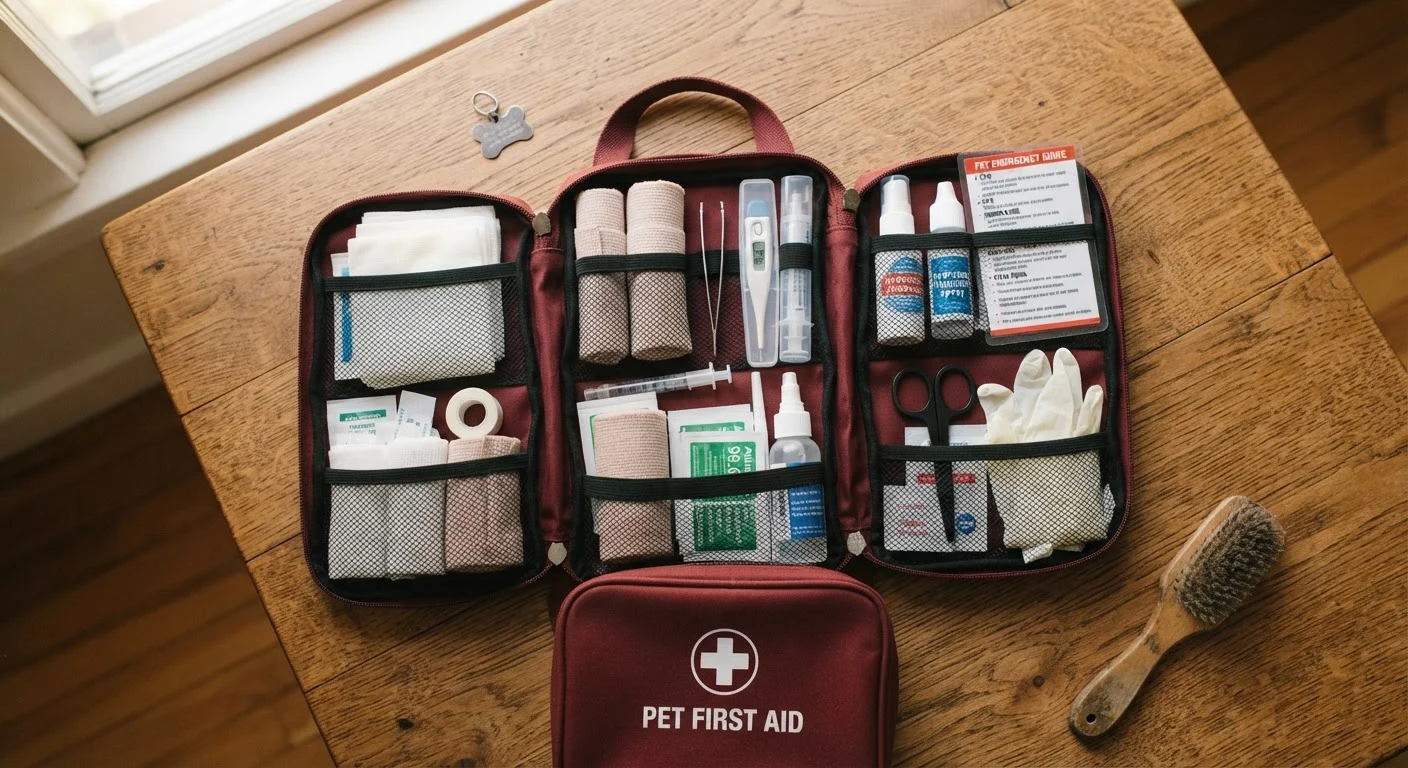
Waterproof container or handled case
Houses all kit supplies and protects them from moisture and damage during transport.
Digital rectal thermometer
Measures your pet's body temperature to help assess fever or hypothermia.
Self-adhesive cohesive bandage wrap
Provides secure bandaging that adheres to itself without pulling on fur.
Sterile saline wound wash
Gently flushes debris and contaminants from wounds before bandaging.
Blunt-tipped scissors
Safely trims bandage material, tape, or fur around a wound site.
Disposable latex-free gloves
Protects you from contact with blood or bodily fluids while handling injuries.
Pet-appropriate muzzle
Prevents biting from a frightened or pain-stressed pet during first-aid handling.
Penlight or small LED flashlight
Provides targeted illumination to inspect the mouth, ears, eyes, or skin.
How to Build and Maintain Your Kit
Start with a dedicated container - a waterproof case, a handled tackle box, or a zippered pouch that stays in one consistent location. Label it clearly and make sure every adult in the household knows where it is. Store it somewhere accessible but out of reach of children and curious pets.
Every item in the kit has a specific purpose, so resist the urge to toss in random household medications. Many human medications are toxic to dogs and cats. For example, acetaminophen is dangerous to cats, and ibuprofen can cause serious harm in both dogs and cats. Only include items that have been confirmed safe for your species by your veterinarian. If you're unsure about a common habit that could cause unintended harm, the article on well-intentioned pet care habits that can quietly cause harm is a useful read.
Never Give Human Medications Without Vet Guidance
Common over-the-counter pain relievers including acetaminophen, ibuprofen, and aspirin can be toxic or even fatal to dogs and cats. Do not add any human medication to your pet first-aid kit unless a veterinarian has explicitly approved it for your specific pet and given you clear dosing instructions. When in doubt, call your vet before administering anything.
Audit your kit every six months - mark dates on a calendar. Check expiration dates on any topical antiseptics, saline solution, or medications your vet has approved. Replace anything expired or depleted. Refresh your emergency contact list if your vet or after-hours clinic information has changed.
Documentation & Contacts
Wound Care & Bandaging
Assessment Tools
Restraint & Safety
Vet-Approved Additions
Knowing When the Kit Isn't Enough
First aid is a bridge, not a destination. Certain situations require immediate veterinary attention regardless of what supplies you have: difficulty breathing, suspected poisoning, seizures, loss of consciousness, deep or gushing wounds, suspected fractures, eye injuries, or a pet that is unable to stand or walk. In those cases, contact your veterinarian or an emergency animal hospital without delay. Keep the ASPCA Animal Poison Control Center number (888-426-4435, which charges a consultation fee) included in your kit documentation.
Building confidence with your kit takes practice. Many local humane societies, veterinary schools, and community organizations offer hands-on pet first-aid courses that teach you how to correctly apply a bandage, take a pet's vital signs, and perform rescue breathing. These skills are as important as the supplies themselves.
As you invest in your pet's safety, consider how overall wellness habits - from daily routines to building a solid feeding routine - contribute to a healthier, more resilient animal. A well-nourished, regularly monitored pet is often better positioned to recover from minor incidents.
This article is for general informational and educational purposes only and is not a substitute for professional veterinary advice, diagnosis, or treatment. Always consult a licensed veterinarian for concerns about your pet's health.