

Key Takeaways
Why Plant Choice Determines Gardening Effort
Most gardening frustration traces back to a mismatch: the wrong plant placed in the wrong conditions. A thirsty annual in dry clay soil or a shade-loving fern baking in full sun will always struggle, no matter how attentive the gardener. The fix isn't more effort - it's smarter selection from the start.
Resilient plants aren't a compromise. Many are genuinely beautiful, seasonally interesting, and structurally valuable in a landscape. The key distinction is that they evolved - or were bred - to handle the very stresses that defeat high-maintenance choices: drought, poor soil, temperature swings, or neglect between visits. Once established, they largely govern themselves.
If you're starting a garden from scratch, anchoring your plant list around inherently low-effort species is one of the highest-return decisions you can make. Below are eight plant types that consistently reward minimal attention - and the reasons why.
Native Perennials
Plants native to your region are already adapted to its rainfall patterns, soil chemistry, and seasonal temperature extremes. Once established, most native perennials require little to no supplemental watering, no fertilizing, and minimal pest management - because local insects and pathogens evolved alongside them and rarely overwhelm a healthy specimen.
Examples like coneflowers (Echinacea), black-eyed Susans (Rudbeckia), and native ornamental sages die back in winter and return reliably each spring from established root systems. They also support local pollinators, which has broader garden benefits - including for any edible plants nearby. For context on how these interact with vegetable gardens, see companion planting pairings.
Native plants are already tuned to your climate - they need no convincing to thrive.
Ornamental Grasses
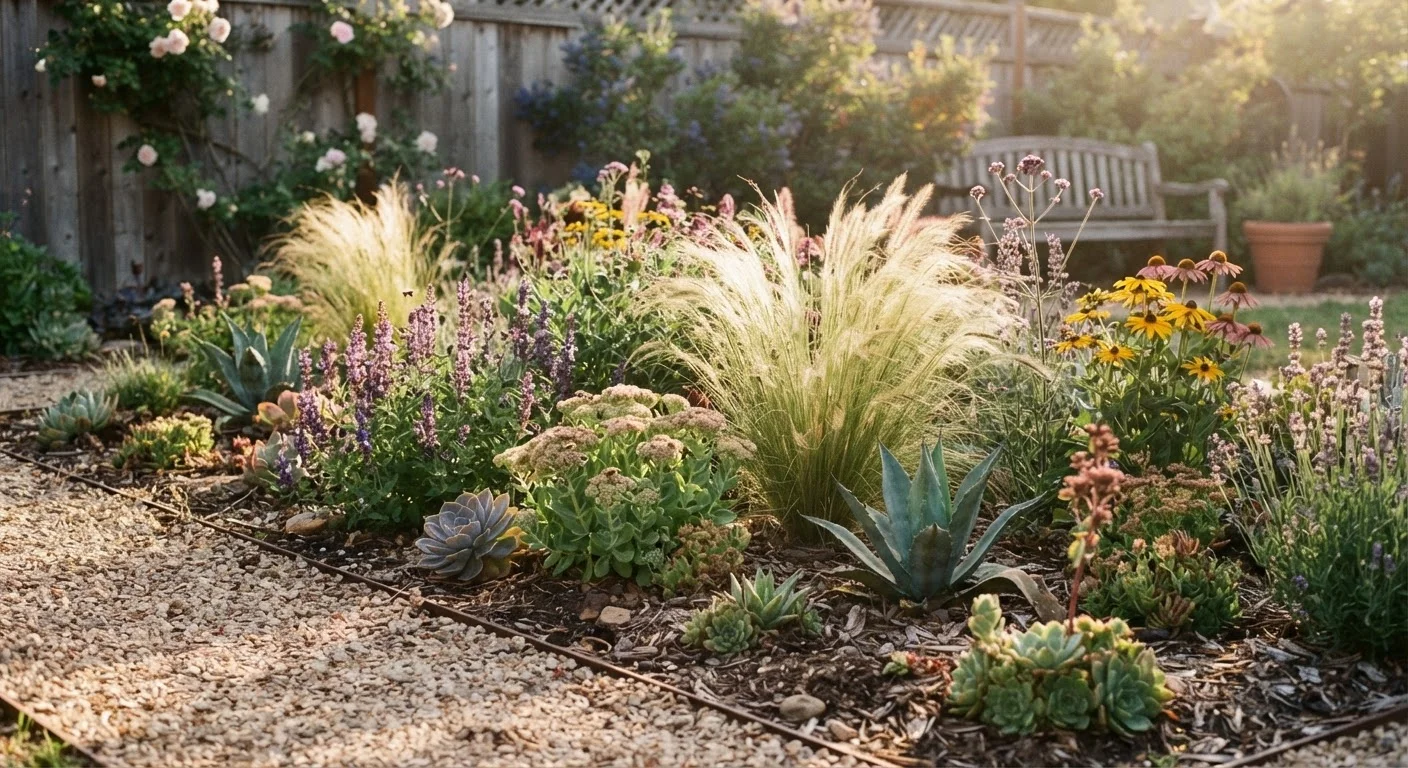
Ornamental grasses are among the most forgiving plants available to home gardeners. They tolerate drought, poor soils, and coastal winds, and they rarely suffer serious pest or disease pressure. Most varieties need only one annual haircut - cut back in late winter before new growth emerges - and nothing else.
Beyond practicality, grasses add genuine design value: movement in wind, winter structure, and textural contrast. Varieties like Pennisetum, Miscanthus, and Nassella (formerly Stipa) cover a wide range of heights, climates, and aesthetic styles. Many are effective as informal ground covers on slopes where mowing is impractical.
One annual cut is all most ornamental grasses ask for in return for year-round structure.
Sedums and Succulents
Sedums and most succulent genera store water in their leaves, stems, or roots, making them genuinely drought-tolerant once established. In well-draining soil - or containers with adequate drainage - they can go weeks without supplemental water and still look presentable. Overwatering is a far greater risk than underwatering for this group.
Hardy sedums (sometimes sold as stonecrops) survive freezing winters across much of the US and make excellent ground covers in dry, sunny spots where little else succeeds. If you're exploring container options, succulents are among the most forgiving choices; our guide to container gardening covers the drainage and soil mix specifics that make them work in pots.
For succulents, benign neglect is often closer to ideal care than attentive watering.
Creeping Ground Covers
Low-spreading ground covers like creeping thyme, vinca, pachysandra, and liriope fill space efficiently, suppress weeds by outcompeting them, and dramatically reduce the bare-soil maintenance that annual planting requires. Once a ground cover knits together, it largely self-maintains - and many types tolerate both drought and moderate foot traffic.
The labor savings are cumulative: a well-established ground cover eliminates the need for repeated mulching, frequent weeding, and annual replanting in the same footprint. For slopes, edges, and shady areas under trees where grass struggles, these plants solve problems that mowing and annual beds never fully resolve.
A knitted ground cover eliminates the bare soil that creates most ongoing garden maintenance.
Shrubby Herbs
Woody, Mediterranean-origin herbs - rosemary, sage, lavender, and thyme - evolved in rocky, well-drained soils with minimal rainfall and intense sun. In comparable conditions in the US, they thrive on near-neglect. They're drought tolerant, deer resistant in most regions, and largely pest-free when given good air circulation and fast-draining soil.
They also serve double duty: ornamental in the garden and useful in the kitchen or as cut stems. Lavender in particular provides extended bloom periods and pollinator value with nothing more than an annual light trim after flowering. Avoid over-fertilizing this group - excess nitrogen promotes lush, floppy growth that's more prone to disease.
Mediterranean herbs are built for drought and thin soil - rich, moist conditions actually harm them.
Daylilies
Daylilies (Hemerocallis) are justifiably described as bulletproof by many experienced gardeners. They tolerate a wide range of soil types, bounce back from drought and flooding, spread to fill space over time, and resist most pests. A clump planted in reasonable conditions may persist and expand for decades without division or feeding.
Each individual flower lasts only one day, but established plants produce successive blooms over weeks. Extended-bloom cultivars stretch the flowering season further. Outside of bloom season, the strap-like foliage remains tidy and effective as a weed suppressant. Division every several years, when clumps become crowded, is the main maintenance ask - and it produces free new plants.
Daylilies can outlast decades of minimal care - and still reward you with weeks of flowers.
Conifers and Structural Evergreens
Slow-growing conifers and evergreen shrubs - junipers, mugo pines, dwarf spruces, and similar species - provide year-round structure with essentially zero seasonal maintenance once established. They don't need deadheading, cutting back, or winter protection in their appropriate hardiness zones, and their slow growth rate means minimal pruning for years at a time.
Placed thoughtfully, they anchor garden beds, provide windbreaks, and give the garden a sense of permanence through every season. The upfront cost is often higher than annuals or smaller perennials, but the long service life and near-zero annual maintenance make them highly cost-effective over time.
A well-sited conifer may outlive the gardener who planted it - with almost no maintenance required.
Self-Seeding Annuals
Unlike typical annuals that require replanting each year, self-seeding varieties - such as California poppy (Eschscholzia californica), borage, nigella, and cosmos - drop seeds that germinate on their own the following season. With a small initial investment, these plants essentially replant themselves year after year, filling gaps and naturalizing over time.
The trade-off is predictability: self-seeders pop up where conditions suit them, not always where the gardener planned. Many gardeners find this informality appealing; others prefer more control. Either way, letting a portion of the garden self-seed substantially reduces the time and cost of annual replanting - and often produces denser, healthier stands than transplanting achieves.
Self-seeding annuals effectively replant themselves - turning one season's effort into several years of color.
Setting These Plants Up for Long-Term Success
Even the toughest plants benefit from a thoughtful start. Amending compacted soil before planting, giving roots adequate water during the first establishment season, and placing plants at the correct spacing prevents the majority of problems that appear later. Think of it as a one-time investment that eliminates years of remedial care.
Establishment Watering Is Non-Negotiable
Even drought-tolerant plants need consistent moisture during their first growing season while roots spread beyond the original root ball. Plan to water new plantings deeply once or twice a week for the first 8-12 weeks, then gradually taper off. Skipping this step is the most common reason resilient plants fail to establish.
Watering strategy also matters more than many gardeners expect. Understanding how each plant type uses water - and adjusting frequency by season - prevents both underwatering stress and the root rot that comes from overdoing it. Our guide to garden watering schedules walks through how to build a routine calibrated to your plant types, climate, and time of year.
Finally, don't be misled by common gardening lore. Several widespread practices - like lining pots with gravel or watering on a rigid daily schedule - actually undermine plant health. For a clear-eyed look at what the evidence shows, see our piece on gardening myths that waste your time and money. Combining the right plant choices with accurate foundational knowledge is what turns a low-effort garden into a genuinely thriving one.