

Key Takeaways
Option A
Raised Bed Gardening
The controlled, high-performance setup for challenging conditions.
Best for: Gardeners dealing with poor native soil, drainage problems, or physical accessibility needs.
Option B
In-Ground Planting
The low-cost, scalable approach for established or improving soil.
Best for: Gardeners with decent native soil who want to grow large quantities at lower upfront cost.
If your native soil is compacted, rocky, or heavily clay-based
Raised Bed Gardening
Building above poor soil lets you sidestep years of amendment work by starting with an optimized growing mix from day one.
If you want to maximize growing space on a tight budget
In-Ground Planting
In-ground plots have virtually no material cost to expand, making large-scale growing far more economical over time.
If you have mobility limitations or chronic back issues
Raised Bed Gardening
A raised bed built to 24-30 inches high eliminates the need to kneel or bend deeply, making gardening physically accessible.
If you already have workable loam or sandy loam soil
In-Ground Planting
Good native soil means you can plant directly with minimal prep, letting you focus effort on plants rather than infrastructure.
If you want precise control over drainage and root environment
Raised Bed Gardening
Raised beds drain freely by design and allow you to dial in soil texture and pH with far more precision than amending native ground.
The Core Difference: What Each Method Actually Gives You
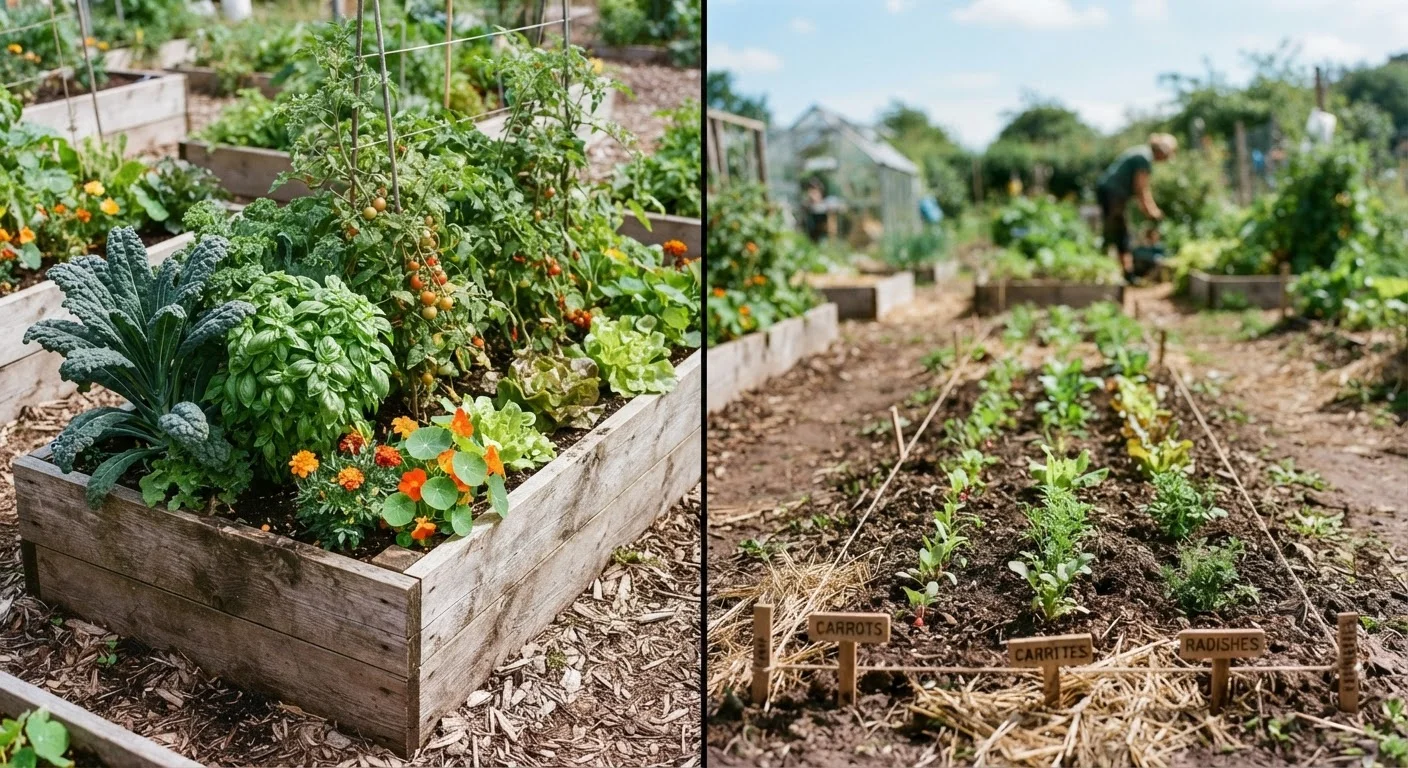
At its simplest, raised bed gardening means growing plants in a contained structure filled entirely with imported or blended soil, elevated above native ground. In-ground planting means working directly with whatever soil your yard provides, amended over time to support plant growth.
That distinction cascades into nearly every practical consideration: startup cost, soil behavior, watering needs, pest pressure, and long-term maintenance. Neither method is universally superior - but each is clearly better suited to specific conditions and goals. Understanding what your site actually offers is the starting point. Our guide on reading your soil's pH, texture, and drainage is an essential first step before committing to either approach.
If you're building a garden from the ground up, it also helps to understand the broader fundamentals covered in our introduction to starting a garden from scratch.
Cost, Setup, and Scalability
Upfront cost is where in-ground planting has the clearest advantage. Digging and amending existing soil requires labor but little material expense. A 4×8-foot raised bed, by contrast, requires framing lumber or alternative materials plus several cubic feet of quality fill - costs that multiply quickly as you add beds.
Raised beds do return value over time. Their contained environment means less wasted fertilizer and water, and weed pressure is typically lower in fresh fill than in established garden ground. However, the fill mix itself will compact and settle, requiring annual topdressing with compost to maintain depth and fertility.
| Criterion | Raised Beds | In-Ground Planting |
|---|---|---|
| Upfront cost | Moderate to high (materials + fill) | Low (labor only) |
| Soil control | Complete - you build the mix | Limited by native conditions |
| Drainage | Excellent by design | Varies by native soil type |
| Spring soil warmup | Faster - up to 2-4 weeks earlier | Standard - follows air temps |
| Scalability | Costly to expand | Easy and inexpensive to grow |
| Weed pressure | Lower initially | Higher, especially early on |
| Accessibility | High - adjustable working height | Low - requires kneeling or bending |
| Long-term maintenance | Frame upkeep + annual topdressing | Ongoing soil amendment + weeding |
In-ground gardens scale with far less friction. Expanding your plot means digging more ground - no additional structural investment required. For gardeners growing staple vegetables in quantity, that scalability often matters more than the precision benefits raised beds provide.
Soil Control, Drainage, and Growing Season
Raised beds give you complete authority over your growing medium. You choose the composition, adjust pH from the start, and avoid the years of amendment work that transforming clay or compacted native soil typically demands. Drainage is inherent - water moves freely downward rather than pooling at the root zone - which is particularly valuable in regions with heavy clay subsoil.
They also warm faster in spring. Because the bed is exposed on multiple sides, soil temperatures in raised beds can climb two to four weeks ahead of native ground in cooler climates, meaningfully extending your growing window for warm-season crops.
Native Soil Ecosystem Takes Time to Develop
A freshly filled raised bed is essentially sterile compared to long-established native soil. Beneficial fungi, earthworms, and microbial networks take several growing seasons to build up in imported fill. Adding quality compost annually accelerates this process, but gardeners should not expect raised bed soil to behave exactly like mature garden ground in the first year or two.
In-ground soil, when it's genuinely good, offers its own advantages. Established native soil supports a complex ecosystem of earthworms, beneficial fungi, and microorganisms that a freshly blended raised bed lacks. That biological activity improves fertility and structure over time in ways that imported fill needs years to replicate. The complete guide to growing vegetables at home covers how to feed and build soil health regardless of which method you use.
Maintenance, Weeds, and Long-Term Realities
Weed pressure in raised beds is lower initially, especially if you use a weed-suppressing base layer when building. Over time, wind-blown seeds will colonize any open soil, and the difference becomes less pronounced. In-ground gardens, particularly those converted from lawn or uncultivated ground, require consistent weeding in early seasons until the bed is established and routinely mulched.
Raised beds introduce a structural maintenance variable that in-ground plots don't: the frame itself. Wood frames are the most common choice and will eventually rot - typically within seven to fifteen years depending on the wood type and climate. Non-wood alternatives (galvanized metal, composite lumber, concrete block) last longer but carry higher initial costs.
A common misconception worth addressing: raised beds don't automatically mean less work overall. They shift effort from soil preparation toward construction, filling, and frame upkeep. That trade-off suits many gardeners well - but it's worth understanding clearly before building. For a broader look at common gardening assumptions that don't hold up, see our piece on gardening myths that waste time and money. And if you're weighing other growing formats, our balanced look at container gardening's real pros and cons rounds out the picture.