

Key Takeaways
Our Verdict
Neither interior nor exterior waterproofing is universally superior - each addresses different aspects of a moisture problem. Exterior systems are the most comprehensive long-term solution when the foundation itself is the entry point, while interior systems offer a practical, lower-disruption path to a dry basement when full excavation isn't feasible. Many homes benefit from a combination of both, along with proper grading and drainage improvements.
| Best for | Recommended |
|---|---|
| Homeowners with persistent foundation seepage and accessible exterior space | Exterior waterproofing |
| Those with finished basements or limited outdoor access | Interior drainage system |
| Homes with minor condensation or surface moisture issues | Interior sealants and improved ventilation |
| Situations where early warning signs are just appearing | Grading correction and gutter improvement first |
Why Basements Get Wet - and Why It Matters
A wet basement isn't just a nuisance - it signals a structural vulnerability. Moisture enters through three primary pathways: cracks in foundation walls or floors, porous concrete that allows water to seep through, and gaps around windows, pipe penetrations, or the sill plate. Understanding which pathway applies to your home directly determines which waterproofing strategy will actually work.
Hydrostatic pressure - the force exerted by water-saturated soil pressing against your foundation - is the most common culprit behind persistent basement moisture. When soil around your foundation holds water after rainfall or snowmelt, that pressure forces water through even hairline cracks. Poor grading (ground sloping toward the house), clogged gutters, and inadequate downspout extensions all amplify the problem.
Before spending on any waterproofing system, do a diagnostic walkthrough. Check whether moisture appears after rain (likely an entry point issue) versus on humid days (likely condensation). Run your hand along the wall - if water beads on the surface, it's coming through; if the wall itself is damp and cool, condensation is the more likely cause. This distinction shapes every decision that follows. The weekend home audit checklist can help you systematically spot and document moisture issues before calling a contractor.
Exterior Waterproofing: Stopping Water at the Source
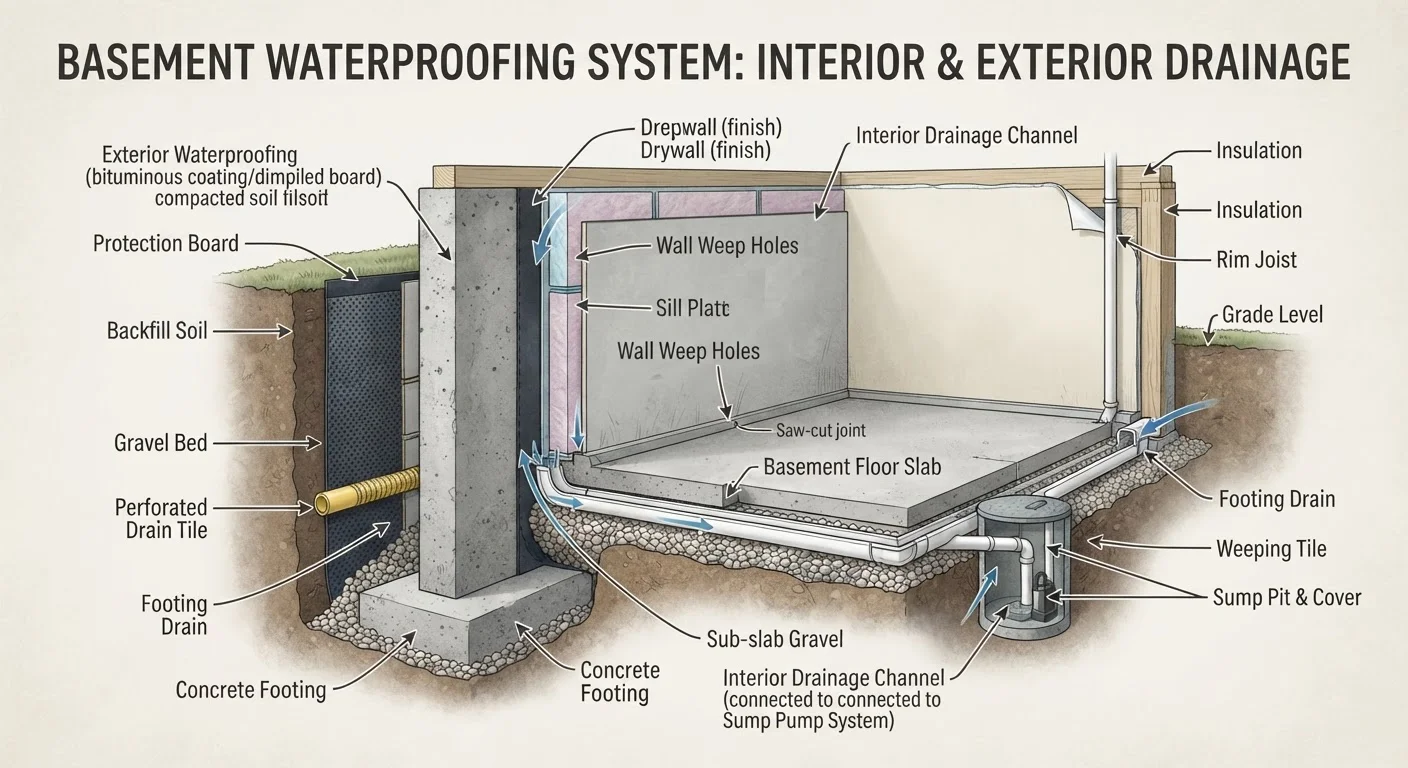
Exterior waterproofing addresses the problem where it originates - outside the foundation wall. The process typically involves excavating the soil around the perimeter of the home down to the footing, applying a waterproof membrane or coating to the exterior foundation surface, installing or replacing footing drains (also called French drains or drain tile), and backfilling with gravel to improve drainage away from the structure.
This approach is widely considered the most complete solution because it prevents water from ever reaching the foundation wall. A quality exterior membrane, properly installed, can remain effective for decades. It also allows contractors to inspect and repair cracks, deteriorated parging, or damaged footing drains that would otherwise remain hidden.
Exterior Work Requires Licensed Professionals
Excavating around a foundation involves risks beyond the digging itself - disturbing utility lines, compromising structural support, and altering drainage patterns can all create serious secondary problems. This is not a DIY project. Always hire a licensed, insured contractor, verify local permit requirements with your municipality before work begins, and get multiple assessments before committing to a scope of work.
The significant drawbacks are cost and disruption. Excavating around an entire foundation requires heavy equipment, removal of landscaping, decks, or patios, and restoration work afterward. Labor and materials make this the most expensive waterproofing approach by a considerable margin. It's generally reserved for new construction or serious, ongoing moisture intrusion where interior methods have failed or aren't sufficient.
Exterior waterproofing is most appropriate when foundation walls show active water entry through cracks or porous block, when footing drains are collapsed or absent, or when a home is being significantly renovated and excavation is already underway.
Interior Waterproofing: Managing Water That Gets In
Interior waterproofing doesn't stop water from reaching the foundation - it intercepts and redirects water that has already entered. The two main interior strategies are drainage systems and sealants, and they serve distinct purposes.
Interior Drainage Systems
A sub-floor drainage channel (often called an interior French drain or perimeter drain) is installed around the inside perimeter of the basement floor. Water that seeps through the walls or up through the floor is captured by this channel and directed to a sump pit, where a sump pump evacuates it away from the home. This system manages hydrostatic pressure rather than eliminating it, but when properly installed, it keeps the basement dry reliably.
Interior drainage systems are less disruptive than exterior excavation - they require only removing a strip of concrete along the perimeter - and they're effective regardless of soil conditions outside. They're a strong choice for homes where exterior access is blocked by finished hardscaping, additions, or utility lines.
Interior Sealants and Coatings
Hydraulic cement and masonry waterproofing coatings can be applied to interior walls to seal minor seepage. These work best on poured concrete walls with small cracks or on block walls with limited moisture intrusion. They are not effective against significant hydrostatic pressure - water pressure can eventually push coatings off the wall. Think of sealants as a last line of defense or a complement to better drainage, not a standalone solution for serious water problems.
Test Before You Invest
Tape a piece of plastic sheeting to a damp basement wall and seal the edges with tape. Leave it for 24-48 hours. If moisture collects on the wall side, water is seeping through from outside. If moisture is on the room side of the plastic, condensation from indoor air is the source. Each cause points to a different solution - and conflating them leads to wasted spending.
Comparing the Two Approaches
| Exterior Waterproofing | Interior Drainage System | Interior Sealants | |
|---|---|---|---|
| How it works | Prevents water reaching the wall | Captures and redirects water inside | Seals minor cracks and pores |
| Disruption level | High - full excavation required | Moderate - interior concrete removal | Low - surface application only |
| Relative cost | Highest | Moderate to high | Lowest |
| Effectiveness vs. hydrostatic pressure | Strong - addresses root cause | Strong - manages ongoing pressure | Limited - not pressure-rated |
| Best foundation type | Poured concrete or block | Any foundation type | Poured concrete with minor seepage |
| Longevity (when properly installed) | Decades with good membrane | Long-term with pump maintenance | Variable - may need reapplication |
| Permits typically required | Often yes | Often yes | Generally no |
One consideration often overlooked in this comparison is the role of surface-level fixes. Correcting negative grading (soil sloping toward the house), extending downspouts at least 6 feet from the foundation, and cleaning gutters regularly can dramatically reduce the volume of water reaching the foundation in the first place. These low-cost steps should precede any waterproofing investment - they may solve mild problems outright and improve the performance of any system installed afterward. Similarly, addressing air sealing in other parts of the home, much like sealing drafts with caulk or weatherstripping, reflects the broader principle that the right fix depends on precisely identifying the problem first.
When deciding, also factor in your foundation type: poured concrete walls respond differently to coatings and membranes than hollow concrete block walls, which can hold water inside the cavities themselves. A contractor experienced with your specific foundation type will give you the most applicable assessment.