

Key Takeaways
Start here
Understanding the Real Risks of DIY Electrical Work
Foundation
Core Safety Principles Before You Touch Anything
Decide your scope
What DIYers Can Legally and Safely Do
Know your limits
When to Stop and Call a Licensed Electrician
Stay compliant
Permits, Inspections, and Code Basics
Understanding the Real Risks of DIY Electrical Work
Electricity is unforgiving. Unlike a leaky faucet or a squeaky door hinge, a wiring mistake can cause electrocution, house fires, or failed insurance claims - sometimes years after the work was done. According to the U.S. Consumer Product Safety Commission, electrical failures and malfunctions are a leading cause of residential fires in the country.
That doesn't mean homeowners should be afraid to learn the basics. It means the stakes demand that you understand what you're doing before you start - and that you recognize clearly when a job exceeds your current knowledge or the limits of what's legally permitted. This guide is designed to give you that foundation.
Circuit breaker
A safety switch inside your electrical panel that automatically cuts power to a circuit if it detects an overload or fault. You also flip it manually to shut off power before working on that circuit.
GFCI
Ground Fault Circuit Interrupter - a type of outlet or breaker that shuts off power within milliseconds if it detects current leaking outside the intended path, protecting against electrocution in wet areas.
AFCI
Arc Fault Circuit Interrupter - a breaker or outlet that detects dangerous arcing (sparking) in wiring, which can ignite insulation or wood framing. Required by code in bedrooms and living areas in newer construction.
Wire gauge
A measure of wire thickness, expressed as AWG (American Wire Gauge) numbers - the lower the number, the thicker the wire. Thicker wire carries more current safely; using undersized wire creates a fire hazard.
NEC
National Electrical Code - the widely adopted US standard that sets minimum safety requirements for electrical installations in residential and commercial buildings. Local jurisdictions may add their own amendments.
Non-contact voltage tester
An inexpensive handheld tool that detects the presence of live electrical current without touching the wire directly. It beeps or lights up when held near a live conductor.
Core Safety Principles Before You Touch Anything
Every electrical task, no matter how small, starts with the same non-negotiable steps:
- Identify the correct circuit breaker and flip it to the OFF position. If your panel is poorly labeled, use a circuit tracer or plug a lamp into the outlet, then flip breakers until it goes dark.
- Test with a non-contact voltage tester before touching any wire, terminal, or device. These testers cost under $20 and are one of the most important tools you can own.
- Use a lockout tag or tape on the breaker so no one else flips it back on while you're working.
- Work with one hand when possible near live components - it reduces the path current could travel through your body.
- Never work in wet or damp conditions.
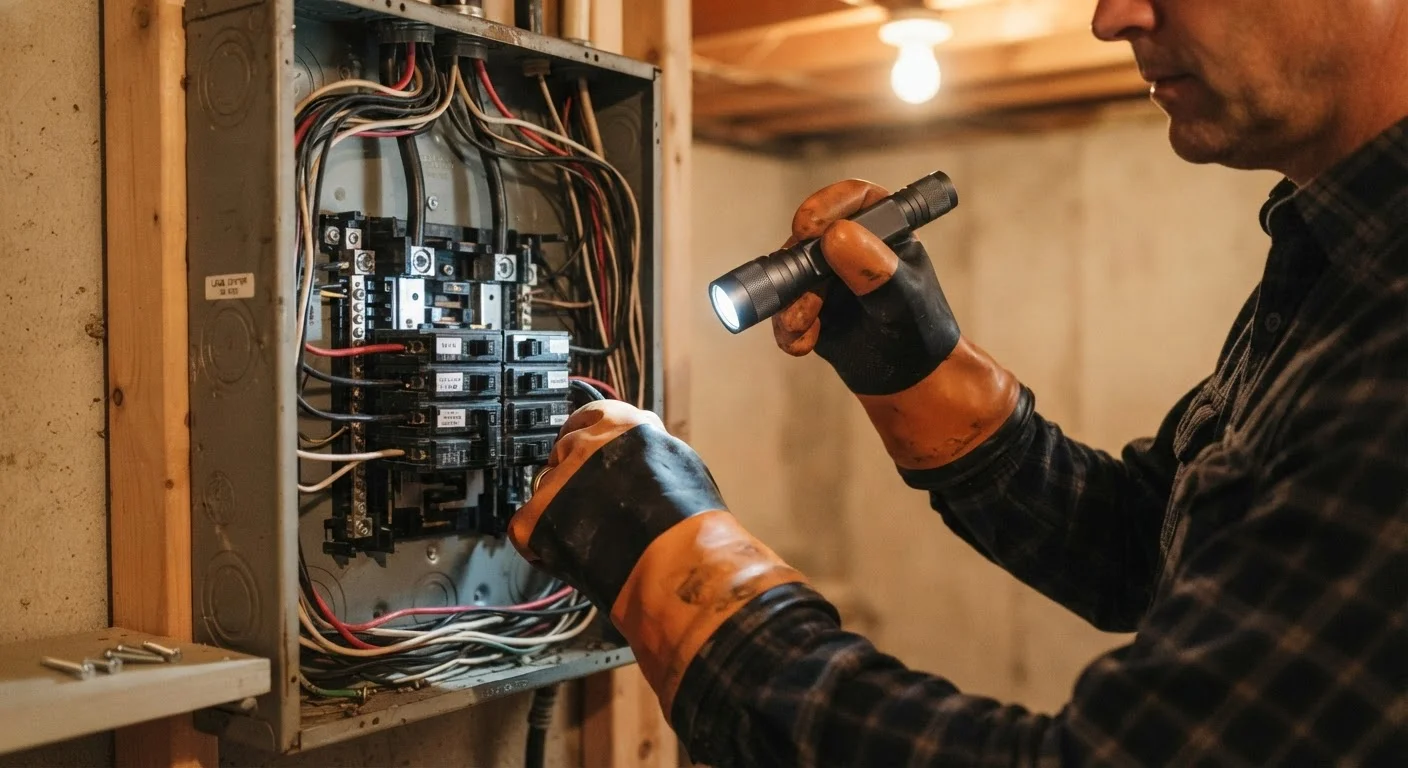
Personal protective equipment matters too. Insulated rubber gloves rated for electrical work, safety glasses, and rubber-soled shoes are minimum gear for any hands-on wiring task.
Label Your Panel While You Have the Chance
If you're already working with an outlet or circuit, take the opportunity to accurately label that breaker in your panel. A well-labeled panel makes every future electrical task faster and safer. Use a simple spreadsheet or a panel directory card (most panels include a slot for one) and update it whenever you confirm a circuit's location.
What DIYers Can Legally and Safely Do
With proper safety precautions, many homeowners can handle these common tasks:
- Replacing a standard outlet or light switch with the same type and amperage
- Installing a GFCI or AFCI outlet in place of a standard receptacle
- Replacing a light fixture (same wiring configuration, same junction box)
- Installing a ceiling fan where a light fixture already exists and the wiring supports it
- Replacing a doorbell transformer or thermostat (low-voltage systems)
Before diving in, always compare your wire gauge to your circuit's amperage rating. Also familiarize yourself with standard measurements for outlet placement - our guide to standard DIY measurements covers outlet heights and other commonly referenced dimensions.
The key word in all these tasks is replacement - swapping an existing device for a like or upgraded one, using the same wiring already in place. Adding new wiring is an entirely different level of complexity and risk.
When to Stop and Call a Licensed Electrician
Some electrical work is beyond the appropriate scope for most DIYers - not because of skill, but because of risk, code requirements, and the complexity of the systems involved. Call a licensed electrician for:
- Service panel work - upgrading capacity, adding breakers, or any work inside the main panel
- New circuits - running wire from the panel to new locations in the home
- Aluminum wiring - older homes with aluminum branch wiring require special connectors and techniques; mistakes here are a serious fire risk
- Knob-and-tube wiring - this older system requires careful evaluation before any modifications
- Anything near the utility meter or service entrance - this is utility company territory and tampering is both dangerous and illegal
Never Assume a Circuit is Off
Panel labels are frequently wrong, especially in older homes that have had prior renovations. Even if you've flipped what you believe is the correct breaker, always verify with a non-contact voltage tester at the actual outlet or wire before touching it. Skipping this step is the single most common cause of DIY electrical injuries.
Just as knowing when to call a mechanic is part of responsible car ownership - see our beginner car maintenance guide for a parallel approach to DIY limits - knowing when to call an electrician protects both your home and your family.
Permits, Inspections, and Code Basics
The National Electrical Code (NEC) is the baseline standard adopted (with local amendments) by most US jurisdictions. It specifies everything from wire gauge requirements to outlet spacing in kitchens. Being familiar with the relevant NEC sections for your project is part of doing the work responsibly.
Most electrical work beyond simple device replacement requires a permit and inspection. This isn't bureaucratic red tape - it's how dangerous amateur wiring gets caught before it causes a fire or fails during a home sale inspection. Unpermitted electrical work can also affect homeowner's insurance claims.
To find out what's required in your area, contact your local building department directly. Requirements vary widely: some municipalities require permits for ceiling fan installations; others don't. When in doubt, ask first. A quick phone call can save you from having to tear open walls to redo uninspected work later.
This article is for general informational and educational purposes only. Electrical work carries serious risk of injury, death, and property damage. Always consult your local building department for permit and code requirements, and hire a licensed electrician for any work beyond your verified skill level and local legal permissions.