

Key Takeaways
One Bag Per Person, No Exceptions
The single most effective organizational decision for a family road trip is also the simplest: every person-including children old enough to carry their own bag-gets one assigned bag that is theirs alone. This eliminates the scramble of "whose socks are in which suitcase" and gives kids a concrete sense of ownership over the packing process.
Assign bags by person rather than by category (e.g., don't create a "kids' bag" that lumps three children together). A small backpack or soft duffel works well for children ages four and up. Older kids can pack their own bag using a short written checklist you review together the evening before departure-this doubles as a practical life skill.
For adults, resist the urge to pack "family items" into your personal bag. Shared supplies-sunscreen, a first-aid kit, extra wipes-belong in a separate shared bag, not absorbed into someone's personal luggage where they become hard to find. See our complete packing guide for a broader framework on luggage selection and organization strategies.
Build a Car-Access Bag and Load It Last
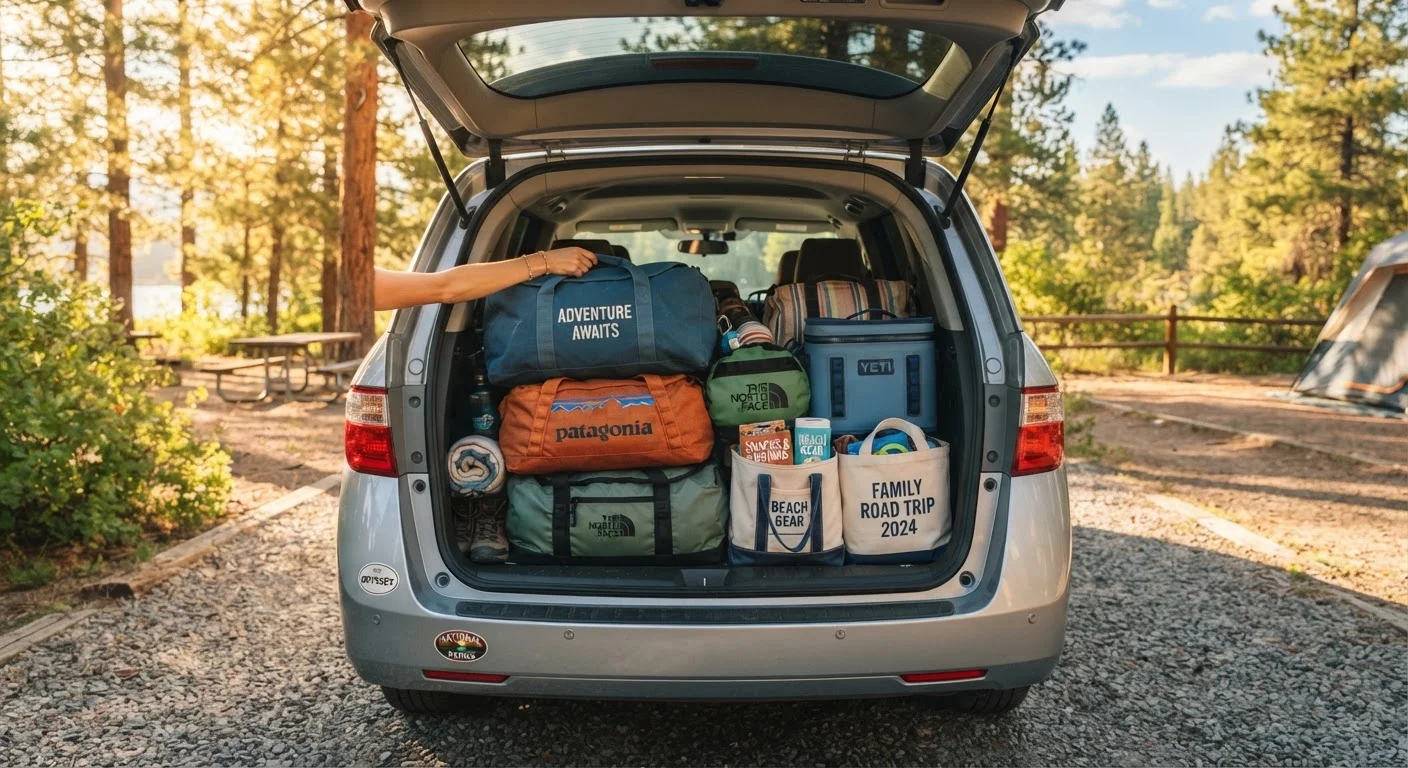
A trunk packed efficiently for space is useless if you have to unload half of it at every rest stop. Designate one soft-sided bag as your car-access bag and load it last so it's first out. This bag should contain everything you'll need without stopping the car or opening the trunk.
Pack a dedicated car-access bag with items needed during the drive and load it last.
Digging through a packed trunk at a rest stop wastes time and frays nerves. A single accessible bag means common items-wipes, snacks, medications, chargers-are retrievable in seconds without disturbing the load.
Assign one named bag per person and enforce it as the only bag they own on the trip.
Shared or category-based bags create ambiguity about who packed what and where it is. Named bags make retrieval fast and accountability clear, which matters most at 6 a.m. in a dark driveway.
Pre-portion snacks into individual servings before departure rather than packing full packages.
Full packages get crushed, encourage overconsumption, and spark disputes. Pre-portioned servings tied loosely to driving segments reduce mess, negotiation, and waste.
Give each child a personal entertainment pouch they are responsible for tracking.
When entertainment items live in a shared pile, they migrate, get lost, and generate repeated interruptions to the driver. Personal ownership of a small, fixed pouch contains the chaos.
Run a written night-before checklist organized by load zone: trunk, car-access bag, and on-person.
Departure morning decisions are made under time pressure and cognitive load. A written checklist from the calm of the prior evening catches omissions before they become roadside problems.
Think of this bag as a rolling daypack for the drive. Keeping it in the rear footwell or between seats means no one has to climb over a sleeping sibling to find the hand sanitizer. This approach also helps with the pre-trip planning decisions that determine what actually needs to be within arm's reach versus stowed away.
Snacks and Entertainment as Separate Systems
Snacks and entertainment are the two categories most likely to create mid-drive chaos when handled ad hoc. Treating each as its own system-with a fixed location and a simple rule-reduces the number of decisions you have to make while driving.
For snacks, use a soft cooler or insulated tote with a set of pre-portioned options rather than full-size packages. Full bags of chips or crackers get crushed, spill, and create arguments about quantity. Pre-portioning before departure takes about 15 minutes and eliminates multiple friction points on the road. Set a snack schedule loosely tied to driving segments rather than responding to requests on demand.
For entertainment, each child gets one small pouch or zippered bag that holds their own items-headphones, a book, a small activity pad, a downloaded playlist on a device. When it's gone from the pouch, it's their responsibility to find it. This containment approach prevents the "where's my charger?" spiral. For families navigating the question of how much to pack overall, understanding why we overpack can help trim the entertainment pile before it grows unwieldy.
The Night-Before Checklist That Actually Works
Departure morning is the wrong time to make packing decisions. Move every remaining choice to the evening before by running a short, written master checklist as a family ritual. Fifteen to twenty items is enough-this is a final verification pass, not a from-scratch inventory.
Organize the checklist into three columns: in the trunk, in the car-access bag, and on-person (wallets, phones, car keys). Checking all three prevents the most common oversights. Confirm that each person's individual bag is zipped and by the door. Charge all devices overnight. Prepare the cooler and place it near the door to grab last.
Road trip packing differs meaningfully from air travel packing-you're not constrained by weight limits or carry-on dimensions, but in-car accessibility and load order matter far more. If you're curious how the discipline translates, packing a week into a carry-on uses a room-by-room method that adapts well to building your per-person bag lists for road trips too.
This article provides general travel preparation guidance and is not a substitute for personalized advice. Verify any destination-specific requirements-including road conditions, entry requirements, and safety considerations-with official sources before you travel.