

| Passport validity rule | 6 months beyond return date (Required by most international destinations) |
| Standard US passport renewal time | 8-11 weeks (standard processing) (U.S. Department of State; expedited options available) |
| STEP enrollment | Free; highly recommended for all international trips (U.S. Department of State Smart Traveler Enrollment Program) |
| IDP issuing bodies in US | AAA and AATA (Only organizations authorized to issue IDPs in the United States) |
| Physical copy sets recommended | 2 sets minimum (One in carry-on; one with a trusted home contact) |
The Core Documents Every Traveler Needs
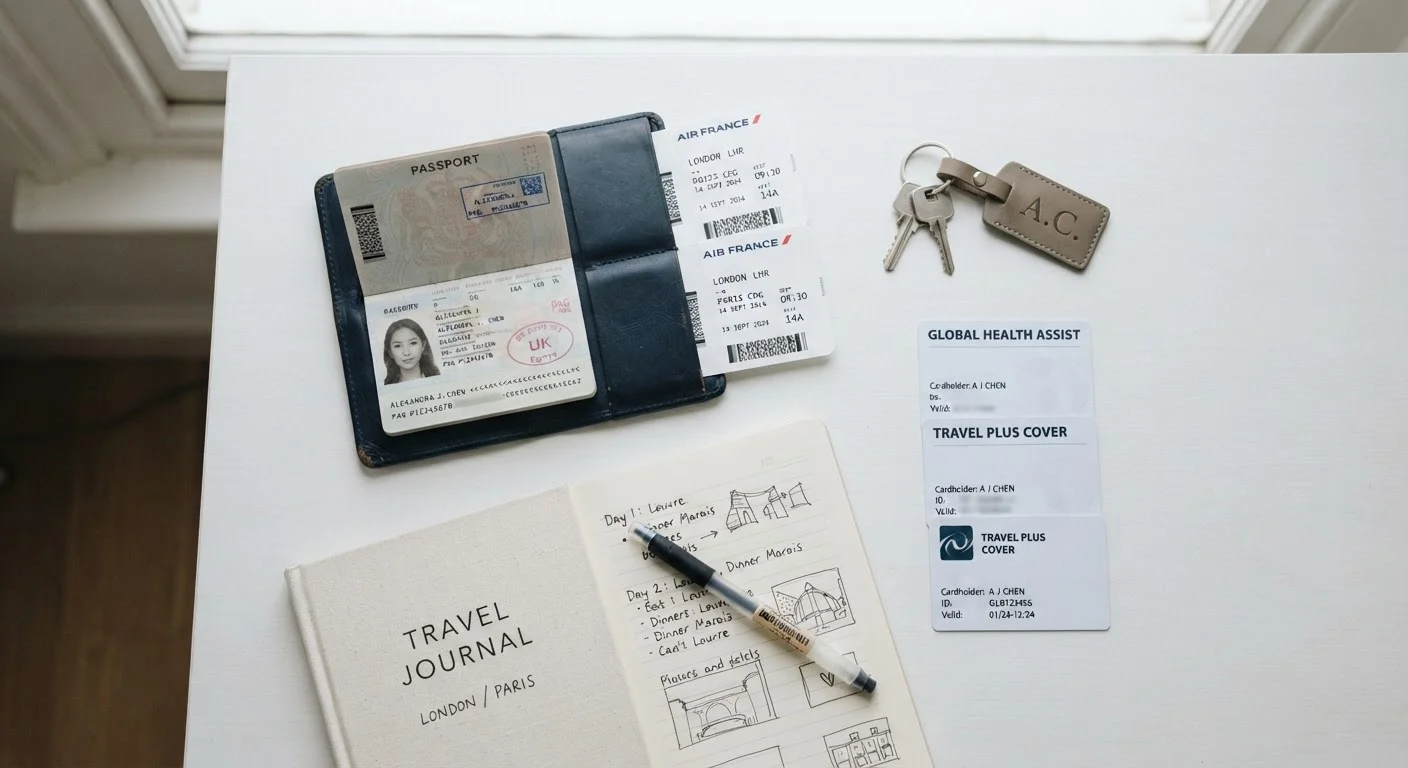
Before anything else, confirm your passport is valid for at least six months beyond your return date - many countries enforce this rule strictly, and airlines may deny boarding without it. If your passport expires within that window, allow eight to eleven weeks for renewal through standard processing, or longer during peak periods. Always verify current processing times directly with the U.S. Department of State before assuming a timeline.
| Passport validity rule | 6 months beyond return date (Required by most international destinations) |
| Standard US passport renewal time | 8-11 weeks (standard processing) (U.S. Department of State; expedited options available) |
| STEP enrollment | Free; highly recommended for all international trips (U.S. Department of State Smart Traveler Enrollment Program) |
| IDP issuing bodies in US | AAA and AATA (Only organizations authorized to issue IDPs in the United States) |
| Physical copy sets recommended | 2 sets minimum (One in carry-on; one with a trusted home contact) |
Beyond the passport, gather these in one dedicated folder or travel wallet:
- Visa documentation - printed approval letters, e-visa confirmations, or stamped pages as required by your destination. Requirements vary widely; check official embassy or consulate sources, not third-party aggregators.
- Flight and accommodation confirmations - printed copies, not just screenshots, since connectivity abroad is never guaranteed.
- Travel insurance card or policy summary - including the 24-hour emergency assistance number.
- International driving permit (IDP) - required in many countries if you plan to rent or drive. Issued through AAA or AATA in the US; not something you can obtain abroad after the fact.
- Vaccination records or health certificates - requirements change; verify with the destination country's official government site and the CDC before departure.
This list forms the foundation of your document kit. For a fuller picture of how documents fit into overall trip preparation, see the Universal Pre-Trip Packing Checklist.
How to Copy, Organize, and Back Up Your Documents
Losing your passport abroad is stressful enough - losing it with no backup information is significantly worse. A simple three-layer backup system closes most of the gap:
E-visa
An electronically issued visa linked to your passport number and stored in a government database. You typically print a confirmation letter to show at the border, as no physical sticker is placed in your passport.
International Driving Permit (IDP)
A standardized document that translates your US driver's license into multiple languages. Many countries require it in addition to - not instead of - your valid US license when renting or driving abroad.
Smart Traveler Enrollment Program (STEP)
A free service from the U.S. Department of State that lets US citizens register their overseas trip with the nearest US embassy or consulate, enabling contact in emergencies or security situations.
Travel insurance policy summary
A condensed version of your travel insurance policy listing coverage limits, exclusions, and - critically - the 24-hour emergency assistance phone number. Carry this separately from the full policy document.
- Physical photocopies: Make two sets. Keep one in your carry-on, separate from your actual passport. Give the second set to a trusted contact at home who can read information to you over the phone if needed.
- Encrypted digital scan: Scan or photograph every key document - passport bio page, visa, insurance card, driver's license, credit cards (front only). Store them in an encrypted cloud folder or a password-protected app. Avoid sending scans to yourself via unencrypted email.
- Offline device copy: Save PDFs to your phone and, if traveling with a laptop, to that device too. Offline access matters when you're in a hotel lobby with no Wi-Fi trying to reach your insurer.
Record critical numbers separately in a notes app or on paper: your passport number, travel insurance policy number, credit card emergency lines, and the nearest US embassy or consulate address for your destination. The State Department's Smart Traveler Enrollment Program (STEP) allows US citizens to register trips so the embassy can reach you in a crisis - enrollment is free and takes minutes.
For guidance on what to do if a document emergency disrupts your plans, the Building a Travel Contingency Plan article covers realistic backup strategies.
Note: Entry requirements, visa rules, and health documentation standards are subject to change. Always verify current requirements through official government sources - both US and destination - before you travel.