

Key Takeaways
Summary
32 items · 30-60 minutes
Why a Category-by-Category Approach Works
Most packing mistakes happen not because travelers are careless, but because they pack from memory rather than from a system. Memory is unreliable under pre-travel pressure - the morning before a flight is the worst time to improvise. A structured, category-based checklist removes the cognitive load entirely, letting you move through each zone of your bag methodically.
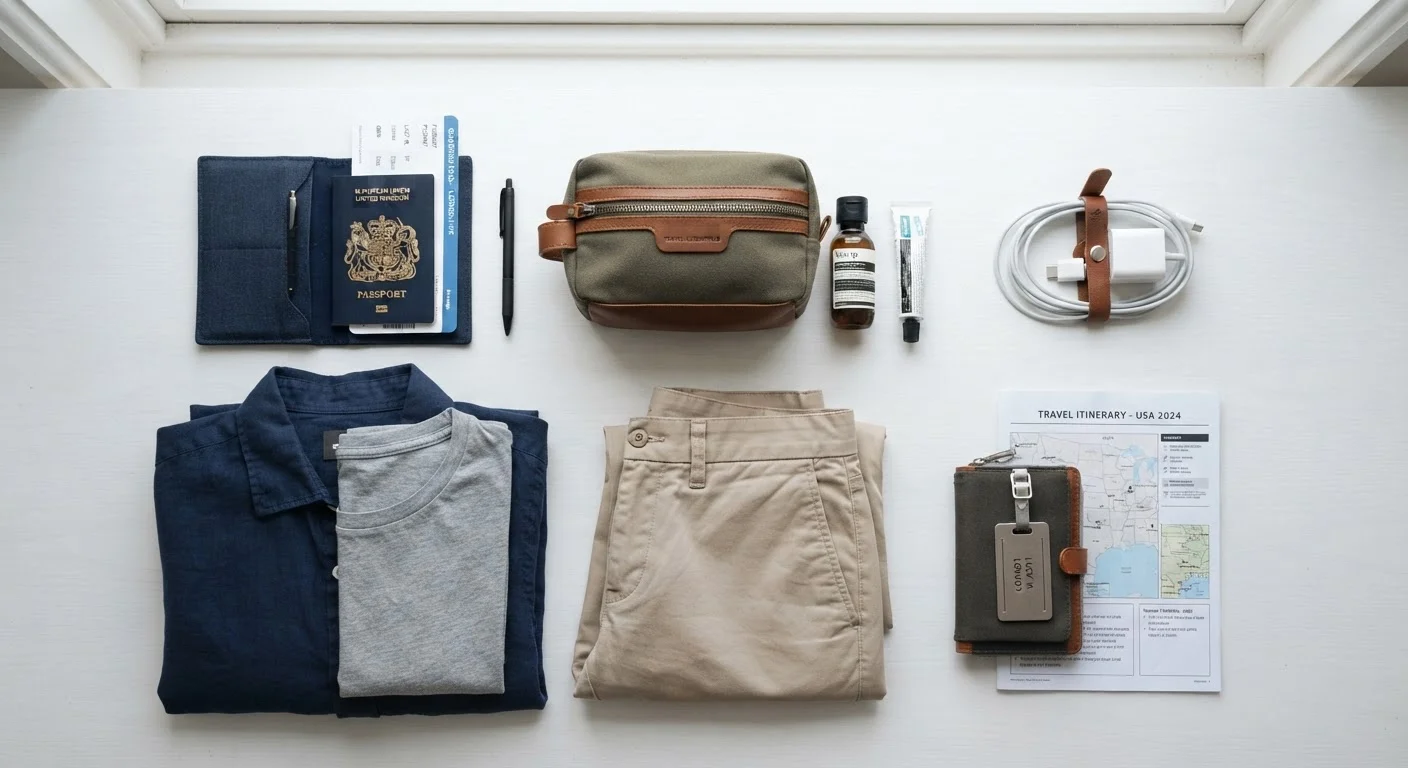
This checklist applies to virtually any trip - domestic or international, carry-on or checked, leisure or business. Work through each group in order, checking items off as they go into your bag. For a deeper look at building a complete packing system from the ground up, see this guide to building a packing system from scratch.
Documents & ID
Clothing & Footwear
Toiletries & Personal Care
Health & Medications
Tech & Connectivity
Money & Payments
Before You Close the Bag
Tools That Make This Checklist Easier to Use
You don't need specialized software to get organized, but the right tools reduce friction significantly - especially when you're adapting this checklist to a specific trip type or destination.
Note-taking or checklist app
Save a digital version of this checklist so you can reuse and adapt it for every future trip.
Luggage scale
Weigh bags before departure to confirm they meet airline limits and avoid overweight fees at check-in.
Packing cubes
Compress and organise clothing by category, making it faster to find items and repack mid-trip.
Secure cloud storage account
Store scanned copies of documents so they are accessible from any device if originals are lost or stolen.
Clear TSA-compliant toiletry bag
Keep liquids grouped and ready for security screening without unpacking your entire carry-on.
If you're driving rather than flying, don't overlook vehicle prep. A pre-trip safety walkthrough covers the two-minute vehicle check that catches flat tires and visibility issues before they become roadside problems.
A Note on Documents and Health Items
Two categories deserve extra attention because the consequences of forgetting them are disproportionately serious: documents and health essentials.
For documents, the goal is redundancy. Keep physical copies separate from originals, and store digital scans in a secure, cloud-accessible location. Travel document prep covers exactly what to gather, copy, and store - including passport photos, insurance cards, and emergency contact sheets - so nothing critical gets left behind.
Prescriptions and Controlled Substances Abroad
Medications that are legal in the US may be restricted or prohibited in other countries. Before traveling internationally with prescription drugs - especially controlled substances - verify the rules for each destination country through official government or embassy sources. Always carry documentation from your prescribing physician. This is general information only; consult your healthcare provider for guidance specific to your situation.
For health items, prescription medications should be packed in carry-on luggage in their original labeled containers. Carry enough supply to cover trip delays. Travelers with specific medical conditions or those visiting destinations with unique health requirements should consult a qualified healthcare provider well before departure - general checklists cannot account for individual medical needs.
For a comprehensive end-to-end resource that goes beyond this checklist, including luggage selection and packing methods, see The Complete Guide to Packing and Preparing for Any Type of Trip.
Don't Rely Solely on Airline Bag Tracking
Checked luggage is occasionally delayed or misdirected, including on domestic routes. Pack any item you cannot go 24 hours without - medications, a change of clothes, chargers, and critical documents - in your carry-on, regardless of how short the trip is. Assume your checked bag may not arrive with you.