

Key Takeaways
Our Verdict
No single source type wins outright - the most efficient researchers use official sites for baseline facts, guidebooks for structural context, and community forums for current ground-truth. The key is knowing what each source does well and where it falls short, then triangulating rather than defaulting to whichever feels most convenient.
| Best for | Recommended |
|---|---|
| Travelers verifying entry requirements, safety advisories, and transport logistics | Official Government & Tourism Sites |
| First-time visitors to a destination needing cultural and historical context | Guidebooks |
| Experienced travelers seeking current, unfiltered conditions and local tips | Traveler Forums & Communities |
| Visual planners building itineraries and identifying neighborhoods | Travel Blogs & Video Channels |
Why Your Research Source Matters as Much as Your Research
Most trip-planning mistakes don't happen at the booking stage - they happen earlier, when a traveler builds their understanding of a destination from sources that are incomplete, outdated, or commercially motivated. The result is mismatched expectations: a neighborhood that's no longer the hub it once was, a 'hidden gem' now overrun, or a visa requirement that changed six months ago.
A smarter approach treats research as a triangulation exercise. See our full breakdown of trip planning phases for how research fits into the broader planning structure. This article focuses specifically on evaluating the four most common source categories so you can allocate your research time where it actually pays off.
Comparing the Four Main Source Types
Each source type has a distinct strength - and a predictable blind spot. Understanding both lets you extract maximum value without being misled.
| Official Tourism Sites | Guidebooks | Traveler Forums | Travel Blogs/Video | |
|---|---|---|---|---|
| Reliability / Accuracy | High for logistics & entry rules | High for context, moderate for currency | Variable - depends on contributor | Variable - often commercially influenced |
| Recency | Updated regularly for advisories | Often 2-4 years behind | Real-time or near-real-time | Varies; popular posts may be dated |
| Depth of Cultural Context | Low - promotional framing | High - editorially structured | Low - anecdotal | Moderate - experience-based |
| Candor About Drawbacks | Low - destination marketing focus | Moderate - editorial standards vary | High - direct traveler experience | Low - commercial incentives apply |
| Best Use Case | Visa, health, safety verification | First-time destination orientation | Current conditions, practical logistics | Visual planning, itinerary inspiration |
| Critical Evaluation Required | Low | Low to moderate | High | High |
The pattern that emerges: official and guidebook sources deliver reliability and structure; community sources deliver currency and candor. Neither replaces the other.
Official Government and Tourism Sites: High Trust, Narrow Scope
For anything safety- or entry-related - visa requirements, health advisories, border rules, vaccination recommendations - official government sources are non-negotiable starting points. Always verify these details with official government and provider sources before travelling, as conditions can change faster than any third-party site updates. National tourism boards add useful logistics (transport infrastructure, regional maps, seasonal calendars) but tend to present destinations in their most flattering light. Treat them as a reliable floor, not a ceiling.
Cross-Reference Before You Commit
When a piece of information meaningfully affects your plans - a transport route, a visa requirement, a neighborhood choice - verify it across at least two independent source types before acting on it. Official sources and community forums rarely have the same incentives, so agreement between them is a strong reliability signal. This habit takes minutes and prevents hours of on-the-ground course correction.
Guidebooks: Strong Context, Lagging Currency
A well-researched guidebook provides something most digital sources don't: structured, editorially curated context - history, cultural norms, neighborhood logic, and suggested itinerary frameworks. That depth earns its place in your research stack, especially for first-time visitors to complex destinations. The trade-off is recency. Print editions are typically 2-4 years old by the time you read them, and even digital updates lag behind fast-moving destinations. Use guidebooks to build a mental map and understand the 'why' behind a place; use other sources to verify that the practical details (opening hours, transport routes, neighborhood character) still hold. For a structured approach to using these sources, the pre-trip research checklist offers a useful framework.
Traveler Forums and Communities: Current but Uneven
Online traveler communities - dedicated forums, subreddits, Facebook groups - are where you'll find the most current ground-truth: which neighborhoods have changed, which routes are actually practical, what the experience is like right now. That recency is genuinely valuable. The challenge is signal quality. Posts are written by individuals with varying experience levels, different risk tolerances, and sometimes undisclosed commercial ties. Before accepting forum advice, consider: How recent is the post? Does the contributor appear to have comparable travel experience and preferences to yours? Is the recommendation consistent across multiple independent sources? Traveler communities are most reliable for practical logistics questions (transit tips, accommodation areas, current conditions) and least reliable for nuanced cultural or safety assessments.
Travel Blogs and Video Channels: Useful Visuals, Scrutinize the Business Model
Travel blogs and YouTube channels can be excellent for visualizing a destination - understanding how neighborhoods connect, what accommodation styles look like in practice, and what a typical day's itinerary feels like on the ground. They're weakest on objectivity. Most monetized travel content has affiliate relationships, sponsored placements, or brand partnerships that influence recommendations, often without prominent disclosure. This doesn't make the content useless, but it changes how you use it. Treat blogs and video as inspiration and visual reference, not as independent editorial assessment. Cross-reference specific recommendations - particularly for accommodation and tours - against community forums and review aggregates before acting on them. For a deeper look at how timing affects destination experience, see how to read shoulder seasons correctly, which applies the same critical lens to seasonal travel claims.
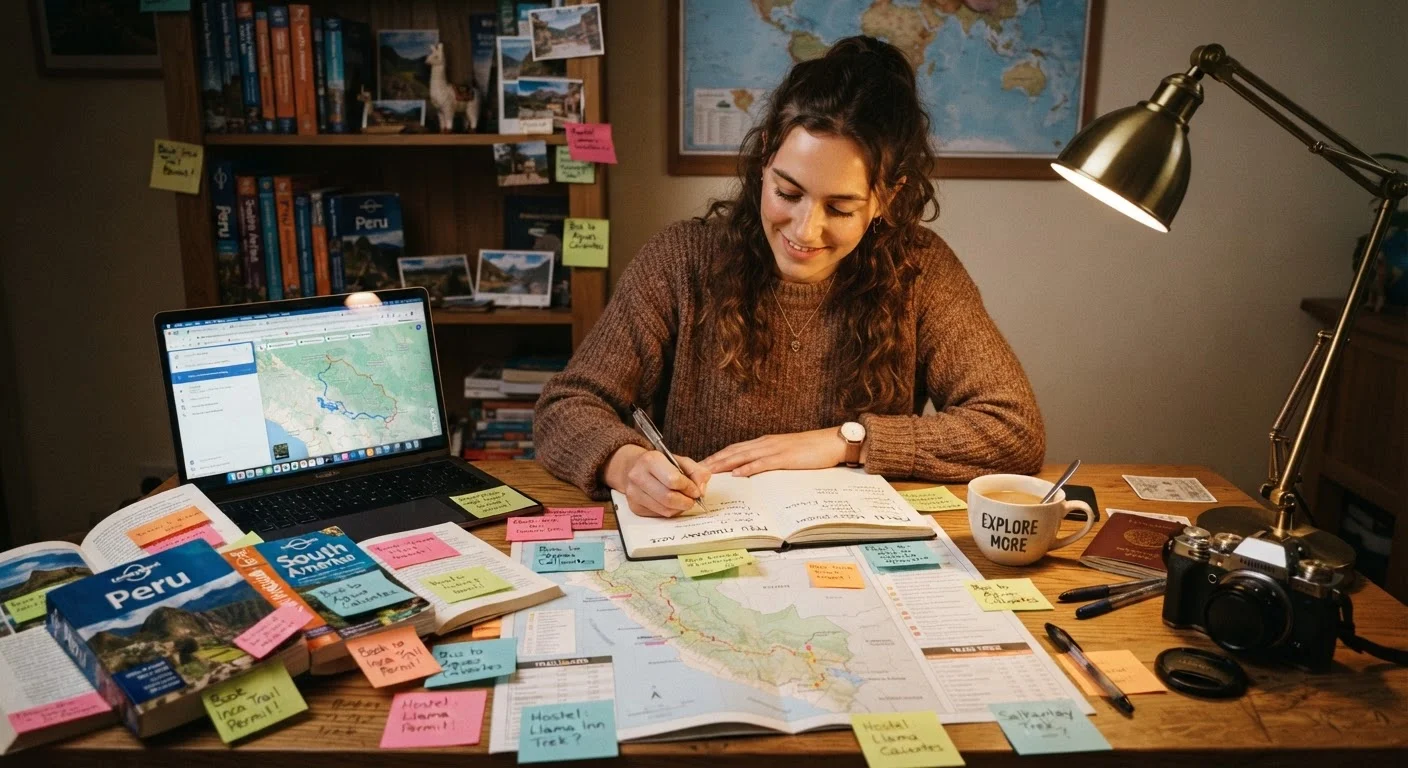
Building an Efficient Research Stack
A practical research workflow looks like this: start with official government and tourism sources to establish baseline facts on entry requirements and safety; use a guidebook to build structural and cultural context; query traveler forums for current conditions and logistics specifics; and selectively use blogs or video for visual orientation. For travelers new to this process, the ground-up planning primer walks through how to sequence these steps within a complete trip plan. The goal isn't exhaustive research - it's targeted research that surfaces the information most likely to affect your actual experience, without burning hours on sources that won't move the needle.