

Travel Smarter

Pre-Trip Research Checklist for Any Destination

Share
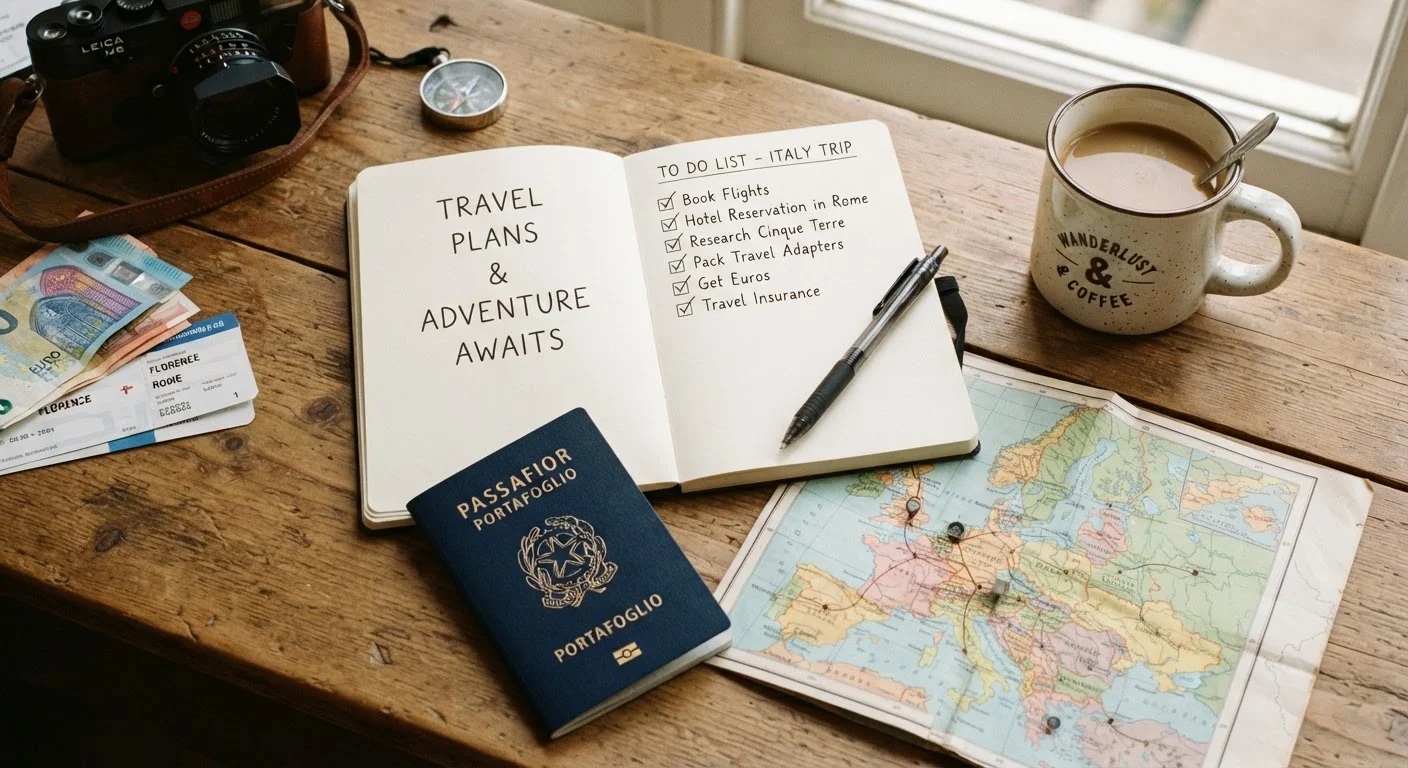
Travel planning flat lay with passport, checklist notebook, world map, and pen on a wooden desk.

Key Takeaways

Entry requirements—visas, passports, vaccinations—must be verified with official government sources before booking.
Travel advisories from the US State Department can change; check them close to departure, not just when you first plan.
Understanding local transport options and costs before arrival prevents overpaying on arrival-day decisions.
Cultural norms and local laws vary significantly; researching both reduces friction and avoids legal trouble.
Health prep, including insurance coverage and destination-specific medical risks, belongs in early planning—not the night before.
A systematic research framework cuts decision fatigue and surfaces savings opportunities before money changes hands.
45–90 min

Summary

24 items · 45–90 minutes

Why a Research Checklist Matters Before You Book Anything

Most travel mistakes are made before departure—not during the trip. Booking a flight without confirming visa eligibility, assuming health insurance covers international care, or underestimating local transport costs are avoidable errors that a structured pre-trip research process catches early.

This checklist is designed to be destination-agnostic. Whether you're crossing a state line or an ocean, the same categories of information determine whether a trip runs smoothly or expensively. Work through each group systematically, ideally before confirming any bookings. For a complementary view of how these phases interconnect, see The Anatomy of a Well-Planned Trip.

Before spending a dollar, also run through the pre-purchase savings checklist to catch straightforward cost-reduction opportunities most travelers overlook.

Entry Requirements

Confirm your passport is valid for at least six months beyond your intended return date—many countries enforce this rule at the border. Must
Check visa requirements for your nationality using your government's official travel portal (e.g., travel.state.gov for US citizens). Must
Determine whether your destination requires proof of onward travel or a return ticket at the point of entry. Must
Research whether any mandatory vaccinations or health documentation (such as vaccination certificates) are required for entry. Must
Check customs rules for items you plan to bring in—restrictions on food, currency amounts, and medications vary widely. Should

Safety & Travel Advisories

Review the current US State Department travel advisory level for your destination at travel.state.gov. Must
Enroll in the Smart Traveler Enrollment Program (STEP) so the nearest US embassy can reach you in an emergency. Should
Identify the location and contact details of the nearest US embassy or consulate at your destination. Should
Research destination-specific risks—crime patterns, natural disaster seasons, civil unrest—from non-commercial sources. Must

Health & Medical Preparation

Consult a travel medicine clinic or your physician about recommended or required vaccinations well in advance of departure. Must
Confirm whether your existing health insurance provides international coverage, and what the claims process involves. Must
Research destination-specific health risks such as altitude, water safety, mosquito-borne illness, or food hygiene standards. Should
Identify local emergency services numbers and the nearest reputable medical facilities at your destination. Should

Local Laws & Cultural Norms

Research local laws that may differ significantly from US law—dress codes, photography restrictions, alcohol regulations, and more. Must
Look into tipping customs, bargaining etiquette, and any behavior that is considered disrespectful in local culture. Should
Confirm rules around LGBTQ+ rights and safety if relevant to members of your travel party. Should
Research any religious or cultural observances during your travel dates that may affect business hours or access to sites. Nice to have

Transport & Getting Around

Research available transport options from the airport or entry point to your accommodation—including typical costs. Must
Determine whether your US driver's license is valid for driving at your destination, or whether an International Driving Permit is needed. Must
Identify reliable local transit options (metro, bus, rideshare) and whether local apps or transit cards are needed. Should
Check whether your mobile carrier plan covers data and calls at your destination, or research local SIM options. Should

Money & Finances

Confirm whether your destination is primarily cash-based or card-friendly, and plan your currency access accordingly. Must
Notify your bank and credit card issuers of your travel dates to prevent fraud blocks on your accounts. Must
Research the destination's current exchange rate and identify whether airport currency exchanges carry significantly higher fees. Nice to have

Tools You'll Need to Work Through This Checklist

Effective pre-trip research relies on authoritative, up-to-date sources rather than travel blogs or secondhand accounts. The tools below give you direct access to official data and help you organize what you find.

Required

US State Department Travel Website (travel.state.gov)

Official source for travel advisories, visa information, and country-specific safety and entry data for US citizens.

Required

CDC Travelers' Health Portal (wwwnc.cdc.gov/travel)

Official source for destination-specific health notices, recommended vaccinations, and outbreak alerts.

Required

Smart Traveler Enrollment Program (STEP)

Free US government service that registers your trip with the nearest embassy for emergency notifications and assistance.

Optional

Spreadsheet or notes app

Organize research findings, links to official sources, and key contacts in a single shareable document.

Required

Your country's official passport agency website

Check passport validity, renewal timelines, and application status before finalizing travel dates.

Once your research is complete, your next task is document preparation. The travel document prep guide walks through exactly what to gather, copy, and store before departure. When you're ready to move from research to packing, the universal pre-trip packing checklist provides a category-by-category breakdown. For an end-to-end planning resource that ties research, logistics, and departure prep together, see Trip Planning from Destination Search to Departure Day.

Verify Entry Requirements Close to Departure

Visa rules, vaccination requirements, and travel advisories can change with little notice. Information that was accurate when you booked may be outdated by the time you travel. Always re-verify entry requirements using official government sources within 30 days of your departure date—do not rely on cached articles, travel forums, or booking platform summaries.

Health Information Here Is General—Not Medical Advice

The health preparation items in this checklist are general planning prompts, not medical recommendations. Requirements vary by individual health history, travel duration, and current outbreak conditions. Consult a licensed healthcare provider or travel medicine specialist for advice tailored to your situation.

Travel Smarter Editorial Team is the collective byline for our editorial team and contributor network. Articles published under this byline or an editorial pen name are researched, written, and reviewed according to our editorial standards for clarity, consistency, and independence before publication.

View all articles by Travel Smarter Editorial Team →
Disclaimer: The content provided on our blog site traverses numerous categories, offering readers valuable and practical information. Readers can use the editorial team’s research and data to gain more insights into their topics of interest. However, they are requested not to treat the articles as conclusive. The website team cannot be held responsible for differences in data or inaccuracies found across other platforms. Please also note that the site might also miss out on various schemes and offers available that the readers may find more beneficial than the ones we cover.