

Key Takeaways
Why Grooming Is More Than Coat Maintenance
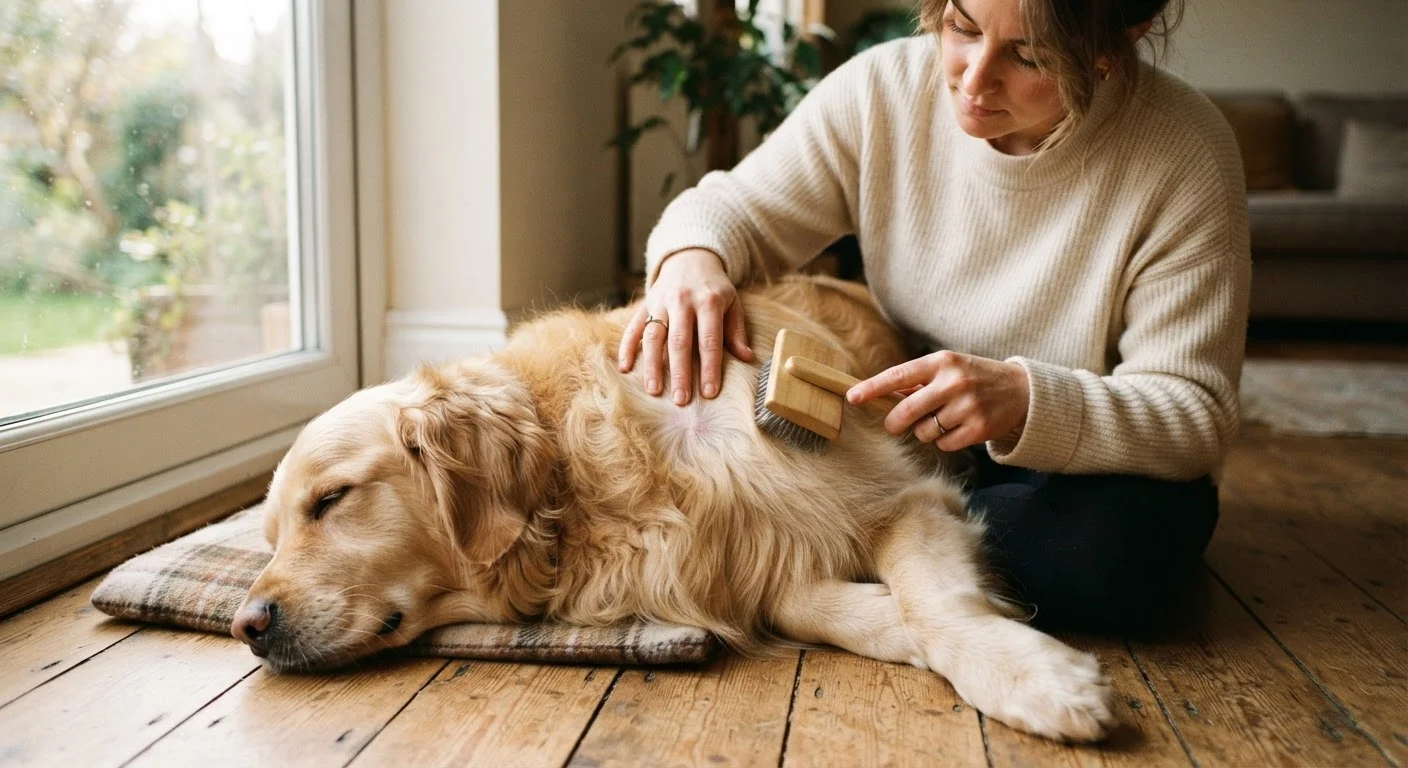
Most pet owners think of brushing as a chore that keeps fur off the furniture. In reality, regular grooming is one of the most practical health-monitoring tools available between veterinary appointments. Your hands and eyes are in direct contact with your pet's entire body - a position even a veterinarian only occupies a few times a year.
Early detection matters. Skin masses, hot spots, ear infections, and external parasites are far easier to address when caught at the first sign rather than after weeks of progression. A structured preventive care routine pairs well with consistent grooming because both habits reinforce the same goal: catching small problems before they become expensive or painful ones.
This article explains how to turn a routine brush-out into a brief but thorough wellness check, what to look and feel for at each body region, and when to stop and call your veterinarian.
Best Practices for a Health-Focused Grooming Routine
The following practices form a repeatable framework. Apply them consistently, and grooming becomes a reliable source of health data rather than just a hygiene task.
Establish a consistent grooming schedule tied to coat type.
Regular, predictable sessions mean you build a clear baseline of what is normal for your individual pet. Irregularity makes it harder to notice gradual changes in skin condition, coat texture, or body contour. Short-coated dogs may need weekly checks; double-coated or long-haired breeds often benefit from every two to three days.
Always work in good, direct lighting and use both your eyes and fingertips.
Many early skin changes - pale lumps, early hot spots, embedded ticks - are easier to feel than to see through a coat. Relying solely on visual inspection in dim light misses subcutaneous (below-the-skin) changes that fingertips can detect. Natural light or a bright, focused lamp reveals color changes that overhead room lighting hides.
Use a systematic head-to-tail sequence every time.
A consistent sequence prevents regions from being skipped, especially areas pets dislike - ears, paws, and hindquarters - where problems often develop undetected. Routine also reduces pet anxiety because the order becomes predictable and familiar.
Document new findings with a dated note or smartphone photo.
Memory alone is unreliable for tracking whether a spot has grown, a patch has spread, or a lump has changed shape over several weeks. A simple log - even a notes app with photo timestamps - gives your veterinarian objective information and helps you determine whether something is evolving.
Reward calm behavior throughout, not just at the end.
Intermittent positive reinforcement during the session - rather than a single treat at the finish - keeps anxious pets cooperative for longer and makes thorough inspection possible. A pet that tolerates ear and paw handling allows a far more complete health check than one that shuts down mid-session.
What You're Looking and Feeling For
Knowing the vocabulary of what you might find helps you describe findings accurately to your vet. Here is a region-by-region reference:
- Head and ears: Redness, odor, dark debris (possible ear mites or infection), eye discharge that is yellow or green, or asymmetry in the face.
- Coat and skin: Flaking, greasiness, patchy hair loss, redness, scabs, or small raised bumps. Part the fur to see the skin beneath, especially in dense coats.
- Body and limbs: Lumps or swellings of any size, tenderness when touched, wounds, or swollen joints. Note if your pet pulls a limb away or vocalizes.
- Paws and nails: Cracked pads, swelling between toes, overgrown or cracked nails, and foreign objects lodged in the paw.
- Tail and hindquarters: Signs of scooting irritation, fecal matter clinging to fur, or swelling near the base of the tail.
If your pet suddenly resists a part of the body they previously tolerated, treat that behavioral shift as a signal worth investigating. Unexpected behavioral changes during handling can reflect underlying pain or discomfort that deserves veterinary attention.
When to Stop Grooming and Call Your Vet
Not every finding requires an emergency visit, but some do warrant prompt attention. Contact your veterinarian if you discover a lump that was not present at your last session, any wound that appears infected or is not healing, signs of extreme pain or sudden behavioral changes during handling, or evidence of a heavy parasite burden. When in doubt, a brief phone call to your veterinary clinic is always appropriate - most practices welcome these questions and can help you triage over the phone.
Pair grooming observations with what you know about your pet's baseline. Monitoring your pet's vital signs at home gives you additional reference points - such as normal respiratory rate and resting heart rate - that, combined with grooming findings, create a more complete health picture.
Quick Wins You Can Start at the Next Session
You do not need special equipment or a lengthy routine to begin. These high-impact actions require only minutes and build naturally into any brushing session.
~70%
Pet owners who skip routine exams between vet visits
Survey data from the American Pet Products Association consistently finds that most owners rely on annual vet appointments as their primary health monitoring, leaving long gaps between professional assessments.
2-4 weeks
Typical delay before owners notice gradual skin changes
Veterinary dermatology literature notes that gradual-onset conditions such as hot spots and early parasitic infestations often go undetected for weeks in pets that are not handled systematically between vet visits.
Be mindful that well-meaning habits can sometimes backfire. Over-bathing, for example, can strip protective oils and create the very skin problems you are trying to prevent. Frequency of grooming should match coat type and lifestyle, not an arbitrary schedule.
This article is for general educational purposes only and is not a substitute for professional veterinary advice. If you notice any concerning changes during grooming, consult a licensed veterinarian for guidance specific to your pet.