

Key Takeaways
Why Vital Signs Matter - and What Home Monitoring Can Realistically Do
Veterinarians check heart rate, breathing, temperature, and circulation at every exam because these four measures reflect how the body's core systems are functioning in real time. A single abnormal reading rarely tells the whole story, but a pattern of readings - or a sharp deviation from your pet's personal baseline - can be the first signal that something needs professional attention.
Home monitoring does not replace annual wellness exams or diagnostic workups. What it does do is shrink the window between a problem starting and you noticing it. Many pets, especially cats, are skilled at masking discomfort. Keeping an occasional log of normal vitals gives you a concrete reference point and makes it easier to describe changes clearly when you call your vet. Pair this habit with routine grooming checks and awareness of behavioral shifts that signal medical issues for a more complete picture of your pet's wellbeing.
What you will need
What You'll Need Before You Begin
The equipment list is short and inexpensive. A standard digital rectal thermometer, lubricant, and a timer are the only essentials. An optional stethoscope can make heart rate counting easier with thick-coated or barrel-chested breeds, but most owners manage well with a flat hand against the chest wall.
Digital rectal thermometer
Measures your pet's core body temperature accurately; a must for detecting fever or hypothermia.
Water-based or petroleum jelly lubricant
Makes rectal thermometer insertion comfortable and safe for the pet.
Timer or stopwatch
Used to count heart rate and breathing rate accurately over a defined interval.
Stethoscope
Makes it easier to hear and count heartbeats clearly, especially in large or thick-coated dogs.
Pet wellness logbook or notes app
Records baseline and follow-up readings so trends can be spotted and shared with your vet.
Build a Baseline When Your Pet Is Healthy
Take and record your pet's heart rate, breathing rate, and temperature on three separate calm days. Average those numbers to create a personal baseline. This makes it far easier to recognize a meaningful change later - and gives your vet useful data if your pet becomes ill.
Step-by-Step: Checking Your Pet's Vitals
Work through the following steps in order. The full check typically takes 10-15 minutes once you and your pet are comfortable with the routine. If your pet becomes distressed at any point, stop and try again later rather than forcing the process.
When to Skip Home Checks and Call the Vet
If your pet is showing obvious distress - gasping, unconscious, seizing, or clearly in pain - do not attempt a home vital sign check. Go directly to a veterinary clinic or emergency animal hospital. Home monitoring is a supplement to professional care, not a substitute. This article provides general educational information and is not a replacement for veterinary advice.
Settle your pet in a calm environment
Choose a time when your pet has been resting for at least 15 minutes - not right after play, a walk, or a meal. Elevated activity raises heart rate and breathing rate significantly, which will skew your readings. Sit or kneel beside your pet rather than hovering over them, and speak in a low, even tone. Fearful or agitated pets produce unreliable readings and are harder to handle safely.
Count the breathing rate
Watch your pet's chest rise and fall. Each full inhale-exhale cycle counts as one breath. Set your timer for 30 seconds, count the breaths, then multiply by two to get breaths per minute. Normal resting respiratory rate is 15-30 breaths per minute for dogs and 20-30 breaths per minute for cats. Rates above 40 at rest, labored effort, open-mouth breathing in a cat, or a rhythmic abdominal push with each breath are all reasons to contact your vet promptly.
Measure the heart rate
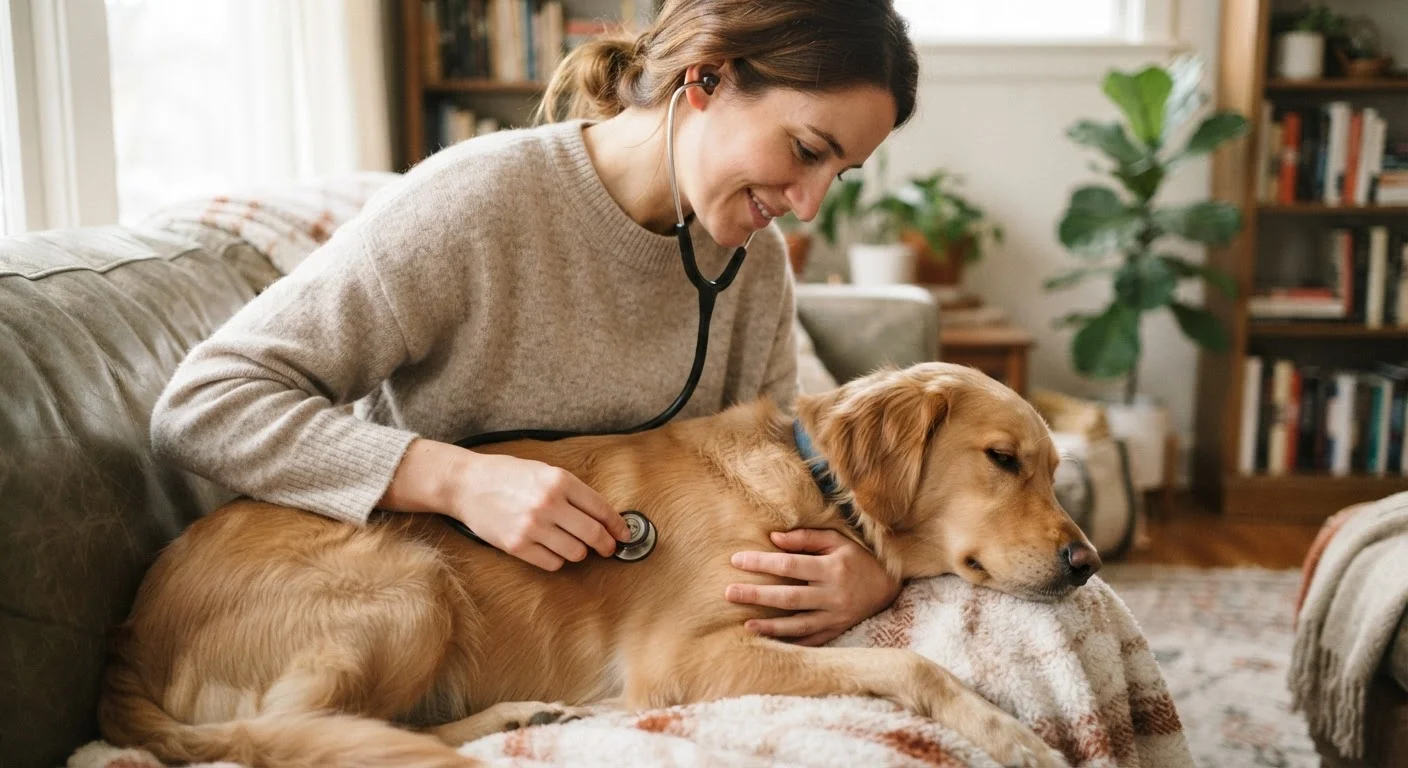
For dogs, place your hand or a stethoscope on the left side of the chest, just behind the front leg. For cats, the same location works but the heartbeat is often easier to feel by wrapping your fingers gently around the lower chest. Count beats for 15 seconds and multiply by four. Normal resting heart rates:
- Dogs: 60-140 beats per minute (smaller breeds trend higher; large and giant breeds trend lower)
- Cats: 140-220 beats per minute
Note whether the rhythm feels regular. Occasional skipped or early beats can be normal, but a persistently irregular rhythm warrants veterinary evaluation.
Take a rectal temperature
Apply a small amount of lubricant to the tip of your digital thermometer. Gently lift your pet's tail and insert the thermometer about one inch into the rectum for cats and small dogs, or up to 1.5 inches for larger dogs. Hold it steady until the device beeps. Normal temperature ranges:
- Dogs: 99.5°F-102.5°F (37.5°C-39.2°C)
- Cats: 100.5°F-102.5°F (38.1°C-39.2°C)
A reading above 104°F (40°C) indicates fever and requires same-day veterinary contact. A reading below 99°F (37.2°C) - particularly with shivering or lethargy - also warrants urgent attention.
Assess gum color and capillary refill time
Gum color and circulation status offer quick insight into cardiovascular health. Lift your pet's lip and look at the gums - they should be bubble-gum pink and moist. Press a fingertip firmly on the gum for two seconds, release, and count how long it takes for the pale spot to turn pink again. This is the capillary refill time (CRT). A normal CRT is under two seconds. Contact a vet immediately if you observe:
- White, blue, or gray gums
- Bright red or muddy brown gums
- CRT greater than two seconds
- Dry or tacky gums
Record results and establish a pattern
Write down today's date, time of day, and all readings - breathing rate, heart rate, temperature, and gum appearance. Note contextual details: was your pet sleeping beforehand, slightly excited, or just back from a short walk? Over multiple sessions you will develop a personal normal range for your individual pet, which is more useful than population averages alone. Share this log with your veterinarian at annual wellness exams or any time a concern arises.
Interpreting Results and Knowing When to Act
A single reading outside the normal range is not always cause for alarm - context matters. A mildly elevated heart rate in a nervous pet at home may normalize quickly; the same rate in a lethargic pet who has not eaten is more concerning. Apply the following framework:
- Within normal range: Log the reading and continue routine monitoring.
- Mildly outside range, pet acting normally: Recheck in 30 minutes after your pet has fully rested. If it normalizes, document it and mention it at the next vet visit.
- Significantly outside range, or pet seems unwell: Call your veterinarian for guidance. Do not wait to see if it resolves on its own.
- Gum color change, severe respiratory distress, collapse, or seizure: Treat as an emergency - contact an emergency animal hospital immediately.
For senior pets, normal ranges can shift and symptoms may emerge more subtly. See our guide on how senior pets age differently for age-specific context. Keeping a basic pet first-aid kit on hand also ensures you are prepared to act quickly while arranging veterinary care.
Never Use a Glass Mercury Thermometer
Glass mercury thermometers are a serious breakage hazard and should not be used on pets. Use only a digital thermometer designed for rectal use. If you are unsure whether your pet will tolerate a rectal temperature check, ask your veterinarian to demonstrate the technique at your next wellness visit.
This article provides general educational information about pet health monitoring and is not a substitute for professional veterinary advice, diagnosis, or treatment. Always consult a licensed veterinarian with questions about your pet's specific health needs.