

Key Takeaways
Periodontal Disease in Pets
Periodontal disease is a bacterial infection of the structures that support the teeth - the gums, ligaments, and bone. It begins as plaque, a sticky film of bacteria that hardens into tartar. Left untreated, it destroys the tissue holding teeth in place and causes chronic pain. It is the single most diagnosed health condition in adult dogs and cats.
Periodontal disease is graded on a four-stage scale (Stage 1: gingivitis only; Stages 2-4: progressive bone and attachment loss). Only Stage 1 is fully reversible with professional cleaning.
Why Dental Disease Goes Unnoticed for So Long
Pets are biologically wired to conceal pain - a survival instinct that makes oral disease especially deceptive for owners. A dog with significant bone loss around a molar will often still eat, play, and behave normally, giving little outward signal that anything is wrong. This is why periodontal disease is so frequently underestimated.
The process starts simply. Bacteria naturally present in the mouth combine with food particles and saliva to form plaque, a soft film that coats tooth surfaces. If not removed within roughly 24 to 48 hours, plaque mineralizes into tartar - a hard, porous deposit that bonds to enamel and provides a surface for even more bacterial growth. Once tartar forms, brushing alone cannot remove it; only professional instruments can.
As tartar accumulates near and below the gumline, bacteria trigger an inflammatory response. Gums become red and swollen (a condition called gingivitis, the earliest and only reversible stage). Without intervention, the infection spreads deeper, degrading the periodontal ligament and the bone that anchors teeth. This progression happens slowly and quietly - which is exactly why so many pets reach Stage 3 or Stage 4 disease before an owner or even a veterinarian catches it during a routine visit.
Because pets hide pain so effectively, owners often mistake tolerance for comfort. See our guide to subtle pain signs in pets for behavioral cues that can reveal hidden discomfort.
Cats Are Not Small Dogs
Feline dental disease has some important differences from the canine version. Cats are uniquely prone to tooth resorption - a painful condition where the tooth structure breaks down from the inside, often with no visible external sign. Standard tartar-focused examinations can miss resorption lesions entirely, which is one reason dental X-rays are especially valuable for cats even when their crowns look intact.
What Owners Can Actually See - and What They Can't
Knowing what to look for during informal at-home checks helps you catch early warning signs between vet visits. The visible indicators of dental disease include:
- Bad breath - persistent halitosis is the most common early signal, not a normal feature of pet ownership
- Tartar buildup - yellow or brown deposits along the gumline, especially on upper back teeth
- Red or bleeding gums - healthy gum tissue should be pale pink and firm, not inflamed or puffy
- Pawing at the mouth or rubbing the face against furniture
- Dropping food, chewing on one side, or losing interest in hard chews or toys
- Visible tooth loss or a tooth that appears loose or discolored
What owners cannot see is the critical part: everything happening below the gumline. Pockets of bacterial infection, bone resorption, and root damage are invisible without dental X-rays taken under anesthesia. This is the fundamental limitation of at-home inspection - it catches surface signs but misses the structural damage that determines treatment decisions.
Reading your pet's vital signs at home covers additional routine assessments you can perform to build a clearer overall picture of your pet's health between appointments.
80%+
Dogs with periodontal disease signs by age 3
According to the American Veterinary Medical Association, the majority of dogs show evidence of periodontal disease by their third year of life.
70%+
Cats affected by dental disease by age 3
Veterinary dental surveys consistently find that most adult cats have some degree of periodontal disease, yet routine dental care remains underutilized in this species.
24-48 hrs
Time for plaque to harden into tartar
Veterinary dental guidelines note that plaque mineralizes into tartar within one to two days, underscoring why daily brushing is more effective than less frequent routines.
Home Prevention: What Actually Works
Prevention is the most cost-effective tool an owner has, and the evidence behind specific strategies varies considerably. Here's an honest breakdown:
Daily Tooth Brushing
This is the gold standard and the only home method with strong veterinary research support. Mechanical removal of plaque before it mineralizes into tartar is far more effective than any passive alternative. Use a soft-bristled brush or finger brush designed for pets, and a pet-safe toothpaste (flavored enzymatic pastes are widely tolerated). Introduce brushing gradually - starting at the lips, then gums, then teeth - to build your pet's acceptance over days or weeks.
Make Brushing a Positive Routine
Short, calm sessions work better than forcing a thorough brushing all at once. Start by touching your pet's lips and muzzle for a few seconds each day, then gradually progress to the teeth and gumline over one to two weeks. Pairing the experience with praise or a small treat afterward builds lasting cooperation.
Dental Chews and Water Additives
Some products carry the Veterinary Oral Health Council (VOHA) seal, indicating they have met an independently reviewed standard for plaque or tartar reduction. Products without that seal make no verified claim. Dental chews are an adjunct to brushing, not a replacement. Water additives have limited published efficacy data but are generally considered low-risk.
Diet and Texture
Kibble provides mild mechanical abrasion compared to wet food, but does not significantly prevent periodontal disease on its own. Prescription dental diets - formulated so that kibble crumbles against the tooth surface rather than shattering - have better-supported evidence for plaque control than standard dry food.
For a broader view of how nutrition and preventive care overlap, see our preventive care calendar and explore pet nutrition guidance as part of your pet's overall health plan.
Professional Cleanings: When and Why They're Necessary
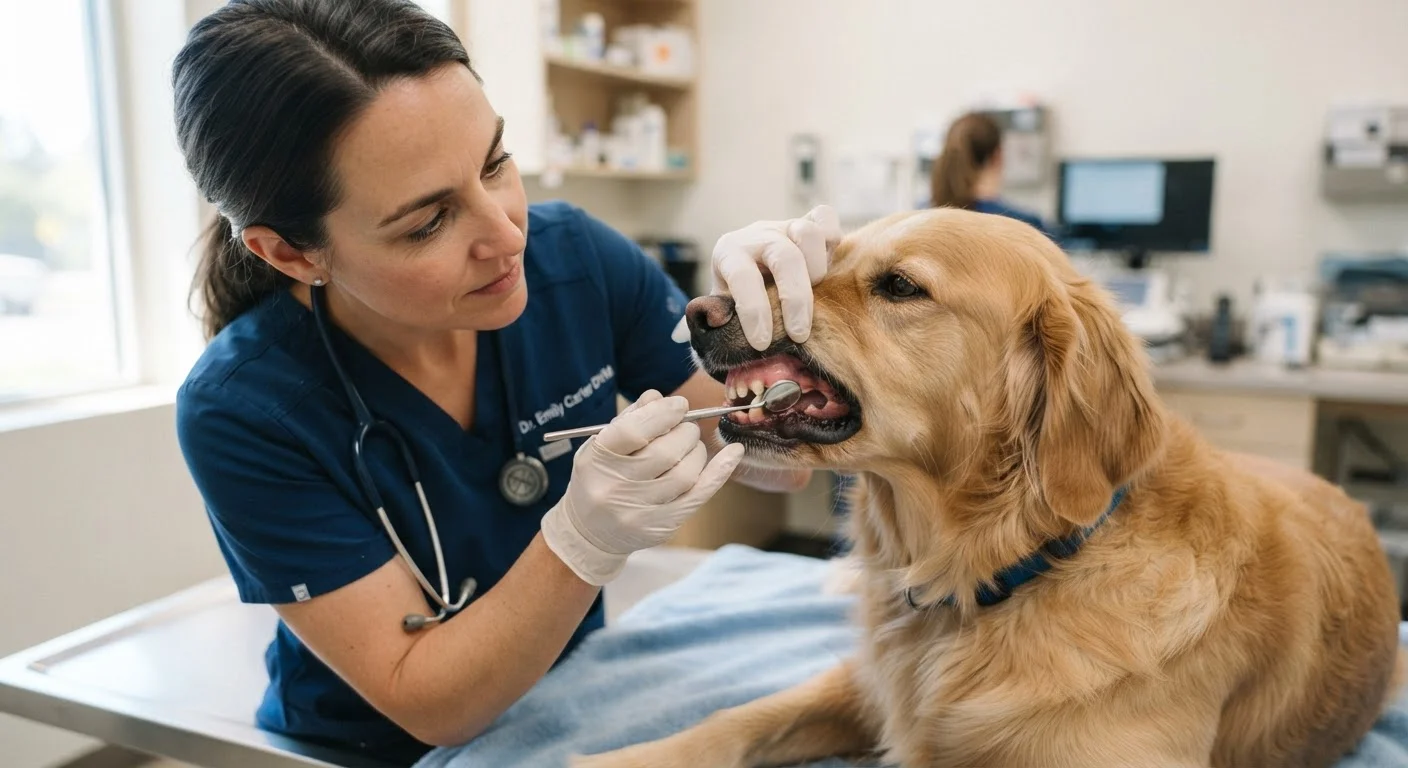
No amount of home care eliminates the need for periodic professional veterinary dental cleanings. Once tartar has formed - particularly below the gumline - only professional scaling can remove it safely. The procedure requires general anesthesia so that the veterinary team can probe every surface, take full-mouth X-rays, treat infected pockets, and extract non-viable teeth without causing distress or injury to the animal.
Many owners hesitate due to anesthesia concerns, especially with older pets. While anesthesia does carry risk, veterinary dental organizations consistently note that the health risk of untreated progressive periodontal disease typically outweighs the risk of a properly administered anesthetic protocol in a medically evaluated patient. Pre-anesthetic bloodwork helps identify animals who need additional precautions.
The frequency of professional cleanings varies by individual. Small-breed dogs (think terriers, toy breeds) and brachycephalic breeds (flat-faced dogs and cats) tend to have crowded or misaligned teeth that accelerate plaque accumulation. Senior pets often require more frequent attention as gum recession and immune changes increase vulnerability. Your veterinarian is the appropriate guide for scheduling - there is no universal answer.
Dental health doesn't exist in isolation. As pets age, their oral health needs shift alongside other systemic changes. Our article on how senior pets age differently outlines how to adapt your care approach over time. And because dental disease is just one piece of the preventive puzzle, reviewing well-intentioned habits that can cause harm may help you identify any gaps in your current routine.
This article is for general educational purposes only and is not a substitute for professional veterinary advice. Always consult a licensed veterinarian for guidance specific to your pet's health.