

Key Takeaways
Option A
Traditional (Grain-Inclusive) Diets
The long-established, research-backed feeding standard.
Best for: Most dogs and cats with no diagnosed grain sensitivity, particularly those benefiting from fiber-rich, well-studied formulations.
Option B
Grain-Free Diets
A popular alternative with real trade-offs under scrutiny.
Best for: Pets with confirmed grain allergies or intolerances - ideally selected with veterinary guidance given ongoing research concerns.
If your pet has no diagnosed food allergy or intolerance
Traditional (Grain-Inclusive) Diets
Grain-inclusive formulas carry the most long-term safety data and meet established nutritional standards without the unanswered questions surrounding grain-free options.
If a veterinarian has confirmed a grain sensitivity
Grain-Free Diets
In documented cases of grain intolerance, a veterinarian-supervised grain-free formula may be appropriate - but ongoing cardiac monitoring is worth discussing.
If you're managing a dog breed prone to dilated cardiomyopathy
Traditional (Grain-Inclusive) Diets
Until research on the DCM-diet link is resolved, cardiologist and veterinary nutritionist guidance generally favors grain-inclusive diets for at-risk breeds.
If your pet has had chronic digestive issues
Traditional (Grain-Inclusive) Diets
Work with a vet to identify the actual trigger first - switching to grain-free without a diagnosis may mask the real cause and delay proper treatment.
How These Two Approaches Differ
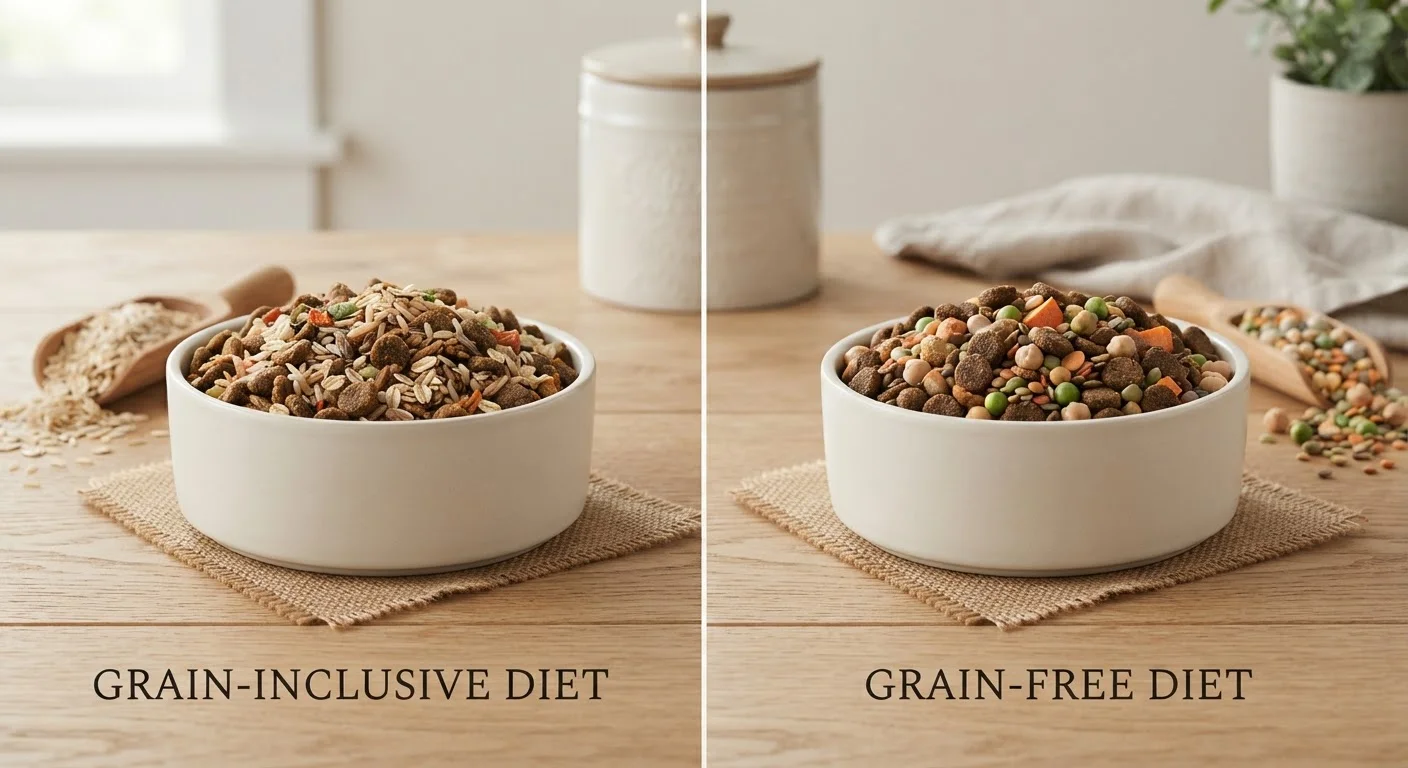
Traditional pet diets typically include grains such as rice, oats, barley, corn, or wheat as carbohydrate sources alongside animal protein and fat. These ingredients have been formulated into commercially available foods for decades and form the backbone of Association of American Feed Control Officials (AAFCO)-compliant nutrition standards.
Grain-free diets eliminate those grain sources and generally replace them with alternative carbohydrates - most commonly peas, lentils, chickpeas, or potatoes. These substitutes are not inherently harmful, but they change a food's fiber profile, amino acid ratios, and overall nutrient density in ways that are still being studied.
Understanding what's actually in each type of diet matters more than the label. For a deeper look at reading those labels accurately, see our guide to decoding pet food ingredient lists.
| Criterion | Traditional (Grain-Inclusive) | Grain-Free |
|---|---|---|
| Primary carbohydrate source | Rice, oats, corn, barley, wheat | Peas, lentils, chickpeas, potatoes |
| Long-term safety data | Decades of research and use | Limited; FDA investigation ongoing |
| Grain allergy suitability | Not suitable for confirmed grain allergy | Appropriate with vet confirmation |
| DCM cardiac risk signal | No current association identified | Under FDA investigation since 2018 |
| AAFCO compliance availability | Widely available across formulas | Available, but verify per product |
| Fiber profile | Well-characterized grain-based fiber | Legume fiber; less studied in pets |
| Common allergen concern | Rarely implicated in food allergies | Legumes: emerging allergen concern |
What the Research Currently Shows
The most significant scientific development in this debate came in 2018, when the U.S. Food and Drug Administration (FDA) began investigating a potential association between grain-free diets and dilated cardiomyopathy (DCM) - a serious heart condition - in dogs. Reports concentrated on diets high in legumes, particularly peas and lentils. The FDA's investigation has not established a causal relationship, and research into the mechanism continues.
One leading hypothesis involves taurine, an amino acid important to cardiac function. Some researchers have proposed that certain legume-heavy diets may interfere with taurine synthesis or absorption in dogs. However, the picture remains incomplete, and DCM has been reported even in dogs eating grain-inclusive diets in some cases.
On the allergy front, veterinary dermatology research consistently shows that the most common food allergens in dogs are animal proteins - beef, dairy, chicken, and lamb appear most frequently in published studies - rather than grains. True grain allergies exist but are comparatively uncommon.
The FDA Investigation: Where Things Stand
In 2018, the FDA began receiving reports of DCM in dogs eating grain-free diets, particularly those listing legumes among the first several ingredients. As of the agency's last public update, the investigation remains open and a definitive causal link has not been confirmed. Pet owners feeding grain-free diets - especially to larger breeds - are encouraged to discuss heart health monitoring with their veterinarian.
For a broader look at how grain-free marketing has outpaced the science, our companion article on grain-free pet food and the evidence covers the topic in depth.
Nutritional Variables Worth Knowing
Neither diet category is monolithic. A high-quality grain-inclusive food may be far superior to a poorly formulated grain-free product, and vice versa. The following variables matter regardless of which category a food falls into:
- Complete and balanced certification: Look for an AAFCO nutritional adequacy statement on the label confirming the food meets minimum standards for your pet's life stage.
- Protein source quality: The type and digestibility of protein matters more than whether the diet is grain-free. Our article comparing raw, cooked, and commercial feeding approaches explores this further.
- Fiber type: Grains like oats and barley provide fermentable fiber that supports gut health. Legume-based substitutes offer different fiber types with less long-term data in companion animals.
- Taurine content: For dogs particularly prone to DCM (large breeds, certain dilated-cardiomyopathy-susceptible breeds), discussing taurine levels with a veterinarian is reasonable due to the ongoing investigation.
This article provides general educational information about pet nutrition and is not a substitute for veterinary advice. Always consult a licensed veterinarian before making significant changes to your pet's diet.