

Key Takeaways
Why Long-Term Training Beats Quick Fixes
Pet owners often search for rapid solutions - a single command that stops jumping, or a trick that eliminates pulling on leash overnight. The reality is that behavior is shaped by patterns repeated over time, not isolated corrections. Just as habits form gradually in humans, your pet's behavioral repertoire is built through consistent signals, predictable consequences, and accumulated experience.
Research in animal learning consistently shows that behaviors reinforced regularly become more reliable and more resistant to extinction - meaning they hold up even under distracting conditions. A dog that sits on cue at home but ignores the command at the dog park hasn't learned the behavior deeply; it has only learned it in one context. True generalization takes deliberate, staged practice across environments.
Understanding why long-term thinking matters helps you set realistic expectations and avoid frustration when progress feels slow. For a plain-language introduction to how reinforcement, shaping, and generalization actually work, see our guide to key training concepts.
Start With What Your Pet Already Does
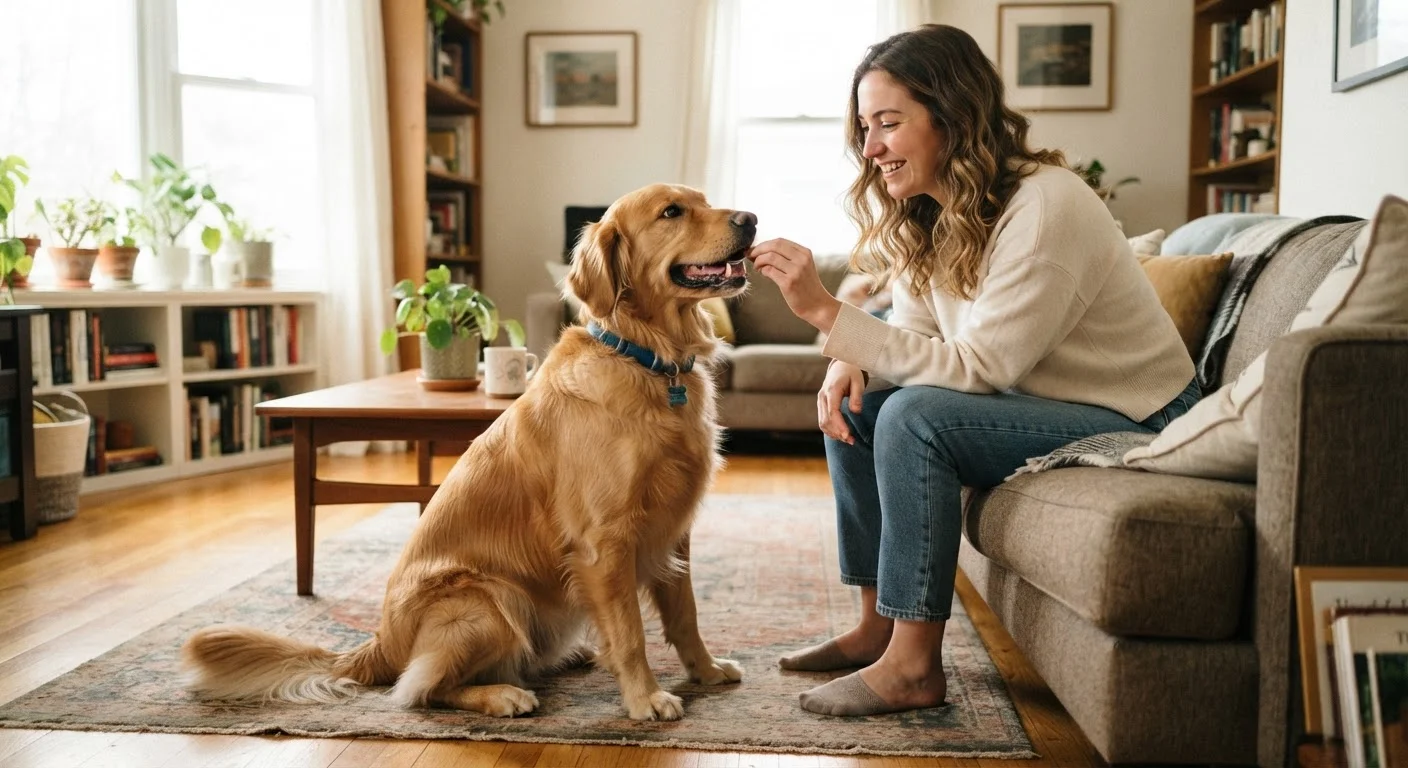
Rather than waiting for a mistake to correct, watch for behaviors you want more of and reward them immediately. This approach - called 'capturing' - builds a behavior repertoire without the pet needing to fail first. It's also far less stressful for both of you.
The Foundation: Core Concepts and Early Habits
Regardless of your pet's species or age, effective training rests on a few non-negotiable foundations. Consistency means everyone in the household uses the same cues and the same rules - mixed signals are one of the leading reasons training stalls. Timing means delivering reinforcement within about one to two seconds of the desired behavior, so your pet can make the connection. Motivation means identifying what your individual animal actually values - for one dog that may be small food treats, for another it may be a brief tug session or verbal praise.
For puppies and kittens, the socialization window (roughly the first three to fourteen weeks for dogs, two to seven weeks for cats) is a critical period when positive exposure to people, surfaces, sounds, and other animals has an outsized influence on adult temperament. Missing this window doesn't doom a pet, but it does mean later socialization requires more patience and care.
Starting early also means establishing routine - predictable feeding, sleep, and training times reduce anxiety and make it easier for pets to meet expectations. Nutrition plays a role here too; a well-fed, properly hydrated pet is more receptive to learning. Our article on building a feeding routine that works complements this stage well.
Building Skills Progressively Across Life Stages
Think of training as a curriculum rather than a checklist. Early puppyhood or kittenhood is the time to establish name recognition, basic cues (sit, come, stay), and leash or harness introduction. Adolescence - roughly six to eighteen months in dogs - brings hormonal changes that can make previously reliable behaviors inconsistent. This is not regression; it's normal development that calls for patience and a return to basics with added distraction-proofing.
Adult pets can learn complex behaviors, new cues, and refined social skills. The idea that older dogs or cats cannot learn is a myth unsupported by behavioral science. What changes is that you may need higher-value reinforcers and more repetitions to override well-established competing habits.
Senior pets benefit from continued mental stimulation - training sessions adapted for physical limitations keep cognitive function sharper and maintain the human-animal bond. Shorter sessions, gentler physical demands, and extra patience are the main adjustments.
5-10 min
Ideal length for a single training session
Veterinary behaviorists generally recommend short, frequent sessions over long ones to maximize focus and retention.
3-14 weeks
Primary socialization window in dogs
According to established canine developmental research, early positive exposure during this period has a disproportionate effect on adult temperament.
2-3×
Recommended daily training frequency
Animal learning research suggests that distributing practice across multiple short daily sessions improves skill retention compared to single longer sessions.
Reward-Based Strategies That Actually Stick
Positive reinforcement - adding something the pet values immediately after a desired behavior - is the most thoroughly studied and broadly recommended approach for companion animals. It works across species, is associated with lower rates of fear and aggression, and builds a stronger working relationship between pet and owner.
A few practical principles make reward-based training more effective:
- Rate of reinforcement matters early. When teaching a new behavior, reward every correct attempt. Once the behavior is reliable, gradually shift to a variable (intermittent) schedule, which makes behaviors more durable.
- Keep sessions short. Five to ten minutes, two to three times daily, outperforms a single thirty-minute marathon for most animals.
- End on success. Finish each session with something your pet can do reliably, leaving both of you on a positive note.
- Manage the environment. Prevention is training. If your dog can't reach the trash can, it can't practice the unwanted behavior. Set the space up for success.
If you share your home with a cat, the strategies diverge in meaningful ways - feline motivation, timing sensitivity, and session length all differ from dogs. Our companion piece on training cats covers those distinctions in detail.
Before every training session, do a quick 'motivation check' - offer a sample of your planned reward and see how enthusiastically your pet responds. A low reaction often means the reward isn't compelling enough in that moment, and swapping to something higher-value can transform the session.
Motivation is not fixed; it varies with hunger, arousal, and competing stimuli. Matching reward value to the difficulty of the environment is a core principle in applied behavior analysis.
Write down your cues and rules and post them somewhere visible for all household members. Behavioral inconsistency - different family members allowing different things - is one of the most common reasons training fails to generalize.
Pets learn from every interaction, not just formal sessions. A unified household approach dramatically reduces conflicting signals that slow progress.
Maintaining Behavior: Avoiding Common Pitfalls
Even well-trained pets regress when training stops entirely or becomes inconsistent. The most common maintenance mistakes include: rewarding unwanted behavior accidentally (laughing at jumping, which provides social reinforcement), stopping practice once a behavior seems solid, and applying rules inconsistently across family members or environments.
Building maintenance into your daily life rather than treating it as separate training sessions is the most sustainable approach. Asking for a sit before meals, a wait at the door before walks, or a calm settle before greetings keeps skills sharp without requiring dedicated practice time.
It's also worth understanding what training-based approaches cannot fix on their own. Punishment-based methods - yelling, leash corrections, physical intimidation - are associated with increased anxiety, fear-based aggression, and damage to trust. Our article on why punishment-based training often backfires explains the evidence behind this clearly and is worth reading before choosing any corrective method.
When Training Isn't Enough: Recognizing Medical Causes
Not every behavioral problem is a training problem. Sudden changes in behavior - new aggression, increased fearfulness, house soiling after reliable training, excessive vocalization, or dramatic shifts in appetite or activity - can indicate underlying medical conditions such as pain, hormonal imbalances, neurological changes, or sensory decline.
A useful rule of thumb: if a behavior appears suddenly, escalates quickly, or doesn't respond to methods that previously worked, a veterinary evaluation should precede - or accompany - any training intervention. For a detailed look at which behavioral changes belong in a clinic rather than a training session, see behavioral changes that warrant a vet visit.
Training is a lifelong practice, not a one-time fix. Returning to it at each new life stage, adapting your methods to your pet's current needs, and staying alert to health signals are the habits that produce genuinely lasting behavior - in any pet, at any age.
This article is for general informational and educational purposes only and is not a substitute for professional veterinary or certified animal behavior advice. If your pet is showing concerning behaviors, consult a licensed veterinarian or a certified applied animal behaviorist.