

Key Takeaways
Litter Box Avoidance
Litter box avoidance is when a cat consistently eliminates outside its designated box rather than inside it. This behavior can develop from learned habits, environmental preferences, or physical discomfort. Understanding the root cause is essential before attempting any correction strategy.
Veterinary behaviorists distinguish between primary (no established habit) and secondary avoidance (a learned association, often formed after a single aversive experience near the box).
Why Litter Box Avoidance Is Never Just One Thing
Few feline behaviors frustrate owners more than a cat that stops using its litter box. Before any correction strategy can work, it helps to understand that avoidance is rarely a single, simple problem. It falls into three broad categories: medical, environmental, and behavioral. These categories frequently overlap, and the wrong intervention - applied to the wrong cause - can make the situation worse.
Medical causes are the most important to eliminate first. Conditions like feline idiopathic cystitis, urinary tract infections, constipation, and arthritis can make the physical act of using the box painful. A cat experiencing that pain may begin associating the box itself with discomfort and avoid it even after the medical issue resolves. This is why a veterinary visit should be the first step whenever elimination habits change suddenly. See our guide to behavioral changes that warrant a vet visit for a broader look at when professional evaluation matters most.
Environmental causes include litter type, box size, location, and cleanliness. Behavioral causes - the learned habits this article focuses on - are typically secondary: they develop after a negative experience has already occurred.
How Cats Form (and Avoid) Litter Box Habits
Cats are creatures of strong preference. Unlike dogs, they are not oriented toward pleasing their owners - they make choices based on what feels safe, comfortable, and predictable. A single aversive event near or inside the litter box can be enough to establish a lasting avoidance pattern. Common triggers include: being startled by a loud noise while inside the box, being bothered by another pet, or experiencing pain during elimination (even from a now-resolved medical condition).
Once a cat begins eliminating in an alternative location - behind furniture, on soft surfaces like rugs or laundry - that spot can quickly become preferred through repetition. The scent residue reinforces the choice. This is why thorough enzymatic cleaning of soiled areas is a practical necessity, not just a hygiene step. Standard household cleaners often mask odors to human noses without neutralizing the compounds that attract cats back to the same spot.
~10%
Cats estimated to develop elimination problems
Veterinary behaviorists estimate that approximately 10% of cats will develop some form of house-soiling issue in their lifetime, making it one of the most frequently cited feline behavior concerns in clinical practice.
1 in 3
Surrendered cats with reported litter box issues
Litter box problems are consistently cited as one of the leading reasons cats are surrendered to shelters, underscoring the importance of early, accurate diagnosis.
Up to 50%
Avoidance cases with underlying medical cause
Some veterinary estimates suggest that up to half of all litter box avoidance cases involve a contributing medical factor, reinforcing the value of a vet evaluation before behavioral intervention.
Understanding this learning process is also what makes punishment counterproductive. A cat scolded after using the wrong spot does not learn "use the box" - it learns that the owner's presence is unpredictable, which adds stress and can compound the problem. Our article on what actually works in cat training explains the behavioral principles behind this in more detail.
Environmental Factors Owners Frequently Overlook
Many litter box problems are solved entirely through environmental adjustments, without any formal behavioral intervention needed. Key variables to assess include:
- Cleanliness: Most cats will not tolerate a box that has not been scooped at least once daily. Some cats refuse a box after a single use if it is not cleaned.
- Litter type: Scented litters, coarse textures, or sudden brand changes can trigger avoidance. Fine-grained, unscented, clumping litter is generally the most widely accepted option, though individual preferences vary.
- Box size: The box should be at least 1.5 times the length of the cat. Many commercially available boxes are undersized for adult cats.
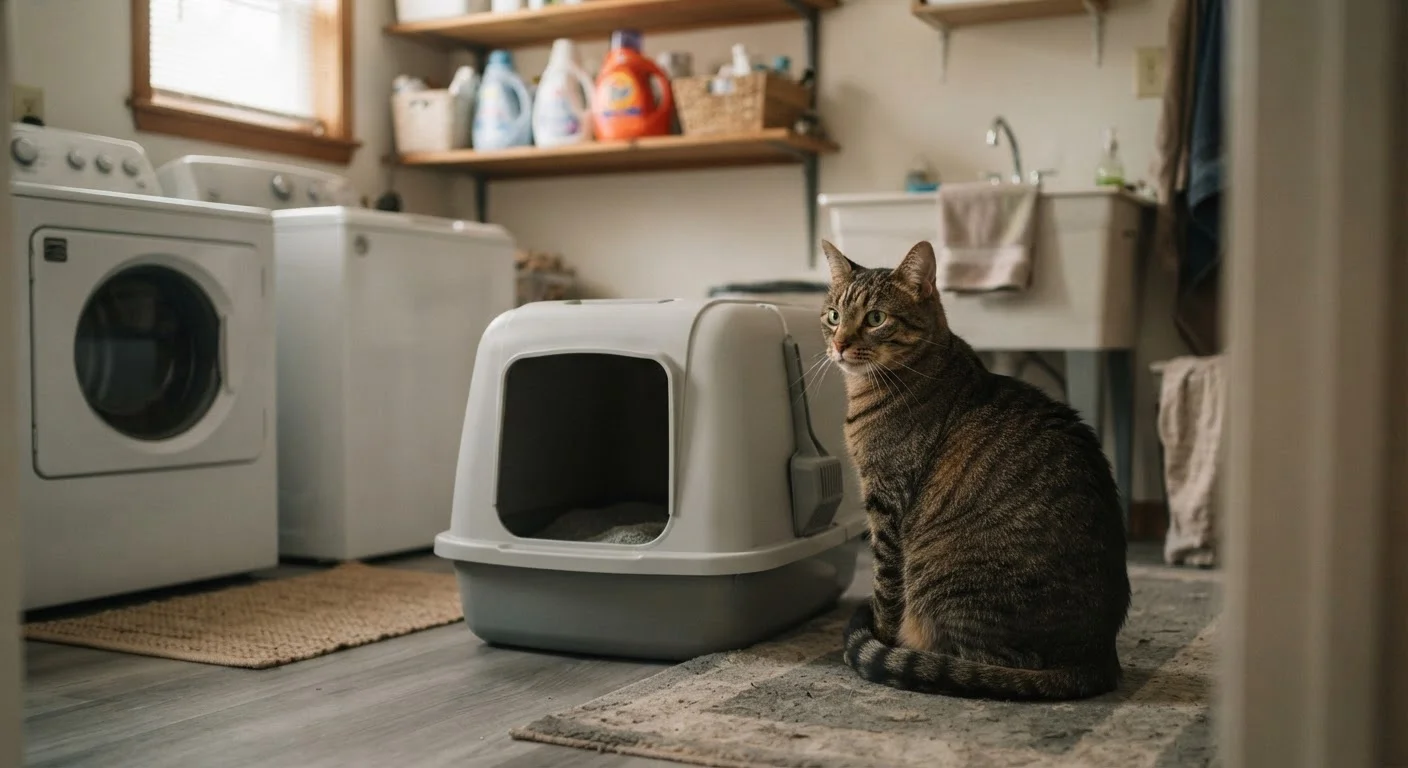
- Location: Boxes placed near appliances that start unexpectedly (washing machines, furnaces), in high-traffic areas, or in locations that offer no escape route can feel unsafe. Quiet, low-traffic areas with at least two points of access are preferable.
- Number of boxes: The standard veterinary recommendation is one box per cat, plus one additional.
Try an Uncovered Box First
Many owners choose hooded litter boxes for odor control, but cats often find them confining and difficult to escape from quickly. If your cat is avoiding a covered box, switching to an open, low-sided design is a simple first step that frequently resolves the issue. Odor control is better addressed through more frequent scooping than through a lid.
For cats that have begun preferring soft surfaces, temporarily removing access to rugs or laundry piles while reintroducing a well-positioned box can interrupt the cycle effectively.
Reward-Based Retraining: What the Evidence Supports
When medical causes have been addressed and environmental factors optimized, some cats still need behavioral support to reestablish reliable box use. Reward-based approaches - rooted in the same positive reinforcement principles used in all animal training - are the foundation of effective retraining.
The core strategy is straightforward: make the box the most rewarding option available. This means placing the box in a location where the cat already spends comfortable time, using a litter substrate the cat has shown preference for, and offering calm, low-key praise or a small treat immediately after the cat uses it correctly. Timing matters - reinforcement must follow the behavior within seconds to be meaningful to the cat.
Temporary confinement to a smaller space (a single room containing a clean box, food, water, and resting spots) can help reset habits in cats that have been consistently eliminating outside the box for weeks. Gradual expansion back to the full home, once the box is being used reliably, reduces the risk of relapse.
It is also worth examining whether stress in the broader household environment is contributing. Cats living indoors face unique behavioral pressures - our article on indoor vs. outdoor cat health trade-offs discusses how environmental enrichment affects feline wellbeing more broadly. Additionally, be aware that some well-intentioned owner habits - like switching litter brands frequently for deals - can inadvertently destabilize a cat's routines.
This article is for general informational purposes only and is not a substitute for professional veterinary advice. If your cat is showing signs of pain, straining to urinate, or producing little to no urine, contact a veterinarian immediately.