

Key Takeaways
One-Bag Travel
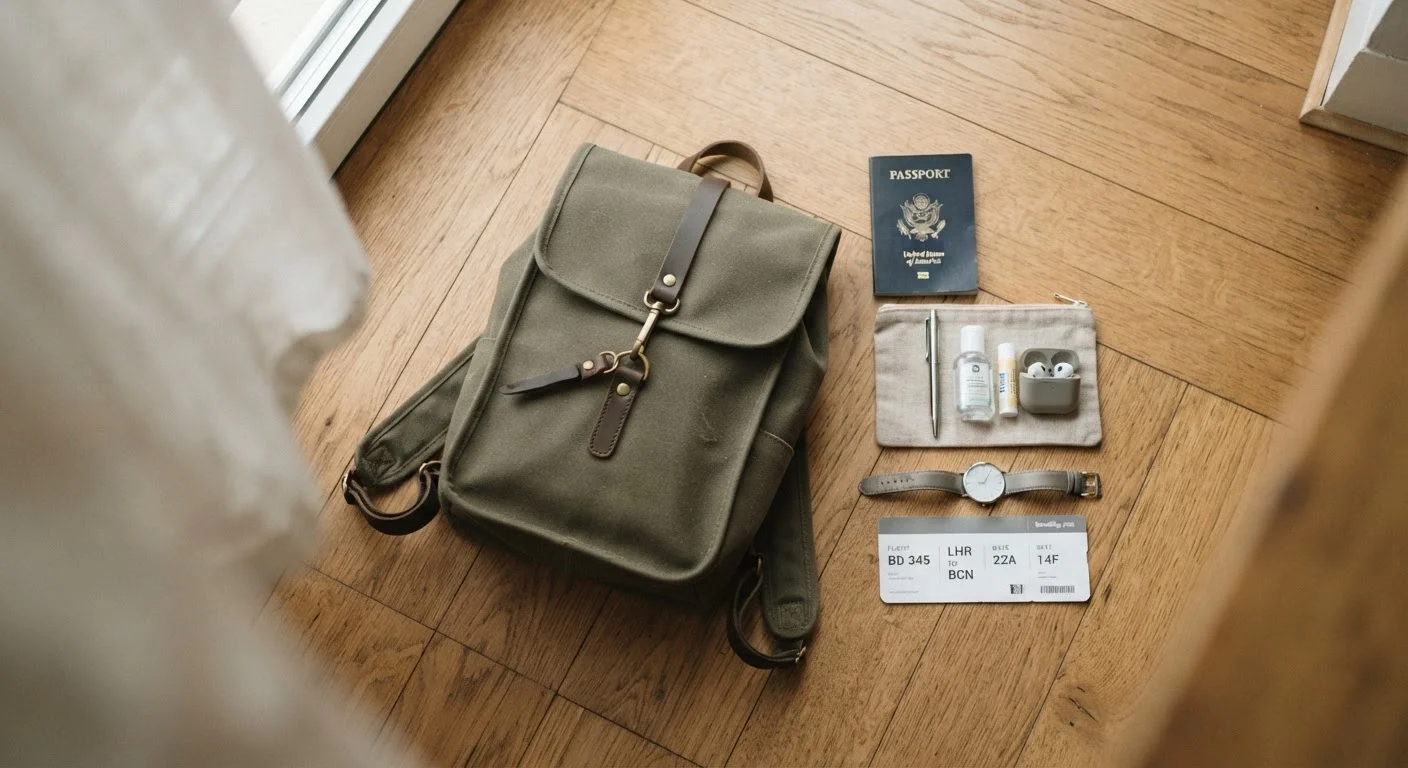
One-bag travel is the practice of taking a single carry-on-sized bag - typically a backpack - as your only luggage for an entire trip. It means no checked bags, no rolling suitcases, and no gear that can't fit on your back or under a seat. The goal is mobility, simplicity, and freedom from baggage fees and logistics.
Most committed one-bag travelers target bags in the 20-40 liter range to stay within airline personal item or carry-on limits, though exact size thresholds vary by carrier and route.
What the One-Bag Philosophy Actually Means
The one-bag philosophy isn't just a packing trick - it's a set of constraints you impose before you start packing. The commitment is simple: everything you bring must fit in a single bag small enough to avoid checked luggage. What follows from that constraint is a cascade of intentional decisions about what you actually need versus what you habitually bring.
Unlike minimalism as an aesthetic, one-bag travel is fundamentally practical. It reduces variables - fewer bags to track, no checked luggage fees, faster airport transitions, and the ability to move through cities on foot without logistics overhead. The philosophy scales from weekend trips to months-long travel when the underlying systems are in place.
The approach is closely tied to how you plan a trip, not just how you pack for one. As our guide on packing light planning decisions explains, destination research and itinerary structure determine what you realistically need long before a bag is opened.
$35-$75
Typical one-way checked bag fee per major US airline
Fee ranges are widely published by US carriers; costs vary by airline, route, and fare class, and change periodically.
~30 min
Average time saved bypassing baggage claim
Traveler surveys and airport operations research consistently cite baggage claim as one of the most time-consuming post-flight steps, though exact times vary by airport and flight volume.
40%
Items first-time packers typically don't use
Travel behavior research and frequent traveler accounts commonly cite roughly a third to half of packed items going unused on trips, particularly clothing.
The Two Pillars: Versatile Clothing and Laundry Access
No matter how disciplined your packing mindset, one-bag travel collapses without two fundamentals: clothing that works across multiple contexts and a realistic plan for washing it during the trip.
Versatile clothing means pieces that layer effectively, transition between casual and semi-formal wear, and dry quickly after washing. Fabrics like merino wool, nylon-blend shirts, and quick-dry travel pants appear repeatedly in experienced travelers' kits because they reduce the total item count without reducing utility. Three or four tops, two bottoms, and one pair of versatile footwear can cover most trip scenarios with planned washing every three to five days.
Laundry access - whether through hotel laundry services, laundromats, or hand-washing in a sink - is the variable that makes longer trips viable. Without it, the math simply doesn't work for trips beyond four or five days. Scoping laundry options at your destination before you travel is as important as choosing what to pack.
When One-Bag Travel Works - and When It Doesn't
One-bag travel performs well in predictable, temperate conditions: urban trips, warm-weather destinations, and itineraries without extreme sport or formal event requirements. Business travel for short trips is a natural fit - our overview on business travel packing priorities covers how frequent travelers handle professional clothing and tech within compact bags.
The method struggles with cold-weather trips requiring heavy insulation and bulky boots, travel that includes formal occasions, gear-dependent activities like skiing or scuba diving, and family travel with young children. For these scenarios, the constraints of one bag work against rather than for you. Understanding when not to apply the philosophy is just as important as knowing when it excels - and our comparison of carry-on vs. checked bag trade-offs can help you decide which approach fits a specific trip.
Test Your Kit Before You Commit
Before your first one-bag trip, pack your bag fully and carry it for two hours around your neighborhood or city. If it's uncomfortable or feels unmanageable, you'll know to reduce further before traveling. This test also reveals whether your bag fits under an airline seat - worth confirming before you reach the gate.
Getting Started Without Overhauling Everything
The most effective entry point into one-bag travel is a short, low-stakes trip - a domestic weekend away or a straightforward city visit where the cost of getting it wrong is minimal. Pack what you think you need, then note what you didn't touch. That data is more valuable than any packing list.
Most new one-bag travelers discover they brought 30-40% more than necessary on their first attempt. Understanding the psychology behind that tendency - covered in detail in our piece on why travelers overpack - helps short-circuit the impulse before the next trip. For a concrete method, our week-in-a-carry-on guide walks through a room-by-room system for fitting seven days into a single bag without compromising on essentials.
The goal isn't deprivation - it's arriving with exactly what serves the trip, and nothing that doesn't.