

Key Takeaways
Lower cost per oil change over time
Buying oil and a filter yourself typically runs $35-$55 for a synthetic change, compared to $70-$120 at many shops. Drivers who change their oil twice yearly can save $70-$130 annually once tools are already owned.
Full control over oil grade and filter brand
You choose exactly what goes in, which matters for drivers with specific requirements-like older engines on high-mileage formulations or turbocharged engines needing particular viscosity grades.
Opportunity to inspect the vehicle up close
Getting under the car to drain oil puts you in position to spot leaks, cracked hoses, or worn suspension components early-before they become expensive failures.
No appointment or wait time required
A DIY change can happen on your schedule, without sitting in a waiting room or dropping off your vehicle during shop hours.
Upfront tool investment reduces early savings
A floor jack, jack stands, oil filter wrench, and drain pan together can cost $100-$200 or more. The first several DIY changes may cost more than shop visits once tools are factored in.
Used oil disposal requires an extra step
Used motor oil must be taken to an approved recycling location-it cannot be placed in trash or poured down drains. Most auto parts stores accept it for free, but the trip is an added burden.
Errors can cause serious engine damage
A stripped drain plug, a misinstalled filter, or running the engine low on oil after refill are mistakes that can result in costly repairs far exceeding any per-service savings.
Requires a safe, suitable workspace
Working under a vehicle on soft ground, a slope, or in tight quarters is dangerous. Not all drivers have access to a level, stable surface appropriate for jack stand use.
No built-in multi-point inspection
Many shops check tire pressure, brake condition, and other fluid levels as part of an oil service. A DIY change only delivers those benefits if you actively build those checks into the routine.
Our Verdict
DIY oil changes make genuine financial sense for drivers who already have the tools, a safe workspace, and the confidence to do the job correctly. For everyone else, a professional service often costs less than the risk of a mistake-and far less than skipping oil changes altogether.
Drivers with some mechanical comfort, a suitable workspace, and a high-mileage or older vehicle where frequent oil changes make the per-service savings add up over time.
What You're Actually Comparing
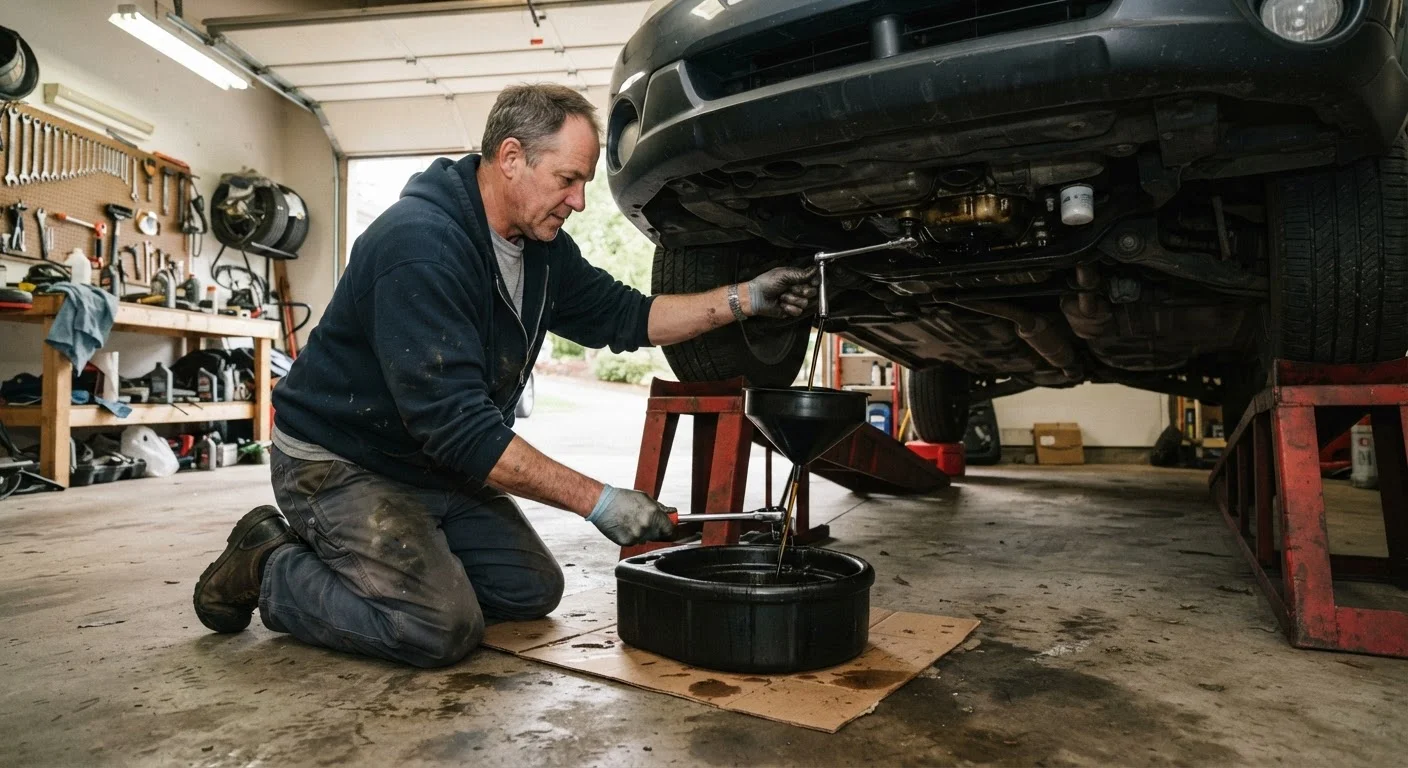
An oil change sounds simple: drain old oil, swap the filter, refill with fresh oil. And for most vehicles, the mechanical steps really are that straightforward. What makes the DIY vs. shop decision more nuanced is everything around those steps-cost of supplies, time, safe disposal of used oil, and the risk of a mistake you don't catch until it's expensive.
Most quick-lube shops complete a conventional oil change in 15-30 minutes. A DIY job, including gathering supplies and cleaning up, typically takes a first-timer 45-90 minutes. Neither figure accounts for the time spent pricing oil or finding a recycling drop-off. Before deciding, it helps to understand what oil type your engine actually needs, since that choice affects cost on both paths.
Pros of Doing It Yourself
Lower cost per oil change over time
Buying oil and a filter yourself typically runs $35-$55 for a synthetic change, compared to $70-$120 at many shops. Drivers who change their oil twice yearly can save $70-$130 annually once tools are already owned.
Full control over oil grade and filter brand
You choose exactly what goes in, which matters for drivers with specific requirements-like older engines on high-mileage formulations or turbocharged engines needing particular viscosity grades.
Opportunity to inspect the vehicle up close
Getting under the car to drain oil puts you in position to spot leaks, cracked hoses, or worn suspension components early-before they become expensive failures.
No appointment or wait time required
A DIY change can happen on your schedule, without sitting in a waiting room or dropping off your vehicle during shop hours.
The financial case for DIY is real, but conditional. A quart of conventional motor oil runs roughly $5-$8; a five-quart jug of full synthetic typically costs $25-$40. Add a filter ($8-$15) and you're looking at $35-$55 for a synthetic DIY change on most passenger vehicles. Shop prices for the same service commonly run $70-$120 depending on region and vehicle. Over multiple changes per year, that gap is meaningful.
The hands-on benefit matters too: when you do the work, you're more likely to notice a weeping gasket, a worn belt, or low brake fluid-small issues that, caught early, stay cheap. See how to check your six essential fluids for a straightforward walkthrough you can do alongside any oil change.
Cons of Doing It Yourself
Upfront tool investment reduces early savings
A floor jack, jack stands, oil filter wrench, and drain pan together can cost $100-$200 or more. The first several DIY changes may cost more than shop visits once tools are factored in.
Used oil disposal requires an extra step
Used motor oil must be taken to an approved recycling location-it cannot be placed in trash or poured down drains. Most auto parts stores accept it for free, but the trip is an added burden.
Errors can cause serious engine damage
A stripped drain plug, a misinstalled filter, or running the engine low on oil after refill are mistakes that can result in costly repairs far exceeding any per-service savings.
Requires a safe, suitable workspace
Working under a vehicle on soft ground, a slope, or in tight quarters is dangerous. Not all drivers have access to a level, stable surface appropriate for jack stand use.
No built-in multi-point inspection
Many shops check tire pressure, brake condition, and other fluid levels as part of an oil service. A DIY change only delivers those benefits if you actively build those checks into the routine.
The risks are real and deserve honest weight. Over-tightening a drain plug can strip the oil pan threads-a repair that can cost several hundred dollars. Under-torquing it means oil leaks onto a hot exhaust. The wrong filter for your vehicle can fail to seal properly. None of these mistakes are common among experienced home mechanics, but they happen frequently enough that they're worth taking seriously before your first attempt.
Used motor oil is a regulated waste in every US state. You cannot put it in the trash or pour it down a drain-both are illegal and environmentally harmful. Most auto parts retailers accept used oil for free, but that disposal trip adds a step many drivers underestimate. If you're new to working on vehicles, this foundational guide can help you assess whether you're ready.
Always Consult Your Owner's Manual First
Your vehicle's owner's manual specifies the required oil viscosity grade, filter type, and recommended service interval. Using the wrong specification-even a high-quality oil-can void warranty coverage on newer vehicles. The manual is the authoritative source, not the sticker from your last oil change or a generic recommendation.
The Case for Using a Professional Shop
Convenience is the primary argument for a professional service, but it's not the only one. A reputable shop will torque components to spec, use the correct oil grade, and reset your maintenance reminder-steps that are easy to overlook at home. Many shops also include a multi-point inspection with every oil change, flagging tire wear, fluid levels, or brake condition you might not check independently.
For drivers in apartments, shared parking, or areas with cold winters, a home oil change may not be practical regardless of willingness. Lying under a vehicle on jack stands in a sloped driveway is neither safe nor comfortable. The shop fee, in that context, is paying for a proper lift, trained hands, and proper disposal-all bundled in.
$70-$120
Typical shop price for a synthetic oil change
Pricing varies by region, vehicle type, and service tier; many independent shops charge less than quick-lube chains for the same service.
7,500-10,000 mi
Common synthetic oil change interval for modern vehicles
Many automakers have extended recommended intervals for full-synthetic oil; always consult your owner's manual for your specific vehicle's guidance.
If you're weighing the longer-term cost picture, it's also worth reading about what deferred maintenance actually costs-because the worst outcome isn't choosing DIY or a shop, it's choosing neither.
Making the Right Call for Your Situation
The honest answer is that neither option is universally better. DIY wins on cost-per-service for mechanically confident drivers with a safe, level workspace and the right tools already in hand. A quality floor jack and jack stands run $100-$200 combined-that investment only pays off over multiple changes. If you'd need to buy everything from scratch for a single oil change, the first one won't be cheaper than a shop visit.
Professional service wins on time, safety margin, and convenience-especially for anyone who isn't sure they've done it right before. The broader DIY maintenance guide frames this well: some tasks are genuinely worth learning; others carry enough risk that the peace of mind from professional work is part of what you're paying for. Oil changes sit right on that line-accessible enough for motivated beginners, consequential enough that doing them wrong still costs you.
Drivers managing high-mileage vehicles may find the math shifts further toward DIY over time, since older vehicles often require more frequent attention and per-service savings accumulate faster.