

| Typical shop labor rate range (US) | $75-$175+ per hour (Varies by region and shop type (dealership vs. independent)) |
| Flat-rate hour guides used industry-wide | Mitchell, Chilton, AllData (Standard references for repair time estimation) |
| Common parts markup range | 25-50% over wholesale cost (General industry practice; varies by shop policy) |
| Diagnostic fee credit | Often applied to repair total if work is authorized (Confirm policy with the shop before authorizing diagnosis) |
| Written estimate requirement | Required in most US states before repairs begin (State consumer protection laws vary - verify your state's rules) |
| Maximum cost variance without re-authorization | Often 10% above written estimate (Common statutory limit; confirm under your state's law) |
The Anatomy of a Repair Estimate
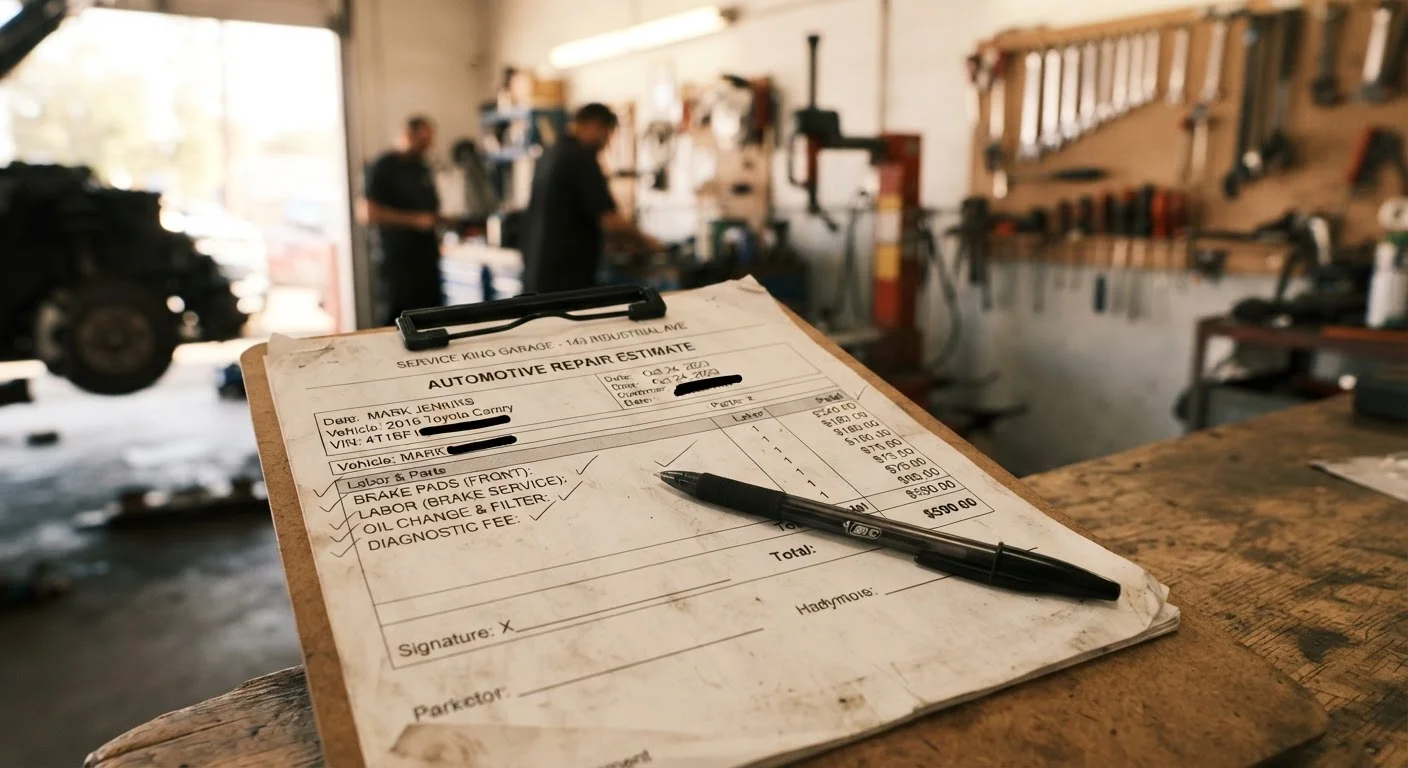
A repair estimate is more than a price tag - it's a breakdown of exactly what a shop plans to do and charge. Every estimate should itemize at minimum three things: parts, labor, and fees. If a shop hands you a single lump-sum figure without line items, ask for a full breakdown before signing anything.
| Typical shop labor rate range (US) | $75-$175+ per hour (Varies by region and shop type (dealership vs. independent)) |
| Flat-rate hour guides used industry-wide | Mitchell, Chilton, AllData (Standard references for repair time estimation) |
| Common parts markup range | 25-50% over wholesale cost (General industry practice; varies by shop policy) |
| Diagnostic fee credit | Often applied to repair total if work is authorized (Confirm policy with the shop before authorizing diagnosis) |
| Written estimate requirement | Required in most US states before repairs begin (State consumer protection laws vary - verify your state's rules) |
| Maximum cost variance without re-authorization | Often 10% above written estimate (Common statutory limit; confirm under your state's law) |
Parts line items should show the part name, part number, quantity, and unit price. Note whether the estimate specifies OEM or aftermarket - a detail that affects both cost and fit. See the
Labor Rate
The hourly fee a shop charges for technician time. It typically ranges from $75 to $175+ per hour depending on shop type and region, and is multiplied by the estimated labor hours to produce the labor subtotal.
Flat-Rate Hours
A standardized labor time assigned to a specific repair by industry guides (such as Mitchell or Chilton), regardless of how long the job actually takes. Shops bill by flat-rate hours, not actual clock time.
OEM Parts
Original Equipment Manufacturer parts made to the same specifications as what came on the vehicle from the factory. They generally carry a higher price than aftermarket alternatives but offer predictable fit and quality.
Aftermarket Parts
Replacement parts made by third-party manufacturers, not the original vehicle maker. Quality varies widely across brands, so they are not automatically inferior - but not automatically equivalent either.
Diagnostic Fee
A charge for the technician's time spent identifying the root cause of a problem, often involving a scan tool or physical inspection. Many shops credit this fee toward the final repair bill if you authorize the work.
Shop Supplies Fee
A line item covering consumables such as rags, cleaners, and fasteners used during the repair. It is typically a small percentage of the total bill and should be itemized, not hidden.
Parts Markup
The margin a shop adds to its wholesale cost for parts before passing the price to the customer. Markups of 25-50% are common; unusually high markups are a point worth questioning.
Sublet Work
Repairs your shop sends to a specialist or another facility, such as machine shop work or alignment. The sublet charge appears on your estimate and the original shop may add a markup.
Labor line items should show the job description, the flat-rate hours assigned to it, and the shop's hourly rate. Multiply those two numbers to verify the labor subtotal yourself. For a deeper look at how labor rates and parts markups combine on a finished bill, see our full guide to mechanic bills.
Fees - diagnostic charges, shop supplies, hazardous waste disposal - should each appear as separate line items. A vague "miscellaneous" charge with no explanation is worth questioning.
Red Flags Worth Challenging
Most shops are straightforward, but certain patterns on an estimate deserve a closer look before you authorize work.
Your Right to a Written Estimate
Most US states require shops to provide a written estimate and obtain your authorization before starting work. Some states also cap how much the final bill can exceed the written estimate - often around 10% - without your approval. Check your state's consumer protection office for the specific rules that apply to you.
- Flat-rate hours that seem high: Cross-reference a quoted labor time against a free online estimate tool or a second shop. A water pump replacement that typically takes 1.5 flat-rate hours shouldn't appear as 3.5 hours without explanation.
- Vague or missing part numbers: Without a part number, you can't verify what's actually being installed or compare pricing. Push for specifics.
- Pressure to approve immediately: A legitimate shop gives you time to review. Urgency tactics that discourage questions are a warning sign.
- Bundled repairs with no individual pricing: If multiple jobs are grouped into one price, ask the shop to break them out. Some bundling is legitimate (e.g., replacing a timing belt and water pump together saves labor), but you should understand what each job costs separately.
- Sublet charges without disclosure: If work is being sent out, the estimate should say so. Hidden sublet markups inflate costs without transparency.
- Final bill significantly above the estimate: Most states limit how much the bill can exceed the written estimate without prior authorization. If you're surprised at pickup, ask for a line-by-line explanation and know your state's rules.
~70%
Share of repair bill that is typically labor
Labor frequently represents the largest portion of an auto repair invoice, making the labor rate and flat-rate hours critical figures to review.
25-50%
Typical parts markup over wholesale
Industry practice allows shops to mark up parts; asking for the wholesale price helps you gauge whether a markup is reasonable.
Keeping your vehicle on a consistent maintenance schedule reduces surprise repairs - see our maintenance schedule explainer for a breakdown of common service intervals and what they actually involve.
Questions to Ask Before You Sign
A written estimate is the start of a conversation, not the end of it. These questions give you the information you need to make a confident decision:
- Is this an OEM or aftermarket part, and what warranty does it carry? Both can be appropriate - but you should know which you're getting and what the coverage period is.
- What is the diagnostic fee, and will it be credited if I approve the repair? Many shops apply the diagnostic charge toward the final bill. Confirm before authorizing the diagnosis.
- What flat-rate time guide are you using, and what is your hourly rate? These are standard reference points, not proprietary secrets.
- If the final cost looks like it will exceed this estimate, will you call me before proceeding? Get that commitment in writing if possible.
- Is any of this work being sent to another facility? Know when sublet work is involved so you understand the full cost chain.
If you're evaluating whether a repair is worth doing on an older vehicle, an independent pre-purchase style inspection from a trusted mechanic can give you an unbiased picture of overall condition. And once you understand what you're spending on repairs, an annual car cost audit helps you see the full picture of where your vehicle dollars are going.