

Key Takeaways
Macronutrients
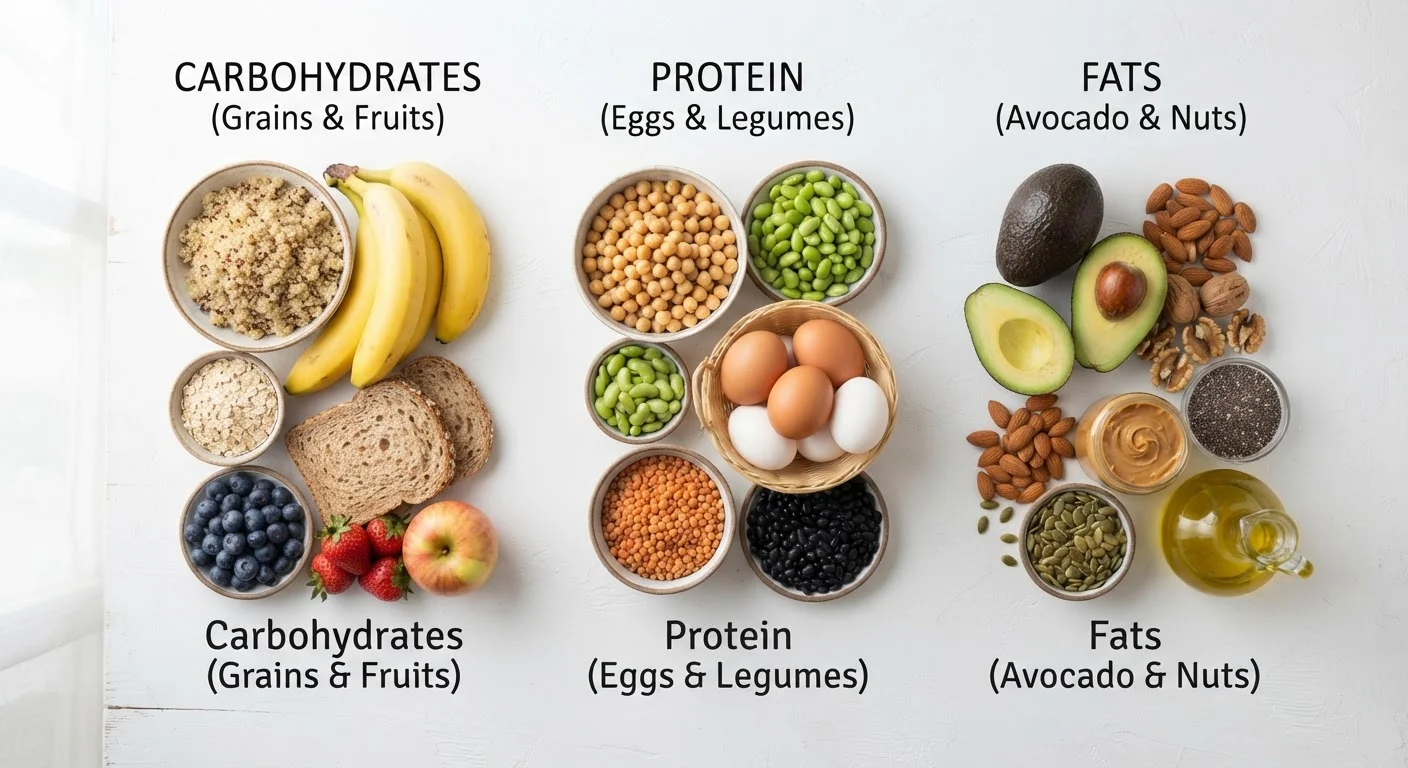
Macronutrients are the three main classes of nutrients - carbohydrates, protein, and fat - that the body needs in relatively large amounts to produce energy, build and repair tissue, and regulate basic functions. Unlike vitamins and minerals, which are needed in smaller quantities, macronutrients are the primary fuel sources that power everything from walking to thinking. Every food you eat contains some combination of the three.
Each macronutrient provides a fixed energy yield: carbohydrates and protein each deliver 4 kilocalories per gram, while fat delivers 9 kilocalories per gram.
Why Macronutrients Are the Foundation of Nutrition
Walk down any grocery aisle and you'll encounter competing claims about carbs, protein, and fat. One decade fat is the villain; the next, carbohydrates are. The noise obscures a straightforward biological reality: your body requires all three macronutrients to function, and none of them is inherently harmful in the context of an overall balanced diet.
Macronutrients differ from micronutrients like vitamins and minerals primarily in scale. Your body needs grams of macronutrients daily, compared with milligrams or micrograms of most micronutrients. Together, macronutrients account for virtually all of the calories in your food.
Understanding what each one does - rather than which one to fear - is the most practical nutrition literacy skill you can develop.
4 kcal/g
Energy from carbohydrates and protein
Both carbohydrates and protein yield 4 kilocalories per gram, a fundamental figure in nutrition science established by the Atwater system.
9 kcal/g
Energy density of dietary fat
Fat provides more than twice the caloric energy per gram compared to carbohydrates or protein, reflecting its role as the body's densest energy store.
~10-35%
Recommended protein intake range (% of calories)
The Dietary Guidelines for Americans suggest protein should account for roughly 10-35% of total daily caloric intake for healthy adults.
Carbohydrates: The Body's Preferred Fuel
Carbohydrates are the body's primary and most readily used energy source. During digestion, most carbohydrates are broken down into glucose, which cells use for immediate energy or store in the liver and muscle as glycogen for later use. The brain is particularly glucose-dependent, using it almost exclusively under normal conditions.
Not all carbohydrates behave the same way. Dietary fiber - a type of carbohydrate the body cannot fully digest - slows glucose absorption, supports gut health, and contributes to feelings of fullness. Whole grains, legumes, vegetables, and fruit supply carbohydrates alongside fiber, vitamins, and minerals. Refined sugars and heavily processed starches, by contrast, deliver energy with fewer accompanying nutrients.
The practical takeaway is not to avoid carbohydrates but to consider their source. Choosing whole-food carbohydrate sources tends to support steadier energy levels and broader nutritional value than relying on refined options.
Protein: Building Blocks for Nearly Everything
Protein's primary job is structural. It supplies amino acids - the building blocks the body uses to construct and repair muscle, skin, enzymes, hormones, immune proteins, and more. Of the 20 amino acids involved in human physiology, nine are classified as essential, meaning the body cannot synthesize them and must obtain them from food.
Animal-based foods such as meat, poultry, fish, eggs, and dairy are considered complete protein sources because they contain all nine essential amino acids in adequate proportions. Most individual plant sources are lower in one or more essential amino acids, though eating a varied plant-based diet throughout the day addresses this effectively. For a detailed comparison, see our overview of plant versus animal protein.
Protein also plays a meaningful role in satiety - it tends to be more filling per calorie than carbohydrates or fat, which may support appetite regulation as part of a balanced eating pattern.
Vary Your Protein Sources
Rotating between animal and plant protein sources - eggs, fish, legumes, tofu, dairy - helps ensure a broader range of amino acids, alongside different vitamins, minerals, and fiber. Dietary variety generally supports better overall nutritional coverage than relying heavily on a single source.
Dietary Fat: More Essential Than Its Reputation Suggests
Fat has spent decades being mischaracterized as something to minimize at all costs. The science is considerably more nuanced. Dietary fat is essential for absorbing fat-soluble vitamins A, D, E, and K; supporting cell membrane integrity; producing steroid hormones; and cushioning vital organs. The brain itself is roughly 60% fat by dry weight.
Fat types matter. Unsaturated fats - found in foods like olive oil, avocados, nuts, seeds, and fatty fish - are associated with favorable cardiovascular and metabolic outcomes in a broad body of research. Artificial trans fats, once common in processed foods, are now largely removed from the US food supply due to established health risks. The picture for saturated fat is more contested in current research, and guidance continues to evolve.
Dietary fat's complicated reputation deserves a closer look than headline-level nutrition advice typically allows. The quality and source of fat - not simply its presence - is what matters most.
Putting It Together: Balance Over Perfection
No fixed ratio of macronutrients is universally optimal. Research comparing high-carbohydrate, high-protein, and high-fat diets generally finds that long-term health outcomes depend more on overall food quality, dietary diversity, and sustainability than on any particular macronutrient split.
Hydration also plays an underappreciated role in how macronutrients are absorbed and metabolized. Our explainer on hydration and nutrition covers this connection in more depth.
Once you have a handle on macronutrients, reading food labels becomes a far more useful exercise. The nutrition label guide translates the numbers into practical information you can use while shopping.
Individual needs - shaped by age, activity, health conditions, and personal goals - vary significantly. A registered dietitian can help translate general principles into an approach that fits your specific circumstances.
This article is for general informational and educational purposes only and is not a substitute for professional medical or dietary advice. Consult a qualified healthcare provider or registered dietitian before making significant changes to your diet.