

Key Takeaways
Our Verdict
Nutrient density and calorie density are complementary tools, not competing philosophies. Prioritizing nutrient-dense foods generally supports long-term health, while awareness of calorie density can help with energy balance. Used together, they give a far more complete picture of food quality than either measure alone.
| Best for | Recommended |
|---|---|
| Those focused on overall diet quality and long-term health | Prioritizing nutrient density |
| Those managing energy intake or feeling overly full on low-calorie foods | Monitoring calorie density |
| Busy readers who want a single practical framework | Using both lenses together |
What These Two Concepts Actually Mean
Food quality is often reduced to a single number - calories - but that framing leaves a lot out. Two more useful lenses are nutrient density and calorie density, and understanding both changes how you evaluate what's on your plate.
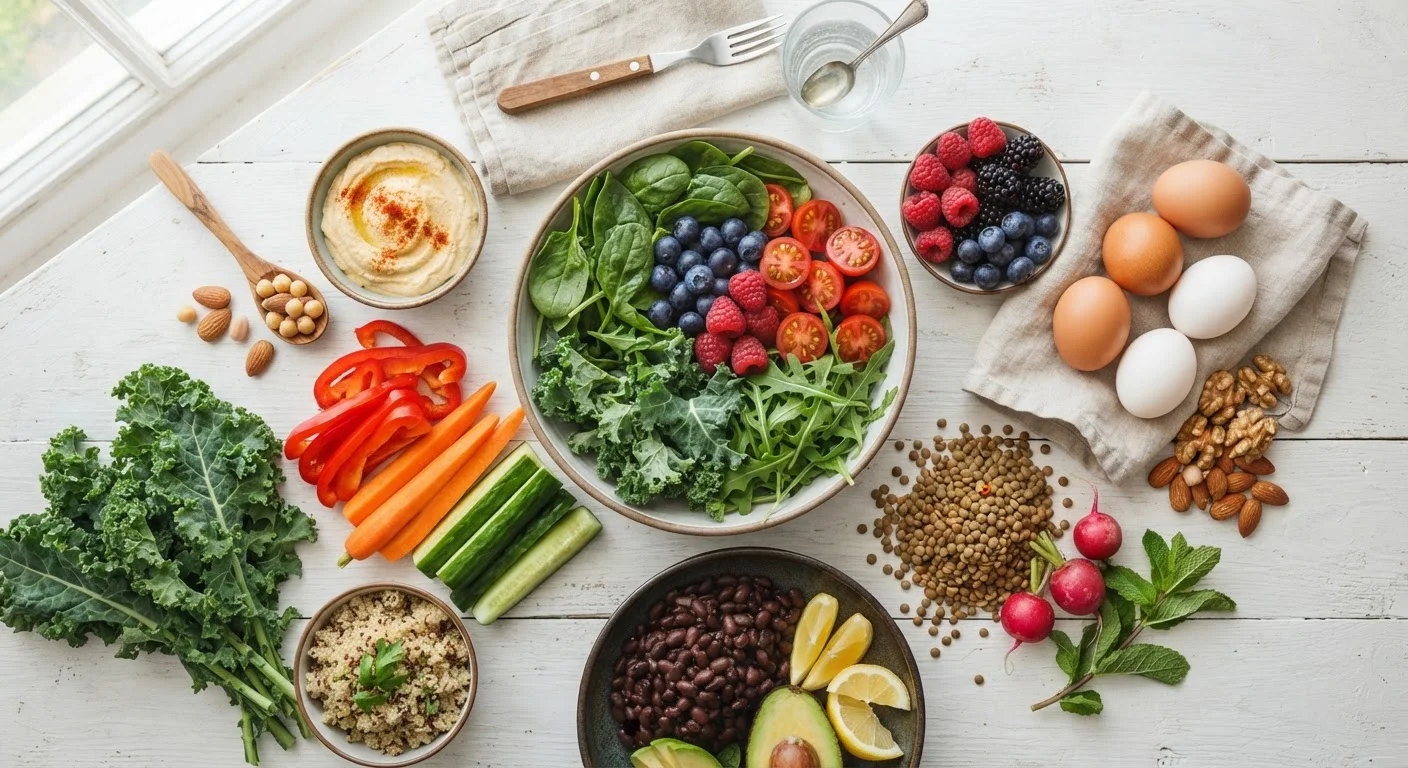
Nutrient density refers to the amount of beneficial nutrients - vitamins, minerals, fiber, protein, antioxidants - a food provides relative to its calorie content. A food that delivers a wide range of nutrients for relatively few calories is considered nutrient-dense. Leafy greens, legumes, eggs, and berries are classic examples.
Calorie density, by contrast, describes how many calories are packed into a given weight or volume of food. Foods high in water and fiber (like cucumbers or broth-based soups) have low calorie density; foods high in fat and low in moisture (like nuts, oils, or crackers) have high calorie density. Neither extreme is inherently good or bad - context matters.
For a deeper look at how calories are measured and what they represent, see what the calorie number on a label actually means.
How They Compare Across Common Foods
The contrast between these two measures becomes clearest when you look at real foods side by side. A handful of almonds is calorie-dense but also nutrient-dense - it delivers healthy fats, vitamin E, magnesium, and protein in a small package. A rice cake, on the other hand, is low in calorie density but also low in nutrient density: not much energy, but not much nutrition either.
This is why neither measure alone is a reliable proxy for food quality.
| Food | Nutrient Density | Calorie Density | |
|---|---|---|---|
| Spinach (raw) | Very high | Very low | |
| Almonds | High | High | |
| Lentils (cooked) | High | Low-moderate | |
| White bread | Low-moderate | Moderate-high | |
| Potato chips | Low | Very high | |
| Eggs | High | Moderate | |
| Soda (regular) | Very low | Moderate | |
| Olive oil | Moderate (healthy fats) | Very high |
The table above illustrates how foods can occupy very different positions on each axis. Processed snack foods often sit in an unfavorable quadrant - high calorie density, low nutrient density - which partly explains why they don't satisfy hunger effectively despite their energy content.
Why Both Lenses Matter for Everyday Choices
Research in nutritional science consistently shows that diets rich in nutrient-dense foods are associated with lower risks of chronic disease, better energy levels, and improved satiety. However, calorie density still plays a practical role in how full you feel and how easily you manage energy balance day to day.
The Double-Win Foods to Prioritize
Some foods score well on both axes simultaneously - high nutrient density and relatively low calorie density. Leafy greens, cruciferous vegetables, legumes, and berries are strong examples. Making these the bulk of your meals tends to support both nutritional quality and natural appetite regulation, without requiring calorie counting.
One useful strategy supported by dietitians is volume eating - building meals around foods with low calorie density and high nutrient density simultaneously. Vegetables, fruits, legumes, and lean proteins fit this profile well. They occupy stomach space, deliver meaningful nutrition, and tend not to spike and crash energy levels the way ultra-processed options can.
That said, some high-calorie-density foods - olive oil, avocados, nuts, seeds - are also high in nutrients and healthy fats. Blanket avoidance of calorie-dense foods based on energy content alone would mean missing out on genuinely beneficial options. The goal is informed choice, not rigid rules.
When reading labels, keep both concepts in mind. Our guide on reading a nutrition label without getting lost walks through how to extract this kind of information from a standard nutrition facts panel.
Putting It Into Practice
You don't need to calculate scores or memorize charts to apply these ideas. A few working principles go a long way:
- Build around whole foods first. Vegetables, fruits, whole grains, legumes, lean proteins, and dairy or dairy alternatives tend to score well on nutrient density. Use them as the foundation of most meals.
- Pay attention to satiety signals. Low-calorie-density foods like salads and soups tend to fill you up with less energy - useful if you're trying to avoid overeating. High-calorie-density foods require more mindful portioning.
- Don't write off any food category by one metric alone. Nuts are calorie-dense but nutritionally valuable. Soda is low in nutrient density but also a significant calorie source - a genuinely unfavorable combination.
For a broader framework on how to structure meals using these principles, building a balanced plate offers evidence-informed guidance that holds up across different dietary approaches. And if you want to audit how your current eating patterns measure up, the weekly eating audit checklist is a practical next step.
This article is for general informational and educational purposes only and is not a substitute for professional medical or dietary advice. Consult a qualified healthcare provider or registered dietitian for guidance specific to your health needs.