

| Moisture content - whole chicken | ~70-75% water before processing (AAFCO Pet Food Committee definitions) |
| Protein concentration - chicken meal | ~65-70% protein by dry weight (AAFCO ingredient standards) |
| By-products excluded by AAFCO definition | Feathers, hair, horns, hooves, hide trimmings, manure (AAFCO Official Publication) |
| Ingredient list ordering rule | By pre-processing weight, heaviest first (FDA 21 CFR Part 501 / AAFCO Model Regulations) |
| Named vs. generic protein sources | "Chicken meal" is species-specific; "meat meal" or "poultry meal" is not (AAFCO ingredient nomenclature guidelines) |
| Regulatory body for U.S. pet food labels | FDA (federal) + AAFCO (model state regulations) (FDA Center for Veterinary Medicine) |
Why Protein Terminology on Pet Food Labels Matters
Protein is the most scrutinized nutrient on any pet food label - and also one of the most misunderstood. Terms like chicken meal, poultry by-product meal, and deboned chicken are not interchangeable. Each describes a specific ingredient with a distinct composition, moisture content, and protein concentration. Knowing the difference helps you interpret what you are actually purchasing.
In the United States, pet food ingredient definitions are governed by the AAFCO, which publishes standardized definitions for each ingredient name that manufacturers are legally required to follow. For a broader look at how those rules apply across the entire label, see our guide to reading pet food labels.
Chicken Meal
Rendered chicken tissue from which most moisture and fat have been removed, producing a concentrated protein powder. AAFCO requires the source species to be named and the product to be free of feathers, heads, feet, and entrails.
Poultry By-Product Meal
Rendered, dried product from slaughtered poultry parts not intended for human consumption - such as necks, feet, undeveloped eggs, and intestines - but excluding feathers. It is a dense protein source with variable composition depending on the batch.
Deboned Chicken
Whole chicken flesh (muscle meat) from which bones have been removed, listed on the ingredient label before moisture is cooked off. Because it contains significant water, its post-processing protein contribution is lower than its label position implies.
Rendering
A high-heat process used to cook raw animal material, separate fat, and evaporate water, producing a dry, protein-dense ingredient. Most "meal" ingredients - chicken meal, lamb meal, fish meal - are produced through rendering.
Meat By-Products
Non-rendered, clean parts of slaughtered mammals other than muscle meat - including organs such as liver, kidney, and lung. Despite the label stigma, these tissues are often nutritionally dense and are consumed as food in many cultures worldwide.
AAFCO
The Association of American Feed Control Officials - the U.S. body that publishes standardized definitions for pet food ingredients and the nutritional profiles required for a food to carry a "complete and balanced" claim.
Common Protein Terms Defined
The following terms appear most frequently on dog and cat food labels. Each has a precise regulatory meaning under AAFCO guidelines.
| Moisture content - whole chicken | ~70-75% water before processing (AAFCO Pet Food Committee definitions) |
| Protein concentration - chicken meal | ~65-70% protein by dry weight (AAFCO ingredient standards) |
| By-products excluded by AAFCO definition | Feathers, hair, horns, hooves, hide trimmings, manure (AAFCO Official Publication) |
| Ingredient list ordering rule | By pre-processing weight, heaviest first (FDA 21 CFR Part 501 / AAFCO Model Regulations) |
| Named vs. generic protein sources | "Chicken meal" is species-specific; "meat meal" or "poultry meal" is not (AAFCO ingredient nomenclature guidelines) |
| Regulatory body for U.S. pet food labels | FDA (federal) + AAFCO (model state regulations) (FDA Center for Veterinary Medicine) |
Whole Meat vs. Meal: The Moisture Difference
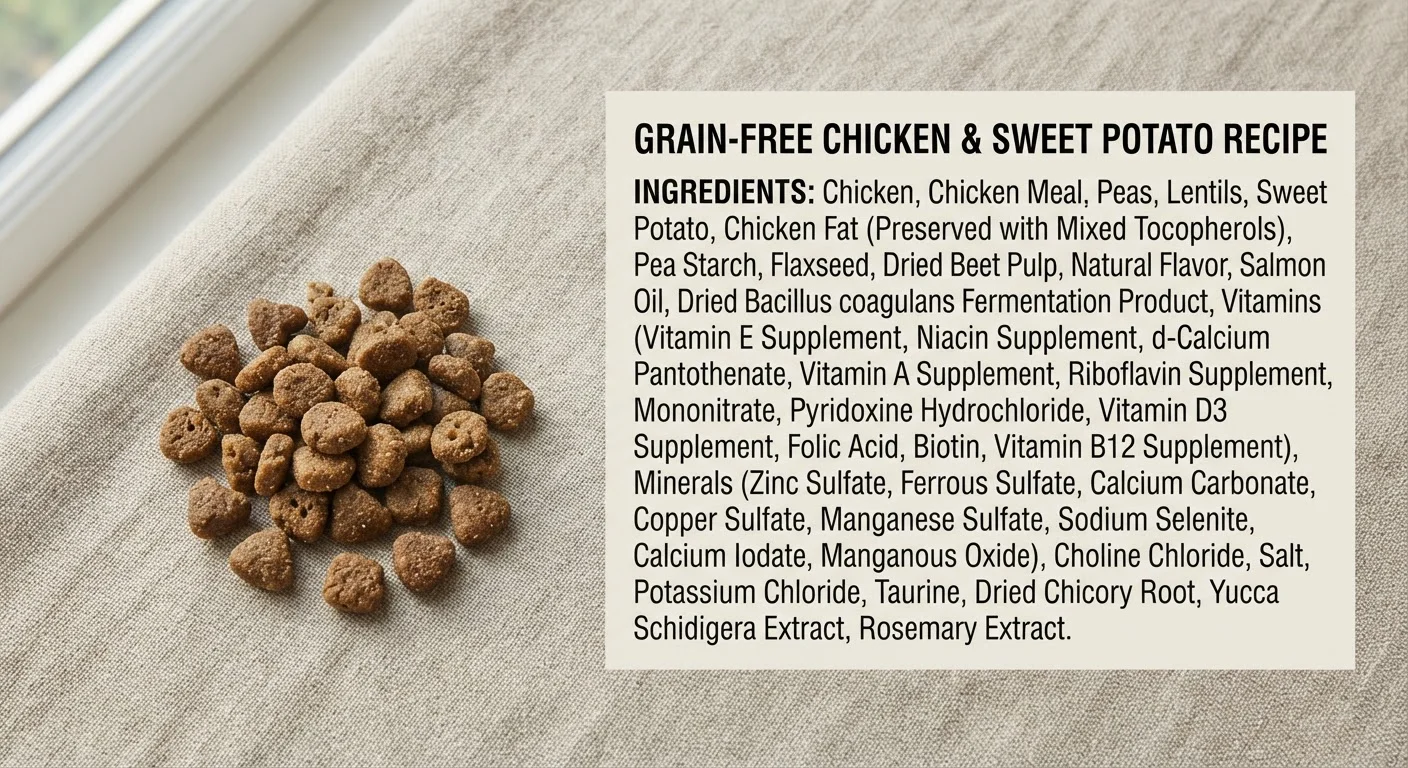
Whole meat ingredients (e.g., "chicken," "salmon," "beef") are listed before moisture is removed. A raw chicken breast is roughly 70-75% water. After cooking and processing, the actual protein contribution per pound of final product is lower than the ingredient's list position might suggest.
Meat meal (e.g., "chicken meal") has already been rendered - cooked at high heat to remove moisture and fat - before it enters the formula. The result is a dry, concentrated powder that is roughly 65-70% protein by weight. This means a food listing chicken meal as a primary ingredient may deliver more protein per cup than one listing whole chicken first, even though "whole chicken" sounds more appealing.
By-Products: What the Term Actually Covers
Poultry by-product meal refers to the rendered, clean parts of slaughtered poultry not intended for human consumption - including necks, feet, undeveloped eggs, and intestines, but excluding feathers. These parts can be nutritionally dense (organ tissue, for example, is high in protein and micronutrients), though the exact composition varies by batch. Meat by-products (non-rendered) may include lungs, spleen, kidneys, brain, liver, blood, and stomach - all of which are consumed as food in many human cultures globally and carry genuine nutritional value.
The word "by-product" carries a negative connotation in marketing, but from a nutritional standpoint, these ingredients are not inherently inferior. Digestibility and amino acid profile are what matter most for your pet. For a deeper look at how protein sources compare on those metrics, see our protein comparison explainer.
"By-Product" Does Not Mean Low Quality
The nutritional value of a by-product ingredient depends on which parts are included and how consistently the formula is sourced - not on the word "by-product" itself. Liver, for example, is technically a by-product and is also one of the most nutrient-dense ingredients in a pet food formula. If specific ingredient composition matters for your pet - particularly for animals with allergies or chronic conditions - consult a veterinary nutritionist who can evaluate the full diet.
Named vs. Generic Sources
Ingredient names that specify a species ("chicken meal," "lamb meal") are considered more transparent than generic terms like "meat meal" or "poultry meal," which may combine multiple unspecified species. AAFCO permits both, but named sources allow for better traceability and are preferable for pets with confirmed protein sensitivities.
If your pet has a documented food allergy or intolerance, ingredient specificity becomes critical - and that's a conversation to have with a veterinarian or board-certified veterinary nutritionist. You can also review how these ingredients interact with the guaranteed analysis numbers in our guaranteed analysis walkthrough.
Putting It Together When Reading a Label
Ingredient lists are ordered by pre-processing weight, not by nutritional contribution to the finished food. This means a label reading "chicken, chicken meal, brown rice" may have more actual chicken protein than one reading "chicken, brown rice, chicken meal" - once moisture evaporates during manufacturing. No single ingredient position tells the whole story.
When evaluating protein sources, consider three things together: (1) whether the protein source is named and species-specific, (2) whether the first several ingredients collectively represent a meaningful protein concentration, and (3) what the guaranteed analysis panel reports for crude protein. For guidance on what those percentages mean in practice, see our practical walkthrough of the guaranteed analysis panel.
Understanding protein terminology is one piece of label literacy. For a complete picture - including how "complete and balanced" claims are validated - see our explainer on AAFCO nutritional standards.
This article is for general educational purposes only and is not a substitute for advice from a licensed veterinarian or board-certified veterinary nutritionist. Always consult a qualified professional for guidance specific to your pet's health and dietary needs.