

Key Takeaways
Our Verdict
Neither group classes nor private sessions are universally superior - the right choice depends on your pet's individual needs and your training goals. Pets with reactivity, anxiety, or specific behavioral challenges typically benefit most from private sessions first, while sociable pets at early training stages thrive in group settings. Many trainers recommend starting with whichever format addresses your most pressing challenge, then supplementing with the other.
| Best for | Recommended |
|---|---|
| Puppies and sociable adult pets learning foundational skills | Group Classes |
| Pets with reactivity, fear, or complex behavioral issues | Private Sessions |
| Owners on a tighter training budget | Group Classes |
| Owners needing flexible scheduling or home-environment training | Private Sessions |
What Each Format Actually Looks Like
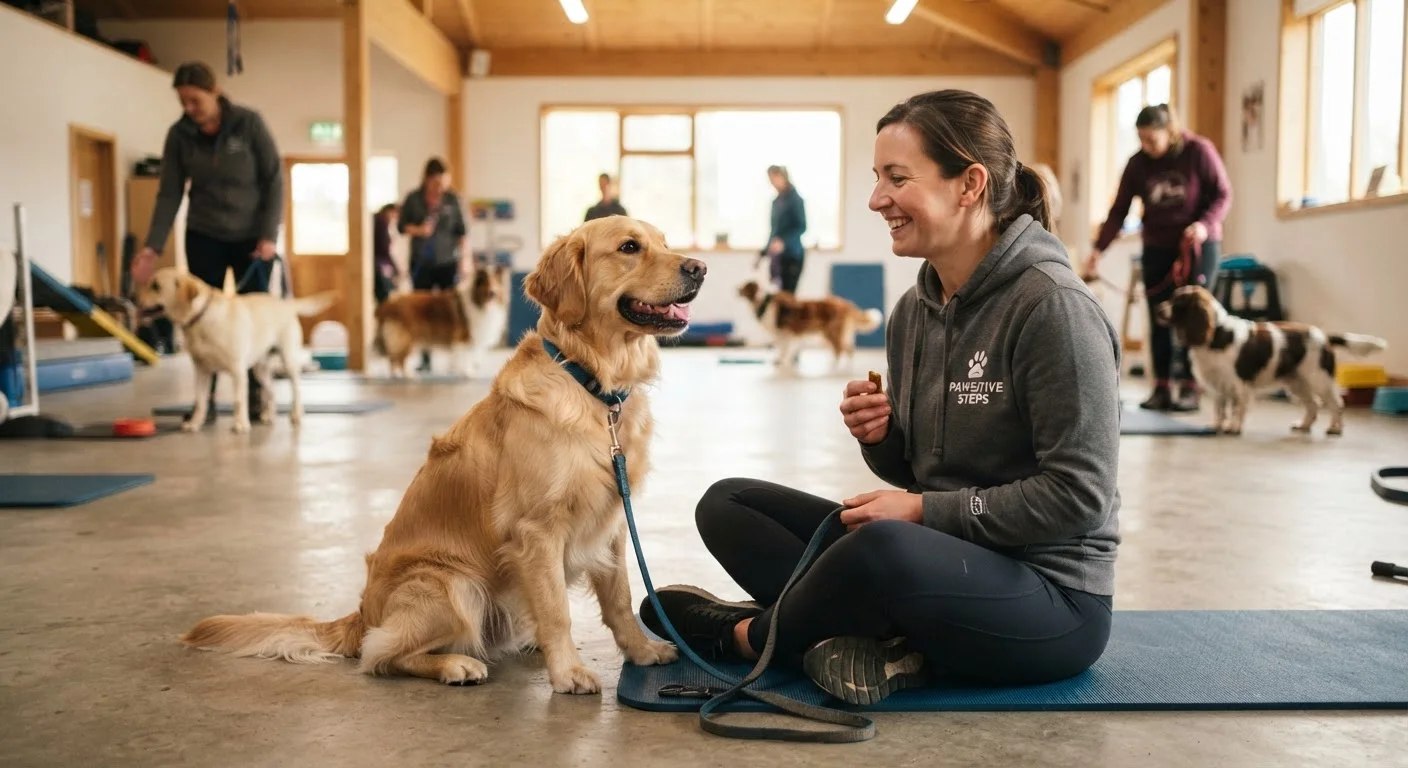
Before comparing the two, it helps to understand what you're actually signing up for. Group classes typically involve four to ten pet-and-owner pairs meeting weekly with a certified trainer. Sessions run 45 to 60 minutes and follow a structured curriculum - sit, stay, loose-leash walking, and recall are common early milestones. The trainer divides attention among all participants.
Private sessions (also called one-on-one or individual sessions) are scheduled directly between you, your pet, and a trainer. They can take place at a training facility, in your home, or at a location relevant to the behavior you're working on - say, a park where leash reactivity flares up. The entire session is dedicated to your specific pet and goals.
Both formats rely on the same underlying science. Whether you're in a group or a private session, qualified trainers use reward-based techniques grounded in behavioral principles. If you'd like to brush up on the vocabulary - reinforcement schedules, shaping, capturing - our plain-language training terminology guide is a useful reference before your first class.
Where Group Classes Excel
Group classes provide something private sessions simply cannot replicate: a controlled social environment. For puppies especially, learning to focus on their owner while other dogs are present is an invaluable skill. Instructors can observe how your pet interacts with distractions and coach you in real time.
Cost is another practical advantage. Group sessions are typically priced significantly lower per hour than private training, making consistent weekly attendance more financially sustainable for most households.
There's also a peer-learning dimension that benefits owners as much as pets. Watching how other handlers cue, reward, and redirect their animals often teaches techniques that are hard to absorb from a book.
Maximize Group Class Value
Arrive a few minutes early to let your pet settle before the session begins - entering an already-active room can raise arousal levels and make early focus harder. Bring high-value treats your pet doesn't get at home; motivation is everything when distractions are high. Practice each skill briefly at home between sessions to reinforce what was covered in class.
Group classes are generally well-suited for:
- Puppies in socialization windows (roughly 3-14 weeks, though classes often begin around 8 weeks post-vaccination)
- Adult dogs with solid baseline temperament learning new skills
- Owners who want structured accountability and a weekly schedule
Where Private Sessions Have the Edge
Private sessions shine when a pet's needs are too specific - or too sensitive - for a group setting. A dog with significant leash reactivity, resource guarding, or fear-based responses may become overwhelmed in a class environment before they're ready. Attempting group training prematurely can reinforce avoidance rather than build confidence.
One-on-one time also means the trainer's eyes are always on your pet. Subtle signals - a lip lick, a weight shift, a moment of disconnect - get noticed and addressed immediately rather than lost in a busy classroom.
Private sessions are also valuable for behavior that occurs in a specific context, such as door-rushing or separation anxiety. A trainer can work directly in your home where the behavior actually happens.
| Group Classes | Private Sessions | |
|---|---|---|
| Typical cost | Lower per session | Higher per session |
| Trainer attention | Shared among participants | Entirely on your pet |
| Socialization opportunity | High - other pets present | Low - controlled environment |
| Best for reactive pets | Often too stimulating | Well-suited with proper approach |
| Schedule flexibility | Fixed class times | Flexible, often home-based |
| Curriculum structure | Standardized progression | Tailored to individual needs |
| Owner peer learning | High - observe others | Limited to one-on-one coaching |
If you're training a cat rather than a dog, the format question involves additional nuance. Our article on what actually works in feline training explores why cats often respond better to individualized, low-pressure approaches.
Making the Decision: A Practical Framework
Rather than defaulting to one format, weigh these factors for your specific situation:
- Your pet's temperament
- A confident, curious pet who greets strangers easily is a natural fit for group classes. A shy, reactive, or easily overstimulated pet will likely learn faster with private coaching first.
- The behavior you're targeting
- Foundation skills (sit, stay, name recognition) translate well to group settings. Problem behaviors with safety implications - biting, severe anxiety, aggression - warrant private sessions with a credentialed professional.
- Your schedule and location
- Group classes have fixed times; private sessions can often flex around your calendar and come to you.
- Your budget
- Group classes offer more contact hours per dollar. If finances are a consideration, starting with a solid group curriculum and reserving private sessions for specific problem-solving is a reasonable strategy.
Many trainers recommend a hybrid approach: begin with private sessions to build a shared foundation and address any pressing issues, then transition to group classes for socialization and generalization of skills. For a comprehensive look at structuring training across your pet's life stages, see our long-term behavior training roadmap.
This article is for general informational purposes only. For pets showing signs of aggression, fear, or severe anxiety, consult a veterinary behaviorist or certified applied animal behaviorist for professional guidance.