

Key Takeaways
Positive Reinforcement
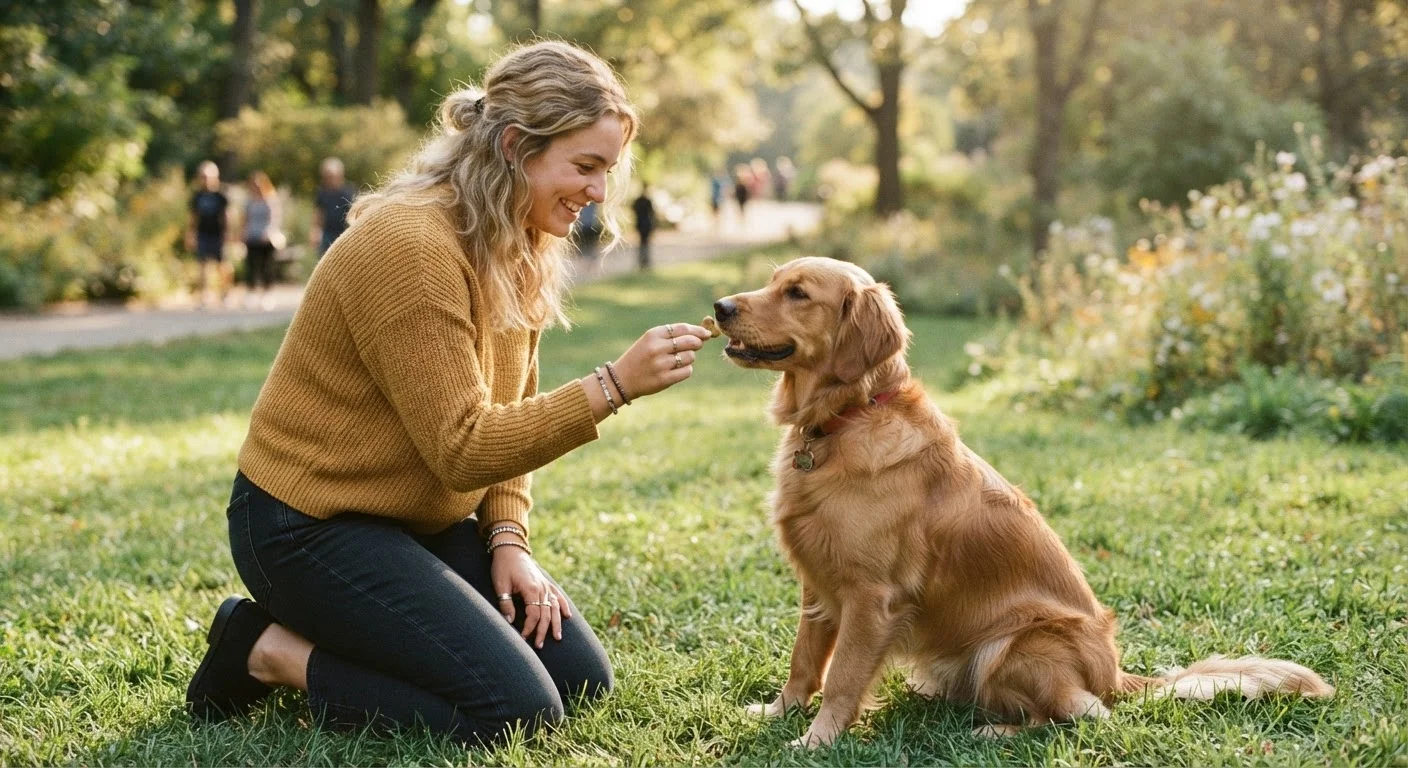
Positive reinforcement is a training method in which a desirable behavior is followed immediately by a reward - such as a treat, praise, or play - making that behavior more likely to happen again. It works by associating good actions with good outcomes, motivating the pet to repeat what earned the reward. This approach is grounded in behavioral science and is widely endorsed by veterinary and animal behavior professionals.
In operant conditioning terms, positive reinforcement adds a pleasant stimulus (the reward) following a target behavior, increasing the probability of that behavior recurring - a principle established through decades of animal learning research.
The Science Behind the Reward
When a pet performs a behavior and immediately receives something pleasant, the brain releases dopamine - a neurotransmitter linked to motivation and learning. This neurological response reinforces the neural pathway associated with that behavior, making it more likely to recur. That is the biological engine driving positive reinforcement.
Behavioral scientists call this process operant conditioning, a framework developed through decades of research. Applied to pets, it means every time your dog sits on cue and gets a treat, or your cat uses the scratching post and earns praise, the brain is literally being rewired to favor that behavior. The more consistent the pairing of behavior and reward, the stronger and faster the learning.
This stands in contrast to punishment-based approaches, which rely on a pet avoiding an unpleasant consequence. Research consistently shows that aversive methods can increase stress and erode the human-animal bond. For a deeper look, see why punishment-based training often backfires.
73%
Pet owners reporting fewer problem behaviors with reward-based methods
A survey published in the journal Applied Animal Behaviour Science found that owners using positive reinforcement reported significantly lower rates of aggression and fear-related behavior in their dogs compared to those using aversive techniques.
1-2 sec
Optimal reward delivery window after a target behavior
Animal behavior research consistently identifies a one-to-two-second window as the critical period for reward delivery; delays beyond this reduce the behavior-reward association substantially.
3-5 min
Recommended training session length for most pets
Veterinary behaviorists generally recommend short, focused sessions to maintain attention and keep the experience positive, especially for young or novice animals.
Timing, Consistency, and Reward Value
Three variables determine how effectively positive reinforcement works: timing, consistency, and reward value.
- Timing: The reward must follow the behavior within one to two seconds. Any longer and the pet may associate the reward with whatever they are doing at that moment, not what they did a few seconds earlier. Tools like clickers or a clear marker word ('yes!') help bridge the gap between behavior and treat delivery.
- Consistency: Everyone in the household needs to respond to the same behaviors in the same way. If one person rewards jumping up and another ignores it, the pet receives conflicting signals that slow learning. Establishing shared rules from the start pays dividends quickly.
- Reward value: Not all rewards are equally motivating. For a new or difficult behavior, use a high-value treat - something small, soft, and highly appealing to your specific pet. For well-practiced behaviors, lower-value rewards or praise often suffice.
Understanding how to choose between reward types is part of building your training toolkit. Key training concepts every owner should know explains reinforcement schedules and other foundational vocabulary in plain language.
Use a Marker Word or Clicker
A clear, consistent marker - either a click from a training clicker or a short word like 'yes' - tells your pet the exact moment they did the right thing, even before the treat arrives. This precision dramatically speeds up learning. Practice marking without the treat first so the sound or word becomes meaningful on its own.
Putting It Into Practice
Effective reward-based training does not require long sessions. In fact, most pets learn better in short, focused bursts of three to five minutes, several times a day. Ending each session on a successful repetition - even an easy one - keeps the experience positive and motivating.
Start with a single, simple behavior your pet can reliably offer (sitting, for example). Mark the moment it happens with a word or click, then deliver the reward promptly. Once that behavior is fluent - meaning your pet performs it readily in a variety of situations - introduce a new cue or build on complexity.
For those just beginning, what new owners need to know about pet training offers a practical starting point. And when you're ready to compare delivery tools, clicker training vs. verbal praise walks through how each method performs across different learning scenarios.
Building Behavior That Lasts
Once a behavior is learned, the key to keeping it reliable is gradual reinforcement fading. Rather than stopping rewards cold - which can cause behaviors to weaken - trainers shift to a variable reinforcement schedule, rewarding the behavior intermittently rather than every time. Research shows this schedule produces behavior that is more resistant to extinction, meaning the pet continues performing even when a reward is not guaranteed.
Life rewards - letting a dog out to sniff the yard, placing a cat's food bowl down after a calm sit - are a powerful and practical way to sustain behaviors without relying on constant treat delivery. The goal over time is a pet who behaves reliably because they have learned that cooperation with you predicts good things, not because a treat is always visible.
For a comprehensive plan covering every stage of your pet's development, the long-term training roadmap provides structured guidance from early learning through adult reinforcement.
This article is for general informational and educational purposes. For concerns about your pet's behavior or welfare, consult a qualified veterinarian or certified animal behaviorist.