

Key Takeaways
Companion Planting
Companion planting is the practice of growing two or more plant species in close proximity so they mutually benefit one another. These benefits can include improved pollination, natural pest deterrence, better use of soil nutrients, and physical support. It's a strategy used by gardeners to work with natural plant relationships rather than against them.
Some companion planting effects are well-documented (e.g., nitrogen fixation by legumes), while others rely primarily on gardener tradition and observational evidence rather than controlled scientific study.
How Companion Planting Works
Plants don't exist in isolation - they interact constantly with the soil, insects, and neighboring species around them. Companion planting is the intentional use of those interactions to your advantage. The mechanisms behind it fall into a few broad categories:
- Nutrient sharing: Legumes like beans and peas host bacteria in their roots that convert atmospheric nitrogen into a form plants can absorb. Neighboring plants can then access that nitrogen, reducing the need for added fertilizer.
- Pest confusion or repellency: Strongly scented plants - such as basil, marigolds, or lavender - may disrupt the ability of insects to locate target crops by smell. This effect varies by pest and context.
- Habitat for beneficial insects: Flowers like dill, fennel (planted away from vegetables), and yarrow attract predatory insects such as parasitic wasps and ladybugs, which prey on common garden pests.
- Physical support and shade: Tall plants can shelter shorter, more shade-tolerant neighbors. Sprawling plants like squash can shade the soil to suppress weeds and retain moisture.
If you're new to gardening, companion planting is worth understanding early - it influences both layout decisions and plant selection from the start.
Start With Low-Risk, High-Reward Pairings
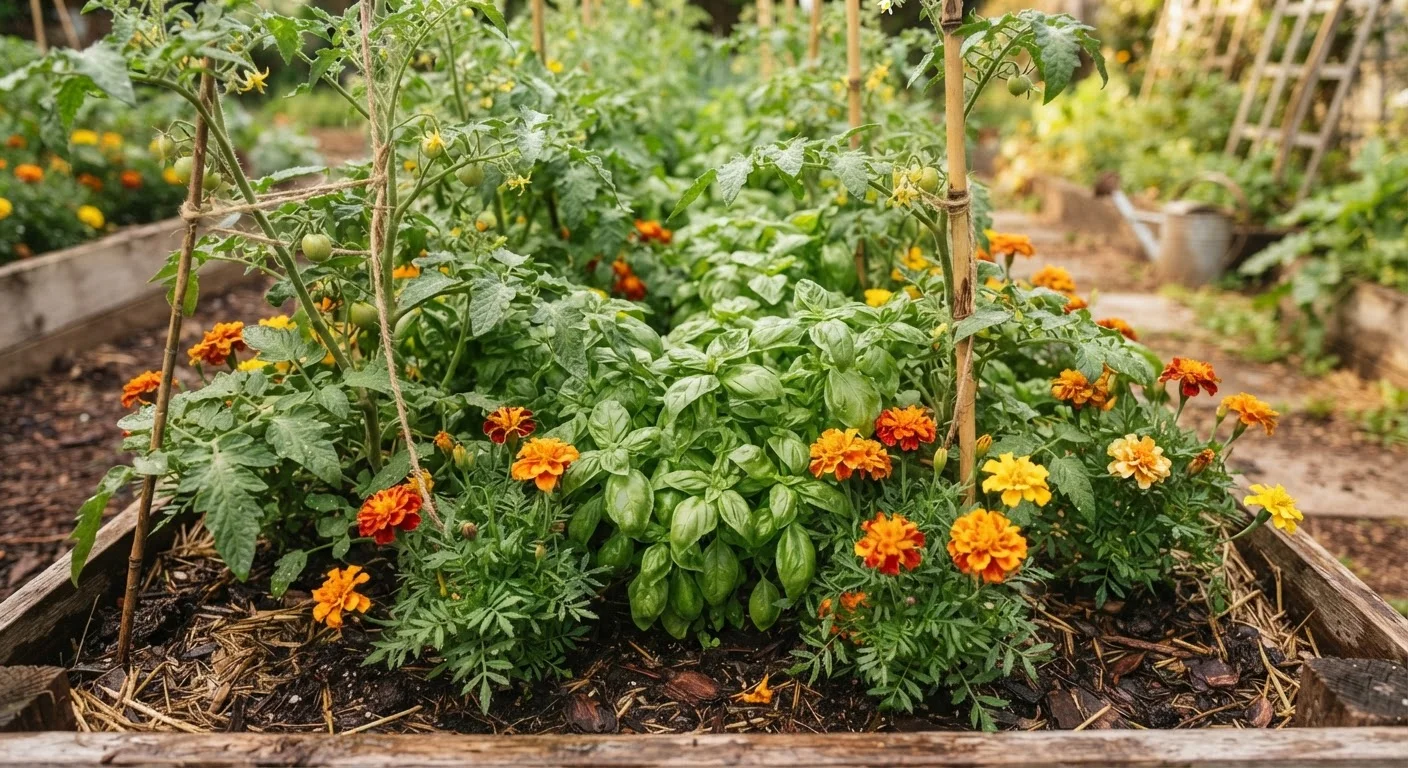
If you're new to companion planting, begin with combinations that have broad gardener consensus and little downside - basil near tomatoes, marigolds around vegetable beds, or nasturtiums alongside brassicas. These pairings are easy to implement, add aesthetic value, and give you hands-on experience observing plant interactions without significant risk to your main crops.
Proven Pairings Worth Knowing
While companion planting lore is extensive, a handful of combinations have enough real-world evidence and gardener consensus to be reliable starting points:
~30%
Potential reduction in aphid pressure with trap crops
Research on trap cropping systems has shown pest load reductions on main crops, though results vary significantly by species, scale, and management.
3,000+ years
Documented history of the Three Sisters planting system
Indigenous agricultural communities across North America developed and refined the corn-bean-squash system over millennia, making it one of the oldest recorded companion planting practices.
The Three Sisters
This is arguably the most well-documented companion planting system, developed by Indigenous agricultural traditions in North America. Corn provides a structure for beans to climb. Beans fix nitrogen that feeds both corn and squash. Squash spreads along the ground, its large leaves shading out weeds and retaining soil moisture. The three crops support each other structurally, nutritionally, and spatially.
Tomatoes and Basil
This is one of the most popular pairings in home gardens. Basil is frequently planted near tomatoes based on gardener reports of improved vigor and reduced aphid and thrip activity. Controlled research on this pairing is limited, but the combination is low-risk and basil is a useful crop in its own right.
Brassicas and Nasturtiums
Nasturtiums are often used as a trap crop near cabbage, kale, and broccoli. Aphids tend to prefer nasturtiums, drawing them away from the main crop. This doesn't eliminate aphids, but it can concentrate them where they're easier to manage.
Carrots and Onions
The strong scent of onions is thought to mask the carrot scent that attracts carrot flies, and vice versa. Both crops also occupy different soil depths, so they don't compete heavily for resources. For more on feeding these crops well, see how fertilizers affect soil health.
Combinations to Avoid
Just as some plants boost each other, others actively interfere with their neighbors. Knowing which combinations to avoid prevents preventable losses.
The Evidence Gap in Companion Planting
Many companion planting recommendations originate from gardening tradition rather than controlled studies. This doesn't make them useless - generations of observation carry real value - but it does mean results are less predictable than they might appear in gardening books. Where research exists, it often involves commercial-scale studies that don't translate directly to a backyard bed. Approach new pairings with curiosity and healthy skepticism.
- Fennel and most vegetables: Fennel produces compounds that inhibit the growth of many common garden plants, including tomatoes, peppers, and beans. Plant fennel in a dedicated bed or well away from your vegetable garden.
- Onions and beans or peas: Alliums - onions, garlic, leeks - can stunt legume growth, reducing yields. Keep them well separated in the garden layout.
- Brassicas and strawberries: These tend to compete for similar nutrients and can suppress each other's development when planted too closely.
- Cucumbers and aromatic herbs: Some strong herbs, including sage and rosemary, may inhibit cucumber growth. This effect is debated, but it's a common caution in companion planting literature.
When planning a vegetable garden, mapping out which plants will share beds is just as important as choosing varieties. For a broader planting strategy, our vegetable gardening guide covers spacing and layout in depth.
Using Companion Planting Realistically
Companion planting is a useful tool, but it works best when you treat it as one layer of a thoughtful garden plan rather than a single solution. A few honest principles help set the right expectations:
- Start simple: Pick one or two well-supported pairings and observe the results in your specific conditions - soil, climate, and local pest populations all matter.
- Combine with other strategies: Crop rotation, good soil health, and correct watering have a larger influence on plant health than companion planting alone. See how light placement affects plant performance as another foundational factor.
- Document what works: Garden conditions vary significantly by region and microclimate. Keeping simple notes on what combinations performed well in your space builds genuinely useful knowledge over time.
- Be skeptical of sweeping claims: Some companion planting recommendations have limited scientific backing. Treat unverified pairings as experiments rather than guarantees.
Even container gardeners can apply these principles at a smaller scale. If you're growing in pots, container gardening has its own set of trade-offs worth understanding before pairing plants in confined spaces.
This article is intended for general informational and educational purposes. Results from companion planting vary by climate, soil conditions, and local pest populations. Always observe your specific garden conditions and adjust accordingly.