

Key Takeaways
Garden Light Zones
Garden light zones are defined areas in your yard that receive measurably different amounts of direct sunlight each day. The three main categories - full sun, part shade (also called partial shade), and deep shade - are determined by counting how many hours of direct sun a spot gets between sunrise and sunset. Plants are labeled with light requirements that correspond to these zones, so matching the two is the foundation of plant selection.
Horticulturally, 'full sun' means 6+ hours of direct sun daily; 'part shade' covers 3-6 hours; 'full shade' or 'deep shade' means fewer than 3 hours. Dappled light under tree canopies is often classified as part shade even when the total duration is ambiguous.
Why Light Zones Are the Starting Point for Every Garden
Before selecting a single plant, experienced gardeners answer one question: how much sun does this spot actually get? It sounds simple, but light conditions vary enormously across a single yard - and ignoring them is the most common reason plants fail in otherwise healthy soil.
Plant tags use standardized light labels that correspond directly to measured hours of sun. A tomato labeled 'full sun' isn't a general preference - it's a biological requirement. Put it in part shade and you'll get leaves but little fruit. Place a hosta in full sun and the foliage will scorch within weeks. The mismatch wastes money and effort that could have been avoided with a one-day observation.
Understanding your yard's light geography also connects to other growing conditions. Light affects soil moisture (shadier spots dry out more slowly), which in turn affects watering frequency. See our guide to garden watering schedules for how to align irrigation with your light zones.
The Three Core Light Categories Explained
Garden light is measured in hours of direct sun - meaning unfiltered, unobstructed sunlight hitting the ground or plant, not just bright ambient sky. Here's how the categories break down:
- Full sun: 6 or more hours of direct sun per day. Most vegetables, herbs, and sun-loving perennials fall here. Heat-lovers like lavender, zucchini, and black-eyed Susans thrive.
- Part shade (partial shade): 3 to 6 hours of direct sun, usually with shade during the hottest afternoon hours. This category includes a wide range of ornamental plants - astilbe, coral bells, and many native woodland species.
- Full shade / deep shade: Fewer than 3 hours of direct sun daily. True deep shade is challenging but not unplantable. Ferns, hostas, and certain groundcovers manage well. Most edibles struggle here.
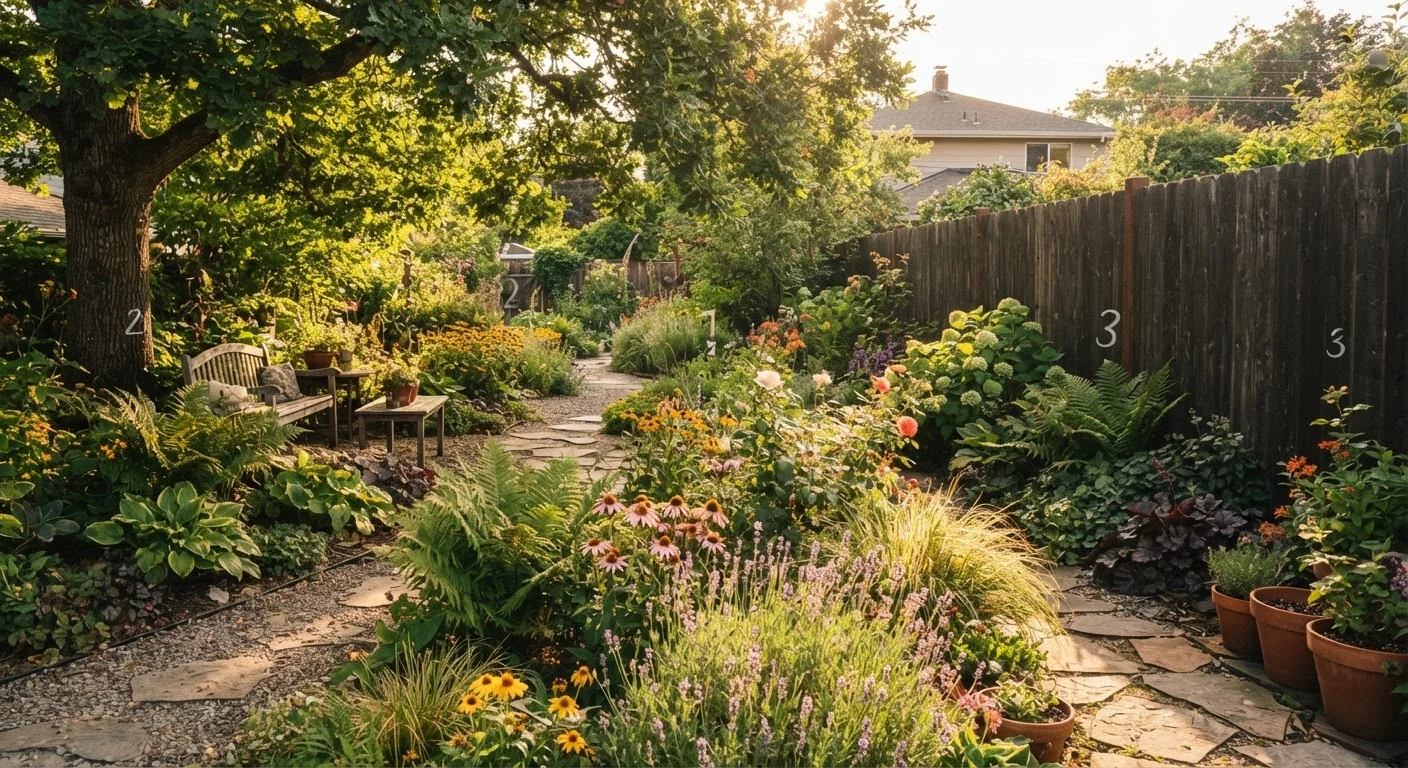
A fourth informal category - dappled shade - describes light filtered through a tree canopy. It's not steady direct sun, but the intermittent patches add up and generally qualify as part shade for planting purposes.
6+ hrs
Daily sun required for full-sun classification
This threshold is the established horticulture standard used on plant tags and by extension services across the US.
3-6 hrs
Daily sun defining part-shade conditions
Part shade covers a wide variety of common garden plants and is the most frequently occurring light zone in suburban yards with fences and mature trees.
<3 hrs
Direct sun in a deep-shade zone
True deep shade limits plant options significantly but still supports groundcovers, ferns, and select woodland natives when soil conditions are suitable.
How to Map the Light in Your Yard
Mapping is a one-day task that pays off for years. On a clear day, walk your yard three times - around 8-9 AM, noon, and 3-4 PM. At each visit, note which areas are in sun and which are in shade, using a rough sketch or phone photos. Mark each zone accordingly.
What you're tracking are the shadow sources: a fence on the west side blocks late afternoon sun; a large oak shades the northeast corner by mid-morning; a south-facing wall reflects and amplifies heat. These patterns are predictable and repeatable each day under similar conditions.
Use the Shadow-Check Method
Instead of checking at three specific times, place a garden stake in the ground and mark where its shadow falls every two hours from 8 AM to 6 PM. The area consistently unshaded throughout the day is your full-sun zone. It takes less than 10 minutes of active effort and gives you a clear, visual record.
One important caveat: repeat this process in multiple seasons if you can. The sun sits at a much lower angle in winter and early spring, casting longer shadows from the same structures. A bed that's full sun in July may be part shade in April - which matters if you're planting spring bulbs or cool-season vegetables.
If you're starting a garden from scratch, mapping light should happen before you decide where any bed goes - not after.
Seasonal Shifts and Why They Catch Gardeners Off Guard
Many gardeners map their yard once in summer and treat it as fixed. In reality, light zones shift meaningfully across the year for two reasons: the sun's angle changes with the seasons, and deciduous trees leaf out and drop leaves on their own schedule.
In late winter and early spring, a bed under a deciduous tree may receive nearly full sun - useful for early bulbs like tulips and daffodils that need light to energize before the canopy fills in. By June, that same bed may be deep shade.
Structures matter too. A south-facing wall that's shaded by your house's roofline in December may be in full sun by May as the sun rises higher. These seasonal shifts are why a seasonal garden checklist includes revisiting your planting conditions each quarter, not just once at the start of the growing year.
Matching Plants to Zones - and Correcting Mismatches
Once your zones are mapped, plant selection becomes straightforward: read the label, match the hours. But what if you've already planted something in the wrong spot?
Most perennials and shrubs can be transplanted in early spring or fall while dormant. Annuals are cheap enough to simply replace. The bigger challenge is a tree or permanent structure creating shade where you wanted sun - in that case, shifting your plant palette to suit the existing light is far more practical than trying to alter the light itself.
Container gardening offers a flexible workaround: if a plant isn't performing, you can physically move the pot. Our overview of container gardening advantages and limitations covers exactly when this flexibility makes a real difference.
Light mapping also informs companion planting decisions. Tall sunflowers or trellised beans can create afternoon shade for heat-sensitive neighbors - a useful tool once you understand your baseline. See how companion planting works for more on intentional plant pairings.
Finally, remember that light is just one layer of your garden's growing conditions. Pairing your light map with a soil assessment gives you a complete picture. Our soil reading guide explains what pH, texture, and drainage tell you - and how to act on what you find.