

Key Takeaways
Summary
28 items · 20-40 minutes to review; tasks spread across all four seasons
Why a Quarterly Approach Works Better Than Reacting to Problems
Most gardeners fall into a reactive pattern - watering when plants look wilted, fertilizing when leaves turn yellow, pruning only after growth gets out of hand. This approach costs more time and money than a simple seasonal routine. When you know what to do each quarter, you front-load effort at the moments it pays off most and sidestep the majority of common problems before they start.
This checklist is organized into four quarters that roughly align with calendar seasons in most US climate zones. Some tasks shift by a few weeks depending on your region - gardeners in USDA Hardiness Zones 9-11 will start spring tasks earlier, while those in zones 3-5 may push some summer actions into late spring. Adjust to your last and first frost dates, not the calendar alone.
If you're building a garden from the ground up, see our introduction to starting a garden from scratch for foundational guidance before working through this checklist.
Q1 - Late Winter / Early Spring (January-March)
Q2 - Spring / Early Summer (April-June)
Q3 - Mid to Late Summer (July-September)
Q4 - Fall / Early Winter (October-December)
Tools and Supplies to Have on Hand
Working through a seasonal checklist is significantly easier when your supplies are organized and ready. Scrambling to find the right fertilizer or a functioning hose mid-task wastes time and breaks momentum. Before each new quarter begins, spend 10 minutes verifying that the tools below are in working order.
Soil test kit or extension service submission
Determines soil pH and nutrient deficiencies so you feed and amend with precision rather than guesswork.
Bypass pruners (hand pruners)
Used for deadheading, light pruning, and harvesting throughout all four seasons.
Garden fork or digging spade
Essential for turning compost into beds, dividing perennials, and planting bulbs.
Slow-release granular fertilizer
Feeds plants steadily through the growing season without requiring frequent reapplication.
Mulch (wood chips, straw, or shredded leaves)
Suppresses weeds, retains soil moisture, and regulates soil temperature in all seasons.
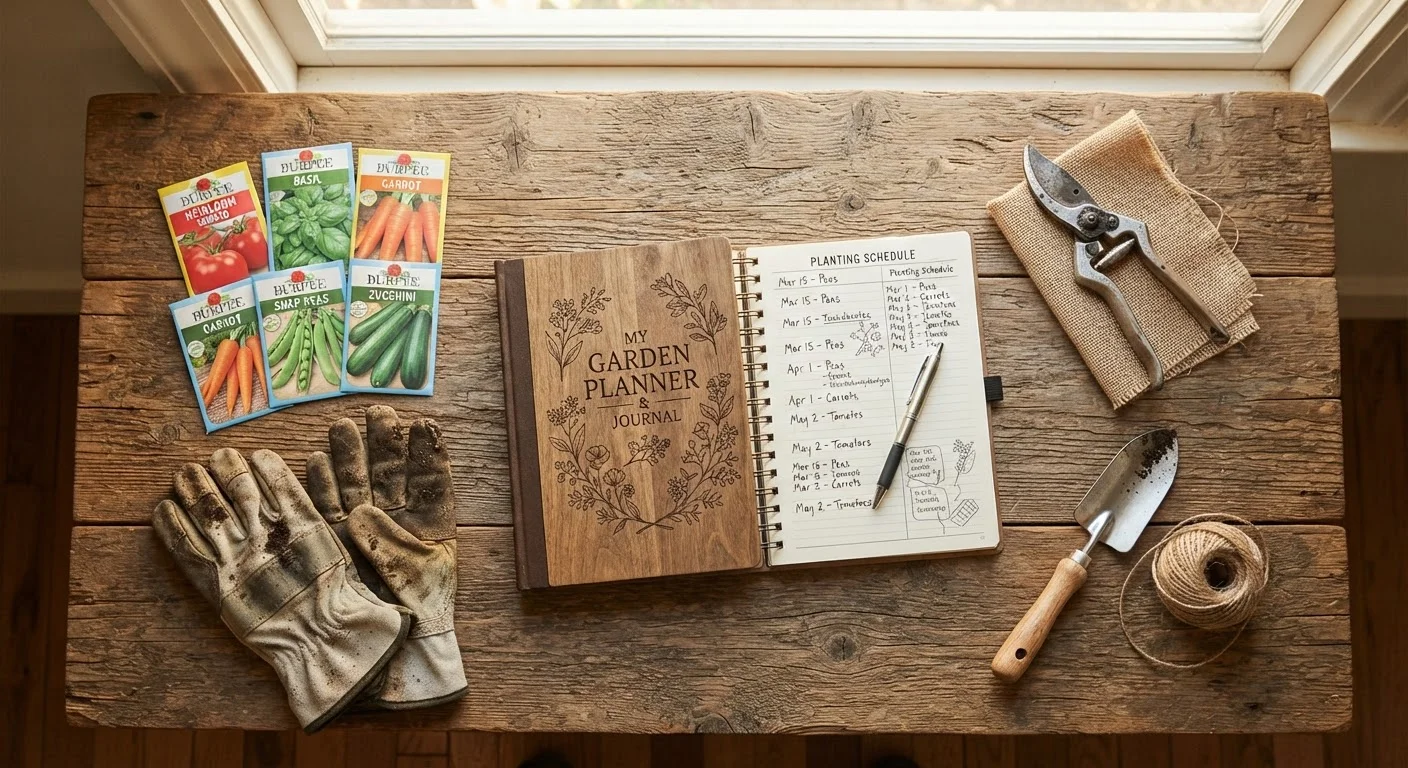
Garden journal or planning notebook
Records planting dates, observations, and results so each season informs the next.
Drip irrigation timer or soaker hose
Delivers consistent moisture at the root zone, reducing water waste and disease risk from overhead watering.
For container gardeners, the same quarterly rhythm applies - you'll just scale down quantities and pay closer attention to watering frequency, since containers dry out faster than in-ground beds. Our article on what works and what doesn't in container gardening covers those nuances in detail.
Don't Prune at the Wrong Time of Year
Pruning spring-blooming shrubs (like lilacs and forsythia) in fall or winter removes the flower buds set the previous season - you'll lose a full year of bloom. As a general rule, prune spring bloomers right after they flower, and prune summer- or fall-bloomers in late winter while still dormant. When in doubt about a specific plant, look up its bloom time before cutting.
How to Use This Checklist Year After Year
Print this checklist or copy it into a garden journal at the start of each quarter. Check off tasks as you complete them and note any observations - which plants struggled, which thrived, what the soil looked like after winter. These notes become your most valuable gardening resource over time, far more useful than generic advice that doesn't account for your specific yard.
Pair this checklist with a solid watering routine. Feeding and pruning decisions are often undermined by inconsistent moisture. Our guide to garden watering schedules explains how to match frequency to plant type and season - an important complement to the tasks here.
Understanding how sunlight moves through your yard also shapes which seasonal tasks matter most in each bed. Use our guide to mapping sun and shade zones to confirm your plants are in the right spots before investing in another season of care. If you're also growing vegetables, our complete vegetable growing guide covers feeding, spacing, and harvest timing in full detail.
Frost Date Accuracy Is Non-Negotiable
Every timing recommendation in this checklist depends on knowing your local average last spring frost date and first fall frost date. Using generic calendar dates without this information risks losing transplants to an unexpected freeze or missing optimal planting windows entirely. Look up your dates using USDA zone maps or your local cooperative extension service website - both are free and regionally specific.