

Key Takeaways
Packing Cubes
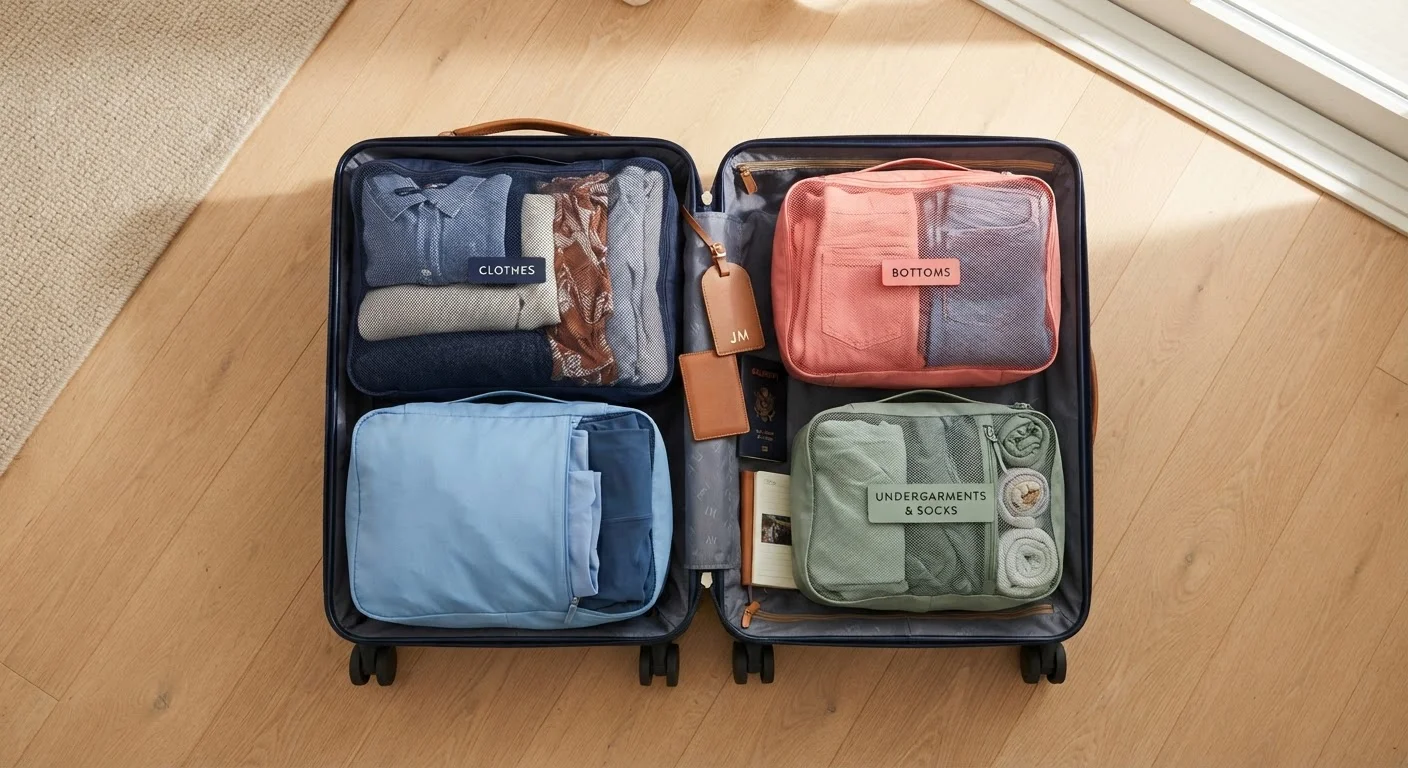
Packing cubes are zippered fabric pouches designed to compartmentalize items inside a suitcase or bag. They come in multiple sizes-typically small, medium, and large-so you can group clothing or gear by category, outfit, or traveler. They don't compress contents like vacuum bags do; instead, they organize them.
Some cubes include a secondary compression zip that flattens contents by roughly 20-30%, which can meaningfully reduce bulk without requiring a vacuum seal.
What Packing Cubes Actually Do
Packing cubes are containers within a container. You zip clothing or gear into them, then load the cubes into your bag. The primary function is organization: each cube acts as a drawer, letting you pull out exactly what you need without disturbing everything else.
What they don't do is make your bag physically larger. A common misconception is that cubes create space. They don't - they structure what's already there. If your bag is already overpacked, cubes won't solve that. They're a tool for arrangement, not volume reduction. For a deeper look at what actually determines how much you can fit, see our breakdown of popular packing myths.
The real productivity gain is repeatability. Once you've established a cube layout that works, packing becomes a known routine rather than a fresh puzzle every trip.
57%
Travelers who repack mid-trip at least once
According to a 2023 TripIt traveler survey, more than half of respondents reported repacking their luggage at least once during a multi-destination trip.
3-5
Cubes sufficient for most one-week trips
Travel organization guides consistently recommend this range as the practical minimum for a week of clothing without overcomplicating the system.
Who Benefits Most - and Who Doesn't
Packing cubes deliver uneven value depending on how you travel. They're worth the investment in these situations:
- Multi-destination trips: Moving hotels every two or three nights means you're repacking frequently. Cubes let you pull a whole category out and put it back without sorting.
- Shared luggage: Families or couples splitting one checked bag benefit enormously from color-coded cubes - one color per person eliminates rummaging.
- Frequent business travelers: Road warriors who pack the same kit repeatedly find cubes speed up both packing and unpacking. See how this fits into a broader business travel packing strategy.
Cubes add less value for:
- Weekend trips with a single small bag
- Travelers who live out of their suitcase without unpacking
- Anyone who already has a minimal, tightly edited packing list
If you're still working on cutting down what you bring, start there first. Understanding why overpacking happens is more useful than organizing an oversized load.
Color-Code by Traveler, Not Category
If you're traveling with anyone else, assign cube colors by person rather than by clothing type. It's faster to hand someone their blue cube than to explain which of three similar black cubes holds their socks. This single habit eliminates most shared-bag frustration.
How to Use Them Effectively
The most common mistake is treating cubes as loosely themed catch-alls. Effective use means assigning each cube a specific, consistent role before you start packing.
A functional starting framework:
- Large cube: Bottoms (pants, jeans, shorts)
- Medium cube: Tops (shirts, blouses, tees)
- Small cube: Underwear, socks, and base layers
- Optional cube: Dirty laundry separator or shoes
Rolling clothes before placing them in cubes typically fits more items and reduces wrinkles, though results vary by fabric. Our rolling vs. folding comparison covers when each technique works best.
If you're aiming for a carry-on-only trip, cubes work best as the final step after you've already made the hard choices about what to leave behind. The planning decisions that precede packing matter more than any organizational tool - see how destination research shapes what you need to bring.
Standard vs. Compression Cubes: A Practical Distinction
Standard cubes have a single zip and hold items at whatever volume they naturally occupy. Compression cubes add a second zip that cinches down the cube after it's loaded, flattening contents and reducing bulk. This distinction matters for specific use cases:
| Type | Best For | Trade-off |
|---|---|---|
| Standard | Shirts, underwear, light layers | No compression; same volume |
| Compression | Sweaters, fleeces, bulky items | Harder to repack on the road |
Compression cubes add a step - you have to re-compress after each repack. For travelers moving frequently, that friction adds up. Reserve compression cubes for cold-weather trips where bulky items are unavoidable.
For carry-on travel specifically, a mix of one compression cube for a jacket or sweater and two standard cubes for everything else is a practical balance. This approach pairs well with a room-by-room carry-on packing method.
“Organization is not about perfection; it's about efficiency, reducing our stress and clutter, saving our time and money, and improving our overall quality of life.”
— Christina Scalise, Author, professional organizer